We are mothers, my barren sisters, when we serve children in our present vocations.
So stand up for them. Speak out for them. March for them. Write for them.
We are mothers, my barren sisters, when we serve children in our present vocations.
So stand up for them. Speak out for them. March for them. Write for them.
Sometimes a hymn can express our feelings better than we ever imagined. Here is the text for three stanzas from the Advent hymn “The Night Will Soon Be Ending.” The lyricist Jochen Klepper understands quite clearly the darkness that tries to squelch our hope. However, as he reminds us, “God dwells with us in darkness and makes the night as day.” (Lutheran Service Book 337:5) Come, Lord Jesus. Amen.
The night will soon be ending; The dawn cannot be far.
Let songs of praise ascending Now greet the Morning Star!
All you whom darkness frightens With guilt or grief or pain,
God’s radiant Star now brightens And bids you sing again.
Yet nights will bring their sadness And rob our hearts of peace,
And sin in all its madness Around us may increase.
But now one Star is beaming Whose rays have pierced the night:
God comes for our redeeming From sin’s oppressive might.
God dwells with us in darkness And makes the night as day;
Yet we resist the brightness And turn from God away.
But grace does not forsake us, However far we run.
God claims us still as children Through Mary’s infant Son.
The day was overcast, cold, and windy. I fumbled with the transferring of groceries from my Aldi cart to the empty bags in the back of the van. My two-year old sat in the cart, playfully kicking me with his legs as I did my work, adding to the annoyance of the morning. Forgot to wear gloves, didn’t bring enough bags, forgot to unload all the junk from the back of the van so I’d have room for groceries, child won’t stop whining….
Apparently I didn’t do a very good job of hiding my aggravation.
I heard the rattle of cart wheels behind me and then noticed the rattling stop as they reached my location. I waited for a minute or so and then glanced over my shoulder. There stood an elderly man in a thin coat and jeans, a patient smile parting the deep creases on his face. He held out a quarter and asked if he could take my cart for me. His face held my gaze for some time as I marveled at his resemblance to my own grandfather, who had left this world years ago. He was smaller in stature and his face was much gentler, but the similarity was enough to tug at my heart. With a cart already in his hand, it was obvious he was just relieving me from having to return my own.
“Oh–thank you,” I smiled back. “I’ll try and hurry.” I fumbled even more, feeling his silent presence at my back and knowing that he was just as cold as my son and I were.
I finished the unloading and closed the door. In a feeble attempt at being witty I wheeled the cart around towards the man and said with a smile, “Did you want the kid, too, or just the cart?”
Without missing a beat and without the slightest change in his kindly expression he responded: “If my wife were still with me we’d probably take you up on that. We never had any of our own. She had five misses and the doctor told us we shouldn’t try for any more.”
Somehow in the midst of him sharing his story the child was removed, the cart and money exchanged, and then I uttered a weak but sincere “Thank you” before he shuffled off, still smiling. I don’t remember giving him any other response. I felt speechless.
As I drove out of the parking lot, the tears came. Tears of embarrassment for sticking my foot in my mouth. Tears of gratitude for the whiny boy in the backseat. Tears of guilt as I recognized, yet again, how often this gift is taken for granted. Tears of sorrow for loved ones with an empty back seat. But mostly, tears of awe at being in the presence of such kindness, such an awareness of other’s struggles, and such thoughtfulness from someone who had lost so much. Even in what may be the last decade of his life, he was looking for ways to serve, to give out of what some might see as emptiness. But he didn’t look empty to me at all. I have a strong hunch that Someone was keeping him full.
* “The hoary head is a crown of glory, if it be found in the way of righteousness.” Proverbs 16:31, KJV

 His divine power has granted to us all things that pertain to life and godliness, through the knowledge of him who called us to his own glory and excellence, by which he has granted to us his precious and very great promises, so that through them you may become partakers of the divine nature, having escaped from the corruption that is in the world because of sinful desire. For this very reason, make every effort to supplement your faith with virtue, and virtue with knowledge, and knowledge with self-control, and self-control with steadfastness, and steadfastness with godliness, and godliness with brotherly affection, and brotherly affection with love. For if these qualities are yours and are increasing, they keep you from being ineffective or unfruitful in the knowledge of our Lord Jesus Christ. For whoever lacks these qualities is so nearsighted that he is blind, having forgotten that he was cleansed from his former sins. Therefore, brothers, be all the more diligent to make your calling and election sure, for if you practice these qualities you will never fall. For in this way there will be richly provided for you an entrance into the eternal kingdom of our Lord and Savior Jesus Christ. – 2 Peter 1:3-11
Whenever I read such words of wisdom from Holy Writ, I feel a deep sense of gratitude that the LORD has made our life’s calling so clear: trust in His promises (not the world’s) and love and serve others (not ourselves).
In this light, it becomes easy to say no to IVF and other assisted reproductive technologies which serve ourselves instead of others and which potentially hurt and harm the very children we are trying to create.
For those of us who desire children, it is good to wait on the LORD, supplementing our faith with virtue, and virtue with knowledge, and knowledge with self-control, and so on, that we might never fall.
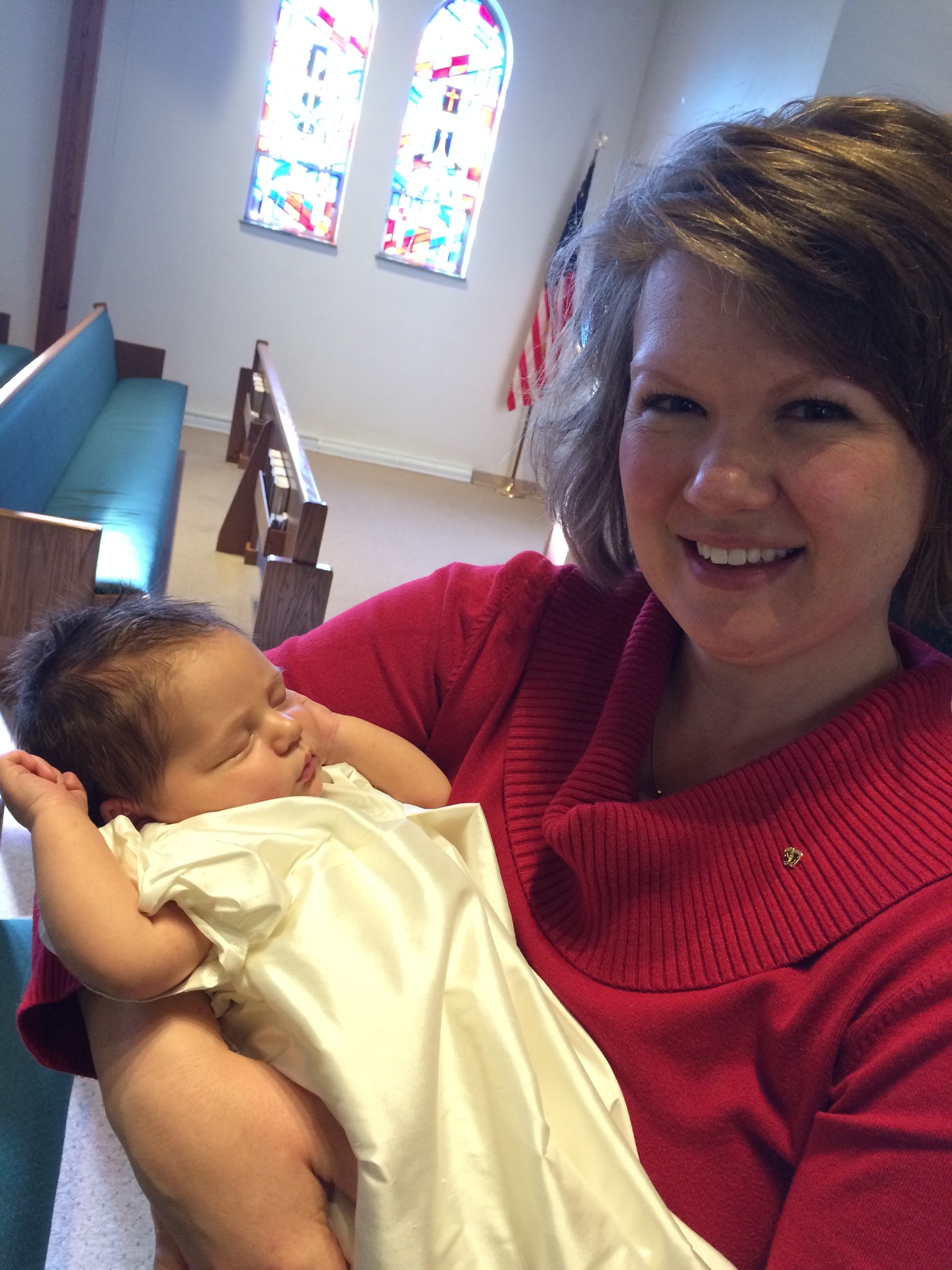 I recently had the blesséd privilege of spending two weeks in the home of a family of nine who was welcoming home a new, baby sister.
It was a season of firsts for me: first time watching a newborn grow and shape-shift daily; first time watching up-close as a beautiful mother suffered through the chapping and cramping that come in the first weeks of breastfeeding; first time helping older brothers and sisters transition and process the change that comes with a new family member in the house; first time tutoring an almost seven-year-old through her math lesson; and first time stripping and washing bedsheets which had been wetted.
It was also the first time I stood in a kitchen holding a baby for close to an hour-and-a-half and realized that my arms weren’t shaking.
You see, it always happens. Within ten minutes of holding any baby, my arms begin to vibrate. Even though I lift eleven times that baby’s weight over my head every day in the gym, the plyometric activity of holding a tiny baby for mere minutes makes my arms begin to shake. It always embarrasses me when that happens, for it is a physical, tangible, public reminder of what I do not hold every day in my own home. I do not have mommy arms.
And the hardest part of finally earning mommy arms is that they feel terribly empty when you have to go back to your own home.
I recently received this note from a sister in Christ. It brought me great comfort in my barrenness:
In our household we have come to love the story of Ruth. [My husband] teaches it on a cycle to the youth of our church. One of his main points is that it is as much Naomi’s story as Ruth’s and Boaz’, for it is the story of the Promise of the Seed and Naomi’s Redeemer.
In the last chapter, when Boaz’ and Ruth’s son is born, the village women remark that Ruth was as good as ten sons to Naomi. This is true, isn’t it? Through this child comes the continuation of what will be the Davidic line resulting in David’s King. How wondrous! And yet Ruth is not Naomi’s daughter and blood relation. Instead, upon having seen and tasted her mother-in-law’s faith in her home country, Ruth is a daughter by confession. “Your people will be my people; your God, my God.”
Not all mothers give birth to their daughters.

Why do you suffer? Because God does not – and will not – forsake you.
“When faith begins, God does not forsake it; He lays the holy cross on our backs to strengthen us and to make faith powerful in us. The holy Gospel is a powerful Word. Therefore it cannot do its work without trials, and only he who tastes it is aware that it has such power.
Where suffering and the cross are found, there the Gospel can show and exercise its power. It is a Word of life. Therefore it must exercise all its power in death. In the absence of dying and death it can do nothing, and no one can become aware that it has such power and is stronger than sin and death. Therefore the apostle says ‘to prove you’; that is God inflicts no glowing fire or heat – cross and suffering, which make you burn – on you for any other purpose than ‘to prove you,’ whether you also cling to His Word. This is is recorded in Wisd. of Sol. 10:12 of Jacob: “God sent him an arduous contest, so that he might know that godliness is more powerful than anything.”
God lays a cross on all believers in order that they may taste and prove the power of God – the power which they have taken hold of through faith.”
– Martin Luther (Treasury of Daily Prayer, Writing for December 2nd)

 Barrenness is a no fun-and-games deal. There are days when I’m “okay” with it, and the next day I struggle with my own reality. I’ve survived days in which I’ve wanted to crawl into a hole and cry. I’ve asked the Lord to take this suffering away from me. I’ve begged the Lord to open my womb and give me more children. He listens, and He gives me what I need, whether or not that includes children.
I really want more children. However, the Lord has determined that more children is not what I really need. Ouch. That statement hurts. Still, dear sister, you and I live under the Lord’s grace and mercy. He grants us daily breath, His Word and Sacraments, and He gives us the vocations of daughter, aunt, niece, and friend.
Why isn’t motherhood on that list? That’s a harsh concept to swallow; it certainly doesn’t seem fair. For now, though, motherhood is not the vocation God has given you. Rather, He is blessing you with the time, resources, and opportunities to serve your neighbor in other ways. That art class you always wanted to take? Do it; maybe you’re the modern Monet. Perhaps your art can give silent witness to the faith you have in God. The trip to Europe that you and your spouse dream about? Now might be the time to pick up the travel information and see the Luther sites. The parents at church who seem overwhelmed? Perhaps you could offer to babysit for a few hours and give the couple some time together. Does your elderly neighbor need some company? Could you offer to bring dinner and enjoy a nice conversation? Are your nieces and nephews struggling with their identities? Can you send them an encouraging note or text and remind them of their value in your family?
These vocations may never satisfy the craving and deep desire to be a mother. However, they are vocations that serve God and your neighbor. There can be great joy and satisfaction in loving others. Undoubtedly, there are days that will drive you to despair. It will be difficult to remember that your life is NOT over, despite the fact that you have not been given children. Your grief is real; there is no denying the sorrow that accompanies barrenness. Know this: You have been given grace to live the life that has already been granted to you, despite its suffering and sorrows. You are a daughter, a friend, a niece, an aunt, a godmother, and more. God loves you, just as you are. The Lord is blessing you with opportunities to try something new. What is it that you’ve always wanted to do?
The Apostles’ Creed with explanation:
THE FIRST ARTICLE
I believe in God the Father Almighty, Maker of heaven and earth.
What does this mean?
I believe that God has made me and all creatures; that He has given me my body and soul, eyes, ears and all my members, my reason and all my senses, and still preserves them; that He richly and daily provides me with food and clothing, home and family, property and goods, and all that I need to support this body and life; that He protects me from all danger, guards and keeps me from all evil; and all this purely out of fatherly, divine goodness and mercy, without any merit or worthiness in me; for all which I am in duty bound to thank and praise, to serve and obey Him. This is most certainly true.
No matter how difficult it is to give thanks to God, we are still His children, whom He dearly loves. He made us and still preserves us, despite our sinful condition. More of His gifts are outlined in the explanations to the Second and Third Articles of the Apostles’ Creed.
THE SECOND ARTICLE
I believe in Jesus Christ, His only Son our Lord, Who was conceived by the Holy Spirit; born of the Virgin Mary; suffered under Pontius Pilate; was crucified, died, and was buried; He descended into hell; the third day He rose again from the dead; He ascended into heaven, and is seated at the right hand of God the Father almighty; from there He shall come to judge the living and the dead.
What does this mean?
I believe that Jesus Christ is true God, begotten of the Father from eternity, and also true man, born of the Virgin Mary; and that He is my Lord, Who has redeemed me, a lost and condemned creature, purchased and won me from all sins, from death and from the power of the devil; not with gold or silver, but with His holy, precious blood, and with His innocent suffering and death; in order that I might be His own, live under Him in His kingdom, and serve Him in everlasting righteousness, innocence and blessedness; even as He is risen from the dead, lives and reigns to all eternity. This is most certainly true.
God the Father sent His only Son Jesus to take our punishment for sin. Now the gift of eternal life is ours.
THE THIRD ARTICLE
I believe in the Holy Spirit; the holy Christian Church, the communion of saints; the forgiveness of sins; the resurrection of the body; and the life everlasting. Amen.
What does this mean?
I believe that I cannot by my own reason or strength believe in Jesus Christ, my Lord, or come to Him; but the Holy Ghost has called me by the Gospel, enlightened me with His gifts, sanctified and kept me in the true faith; just as He calls, gathers, enlightens and sanctifies the whole Christian Church on earth and keeps it with Jesus Christ in the one true faith. In this Christian Church He daily and richly forgives me and all believers all our sins; and at the last day He will raise up me and all the dead, and will grant me and all believers in Christ eternal life. This is most certainly true.
We are preserved in our faith through the work of the Holy Spirit. Despite our trials, we continue to receive God’s gifts in Word and Sacrament.
 Dear God, You know my inmost being, for You formed me. Thank you for sending Your Son to redeem me, and for the gift of the Holy Spirit to keep me in the true faith. Thank you for the gifts that are given to others. Forgive me for coveting those gifts and help me to receive my daily bread with thanksgiving, for it is all truly given by Your grace. In Jesus’ name, Amen.
 Whenever discussing points of ethical contention surrounding the complex subject of assisted reproductive technology, there is usually one fundamental question in need of answering in the church: What exactly is the one flesh union of marriage?
Thank you to Dr. Gifford A. Grobien, Assistant Professor of Systematic Theology and Director of the D. Min. Program at Concordia Theological Seminary, Fort Wayne, IN, for graciously thinking through this question and composing an answer for the benefit of our ongoing discussion of infertility medicine:
The instituting text for marriage is Genesis 2:24: “Therefore a man shall leave his father and his mother and hold fast to his wife, and they shall become one flesh.” The English “flesh” translates well the Hebrew bāśār, meaning the material tissue of a creature. It is the organic, biological elements of a person. The Hebrew něp̄ěš refers to a complete creature, not just its flesh, but its flesh and life. For animals (e.g. Genesis 1:20) this includes its breath; for human persons this includes the soul or self. Něp̄ěš is not used in Genesis 2:23-25.
Thus marriage is characterized fundamentally not as a personal union, but as a fleshly union. This union is an organic, biological union of bodies. Marriage is, firstly, the becoming “one flesh,” not becoming one creature or person. Marriage is a union of flesh or bodies. Marriage is not identical to coitus, but coitus is constitutive of marriage.* When Jesus is questioned about divorce, he reminds his questioners about the nature of marriage as union of flesh, quoting Genesis 2:24 (Matthew 19:3-6; Mark 10:2-12). What, then, is this becoming one flesh? How is it different from becoming united in other ways?
Girgis, George, and Anderson (2010) explain that the union of flesh is not just bodily intimacy, in which body parts of one person surround or intermingle with the body parts of another person. Rather, a body serves natural life. The parts of a body coordinate to achieve biological purpose. For two people to have fleshly, or biological, union, “their bodies must be coordinated for some biological purpose of the whole” (p. 254). Nearly all biological, or fleshly, acts can be accomplished by one independent body—for example respiration, circulation, and digestion. Indeed, fleshly union with respect to any of these bodily acts is impossible. Only in coitus do two bodies act for one biological function.
Coitus enacts a unique fleshly existence and accompanying purpose of procreation. Alone, the reproductive system of one person cannot reproduce. Coitus brings together two bodies in a fleshly union to make possible the singular biological act of procreation.
Any bodily touching that is not coitus—even other touching of a sexual nature—is not true bodily union but only juxtaposition or contiguousness, even if this juxtaposition happens to occur inside a person’s body. One might argue that non-coital sexual relations nourish and expresses intimacy and emotional union. Yet such a union would be just that: one of emotion, the will, or the mind. It is still not a union of the flesh, by which two bodies act together as one body or one flesh, seeking a fleshly—that is, organic or biological—purpose.
The union of flesh in marriage, then, consists of coitus. To emphasize this does not, on the other hand, deny that marriage is also a union of minds, wills, and passions. Marriage by design includes all of these. Coitus is not the only element of marriage. Rather, coitus is one of the fundamental, unique elements of marriage.
Nor is emphasizing coitus to reduce marriage to mating, as though human persons were mere animals. Although, on the above criteria, many animals also engage in a union of flesh when they mate, this does not exclude other characteristics from the fleshly union of man and woman: characteristics which qualify human marriage differently from the mating of animals.
The fleshly union of man and woman is fundamentally a bodily union, but it also includes the union of other human qualities such as the will, the emotions, and the mind. Taking the above understanding of union in general to mean the coordination of two or more elements for a common purpose, in sexual relations a man and woman would also properly coordinate their wills, emotions, and minds. Indeed, their souls are coordinated and caught up with one another in the purposes of deepening and nourishing their relationship, of enjoying one another, and of conceiving, bearing, and raising a child. The relational bond is as much a part of the fleshly union as the biological union. To insist upon the biological or organic union as fundamental to marriage does not in any way marginalize the other ways that a husband and wife are united in marriage.
St. Paul explains this in Ephesians 5: “In the same way husbands should love their wives as their own bodies. He who loves his wife loves himself. For no one ever hated his own flesh, but nourishes and cherishes it, just as Christ does the church, because we are members of his body” (28-30). For human beings, fleshly union is more than mating; is it to treat one’s spouse with love, nourishment, and warmth or comfort. These are the human qualities that go along with fleshly union.
Nor does the fundamental character of fleshly union in marriage in any way diminish or annul the marriages of infertile couples. The union of flesh refers to the act of coitus. In coitus, man and woman come together as one organically. Should this act not later result in conception says nothing about the act of union itself. “[W]hether a couple achieves bodily union depends on facts about what is happening between their bodies,” not other factors regarding the effectiveness of the reproductive system (Girgis, George, and Anderson, 266).
Finally, it is, in fact, only through fleshly union that two people can be completely united. People of all sorts may be united emotionally, according to their wills, or according to their minds. Coworkers united to find the solution to a research question or to a mechanical problem in an automobile have a kind of union in intellect. Friends are united in common activities according to their wills and often according to their emotions. Bodily union, however, occurs only between two who engage in a union of the flesh. Thus, the only relationship that allows the full union of persons—bodily, emotionally, according to the will, and according to the mind—is the relationship which includes fleshly union, that is, marriage. Thus, again, St. Paul’s words in Ephesians 5 express the character of this union: a union of flesh, of love, of care, of growth and nourishment (28-30).
Marriage may be instituted as a union of flesh, a union of bāśār. As a union of human flesh, however, it rightly becomes a union of něp̄ěš, of life. The union of flesh, the ground of marriage, properly stimulates true love for one another, leading to a true union of lives, of both bodies and souls.
*In this essay, coitus means specifically male-female genital sexual relations, not any other kind of use of sexual organs, even that which may occur between a man and a woman.
Girgis, S., R.P. George, and R.T. Anderson. 2010. “What is Marriage?” Harvard Journal of Law & Public Policy. 34 (1): 245-288.

