Author: Katie Schuermann

I believe the Holy Scriptures to be the inerrant Word of God, inspired by the Holy Spirit and fulfilled in Christ Jesus, our risen Lord and Savior. Therefore, I have faith that children are exactly what God tells us they are in His Word: a heritage to receive from Him. Children are not a prize for me to earn, a commodity for me to demand, nor an idol for me to worship. They are a gift which my Heavenly Father only has the privilege to bestow and to withhold. If God makes me a mother, then I can receive His good gift of a child with all joy and confidence in His love for me. If God does not make me a mother, then I can still know with all joy and confidence that God loves me completely in His perfect gift of the Child Jesus whose sacrifice on the cross atoned for my sin and reconciled me to my Heavenly Father. I am God’s own child, purchased and won by the blood of Jesus, and God promises in His Word that He will work all things - even my barrenness - for my eternal good. For this reason, I can in faith confess that my barrenness is a blessing.

A Love Letter to Mothers

Dear Mothers,

There are so many things I like about you.

I like it that you give birth to and adopt children, no matter how painful or gross or inconvenient or time-consuming or expensive or politically incorrect it may be.
I like it that you bring your children to the waters of Holy Baptism so they can be reborn into God’s family. One of the greatest joys in my life is witnessing those baptisms and shouting out, “Amen!” Thank you for that opportunity.
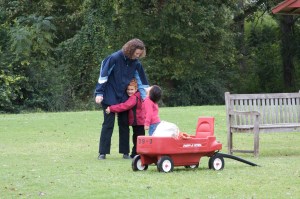
I like it that you bring your children to church every Sunday. Seriously. Don’t worry when they scream or cry or bang their heads on the pews. Kids are noisy, but as baptized children of God they need to hear the Word and grow up in the church.

I like it that you hand your babies to me to hold and snuggle and console and put to sleep when you can’t. It is a huge confidence booster.

I like it that you know how to make homemade yogurt.

I like it that you talk straight to me about your life as a mother. I may not be able to fully understand it, but I learn so much through your experiences (and feel special that you confide in me).

I like it that you ask me questions about my life and celebrate the things that make me different from you.

I like it that you invite me into your home on feast days, so that I can experience the gift of family even when it is not my own.

I like it that you teach your children to call me “Mrs.” or “Miss” or “Aunt” Katie, because every time they speak my name they are reminded that I am worthy of respect.

I like it that you let me be barren and remind me of the good gifts God gives to me every day.
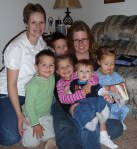
I like it that you selflessly (willingly!) die to self every day and then get up the next morning to do it all over again.

I thank God for you, and I pray for you. A blessed Mother’s Day to all of you!

Love, Katie
Barren Children

A dear sister in Christ wrote this thoughtful response to the post, Mother’s Day. Let’s remember in prayer tomorrow all in the body of Christ, especially those who are estranged from or are without a mother to celebrate:

There are also “barren” children who wish for that mother who is always talked about on Mothers Day. You know, that “mom” who is perfect and has given unconditional love and is always there for them; who took them to church, who put on bandaids, who saw all of their piano recitals or basketball games, and on and on…

I was fortunate and blessed to have a loving mother, even though at times I felt like the unloved child. My mom was not perfect and still is not, and neither am I. As an adult, I have become very attached to her, especially since my dad has passed. However, I know some adult children who had a mother but not a “mom” and still wish for one to this day. 

Many children feel “barren” of that real mom. Just something to think about and remember this Mother’s Day…

Do You Know a Good Guy?

Rebecca and I were talking the other day.

We have this friend. She is the bee’s knees, the cat’s meow.

She is the catch of the century, and we want nothing more than to see her married and settled and loved and taken care of by a superstar husband. We want her dreams of being a housewife and mother fulfilled. We want the comfort of knowing that she has a man there to provide for her and protect her day and night. We want the open-ended question of her marriage status to be answered, closed, sealed, stamped, and delivered so that we can hear the swell of romantic music and feel those Anne-and-Gilbert warm fuzzies whenever we think of her.

Basically, we want her to have what we have, and it is hard not to flip through the little black books in our minds and try to set her up with Mr. Right.

Yet, God has not given our friend the gift of a husband today, and spending all of our time, energy, love, and attention trying to fix her marriage status is no different than others trying to fix our barrenness.

Lord, forgive us! Save our friend from our own wants and help her to rejoice in the good gifts You have given her today. Amen.

The Cross of Barrenness

What is the cross of barrenness? Surely it is one of loss and death and grief, but many in the church don’t realize that the cross of barrenness is also one of warring against the world’s religion of control. The world expects us to manage and control our fertility, so, naturally, that same world also expects us to manage and control our infertility – never mind whether or not we really can.

It is not uncommon for friends, even strangers, to school me in this art of control, this “sure science” of making a baby. A woman standing behind a school lunch counter once told me, “Be sure to keep your cervix lifted for at least thirty minutes after intercourse.” A lady at a party said to me in front of a circle of friends, “Your husband could be shooting blanks. Get his sperm’s motility checked out.” A stranger sitting to my left at a women’s luncheon leaned over and announced during the main course, “My daughter was infertile, but she finally had a baby last spring through In Vitro Fertilization. You should go to her doctor.” A woman at a local farmer’s market stopped me to tell me that taking her suggested brand of vitamin supplements would even out my hormone levels and result in a pregnancy.

I don’t know what to say in return to those who publicly offer advice on sexual techniques or medically misdiagnose my husband’s fertility or tell me to engage in medical procedures that break the First and Fifth Commandments of my Lord. Giving a verbal response to those comments feels like I am somehow validating the very existence of them. If I share with the woman at the market that my hormone levels are already stable, then I am engaging her in conversation about something that is so personal and painful. I am inviting her to continue making suggestions and diagnoses and comments about my barrenness. I am giving her permission to continue trying to find a fix for my problem. I am handing her the salt well and telling her to rub it in my open wound. So, instead of telling her the truth, I simply thank her for her advice, and I keep walking. Then, I go home, and I cry.

I cry, because every time a well-meaning person tells me how to make a baby, I am tempted to believe that I can control my barrenness, that my present childlessness is my own doing, my own fault. I must be doing something wrong. I must be missing a key nutrient in my diet; I must be exercising too much or too little; I must have high levels of prolactin or low levels of progesterone; I must not be producing enough Type E mucus to sustain the lives of the sperm in my uterus; I must not be going to the right doctor. I must, I must, I must. When a well-meaning person makes suggestions to me in my pain and grief, I feel the weight, the burden, the law of my barrenness fully on my own shoulders.

Yet, I cannot control my barrenness. I know this, because God tells me in His Word that children are a heritage from Him – a gift – and that good gift is received, not manufactured or made. God is the Giver, and I am the receiver. And, at the end of the day, my faith must believe what God tells me in His Word, not what the woman tells me at the market.

The Marathon

This is a marathon not a sprint.

We learn the hard way not to push too fast at the start. We pace ourselves. We don’t want our hamstring to cramp at mile seven when the pregnancy test reads negative. We don’t want to stop short with a side stitch at mile fourteen when the birth mother changes her mind. We don’t want to hit the wall at mile twenty when the agency falls behind in our paperwork.

No, we want to finish this race, so we numb ourselves to the pain. We settle into our stride and ignore the mile markers as they pass.

Sure, we might stumble; we might chafe and bleed from all of the friction; we might even have to hitch a ride on the medic cart for a spell. Whatever happens on the course, though, we know to trust our miles ahead to Him who promises to bring us safely across the finish line.

So, chins up, ladies. You are in this race to win it. Keep your shoulders down. Suck your belly button to your spine. Keep hydrated with Word and Sacrament, and put one foot in front of the other.

Do you hear that? That’s all of your brothers and sisters in Christ cheering you on from the sidelines!

Baby Blankets

One of the things I look forward to most at baby showers is the unveiling of a homemade, quilted baby blanket that was lovingly made by a devoted friend or family member. I like to finger the soft material and admire the creative patterns and tiny stitches. In that awe-filled moment, I honestly feel more jealous of the quilter’s talent than the expectant mother’s blanket. Maybe that is because I never expect to be on the receiving end of a baby quilt of my own.

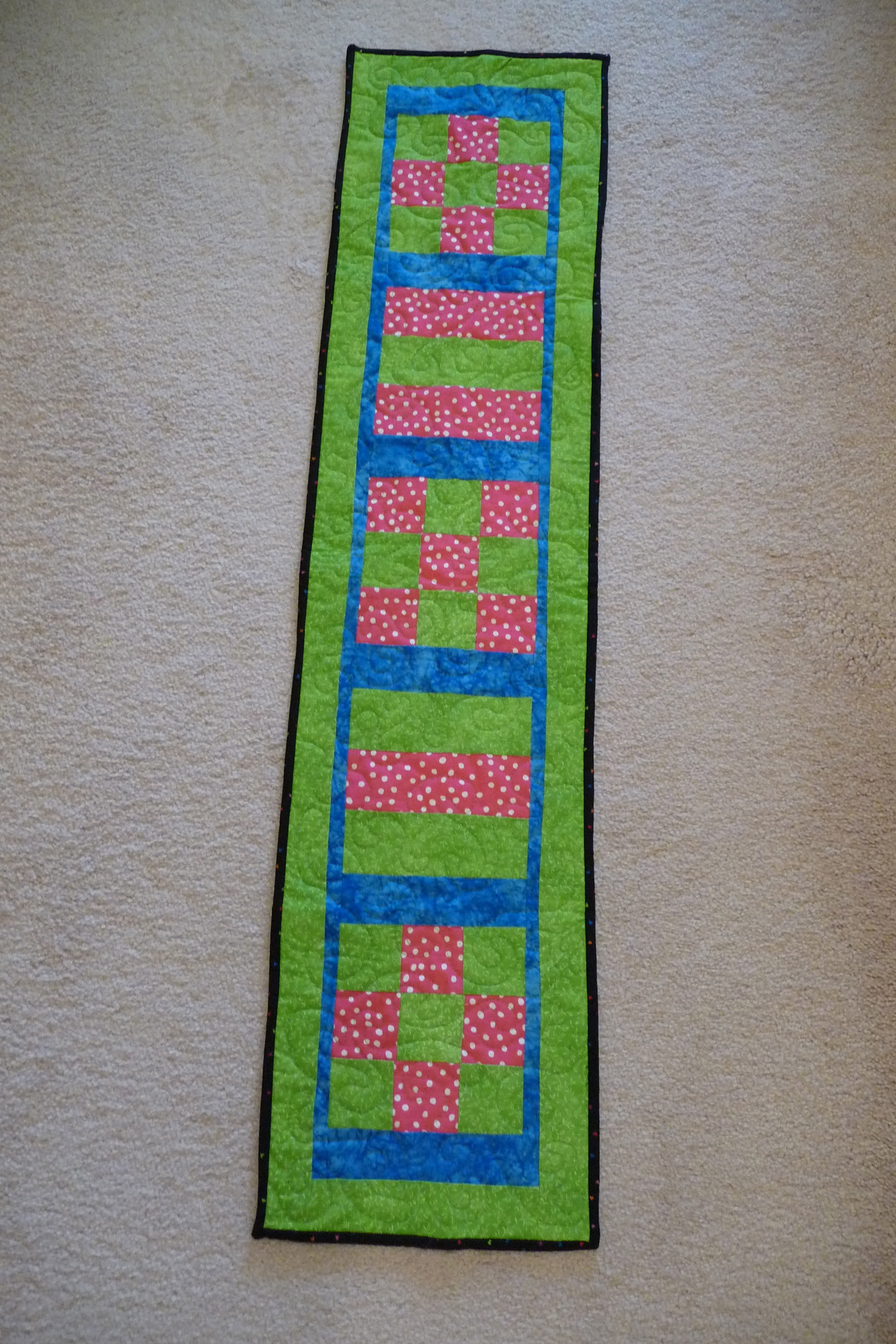
I think that is why I was so undone last week when I opened a package that came in the mail. My hand reached in and pulled out a quilted, green-and-pink (Two of my favorite colors!) table runner. It could have been a baby blanket for all of the excitement I felt.

A corresponding note read, “This runner reminds me of spring and the joy of Easter. I hope it will brighten a corner of your home.”

Do you know of what else it reminds me? It reminds me that I am remembered and “showered” with love by my friends, even without a baby. Thank you!

Mother’s Day

Mother’s Day is almost here.

I have such mixed feelings every second Sunday in May. I enjoy celebrating my mother, grandmother, mother-in-law, godmother, sisters, friends, and all of the other women in my life who make sacrifices to care for me, yet…you know.

There’s that whole I’m-not-a-mother thing.

The awkwardness is unavoidable. I am now too old to remain an inconspicuous, innocent daughter of the church who simply joins in on the celebration of the matriarchs around me. I am a childless, married woman – one of those alien non-mothers – and everyone has to suffer through the uneasy, painful, blushing, frozen, horrible moments of trying to figure out what to say to me on Mother’s Day.

I feel it most for the poor ushers delegated to hand out carnations. I know they want to give me a flower – I can see the chivalrous struggle in their eyes! –  but I have “childless” stamped across my forehead. So, they hand me a service bulletin, instead. “I’m sorry,” one of them inevitably whispers during the exchange, and I am left in the inelegant position of comforting others for my own childlessness.

How did things get to be this way? When did we decide that it was good, right, and salutary in church to give out discriminatory gifts as a coda to Christ’s gifts of Word and Sacrament?

I am going to be blunt. Mother’s Day is a secular holiday that has worked its way into our Sunday services. I am not of the opinion that we should stop celebrating mothers. Quite the opposite, I think we should celebrate mothers every day of the week and with more than just flowers and praise. We should be offering them our time and talents to help them in their God-given vocation of caring for others as well as praying that God would sustain them as they daily die to self in order to serve our youngest church members.

I don’t even think we should stop commemorating Mother’s Day in church. At this point, it would be culturally rude to withdraw from the church the tradition of honoring women whom God has gifted with children, but we need to be mindful of the pain this secular, gift-card-selling holiday inflicts on those from whom God has withheld the gift of children. Sometimes, pastors (often unknowingly) drag this secular holiday’s pain into their sermons, their children’s sermons, their preservice announcement anecdotes, and their prayers. In an effort to be culturally relevant, they slay the barren in the pews and grieve the hearts of mothers who have lost or are estranged from their children.

Perhaps, instead, pastors could use Mother’s Day as an opportunity to use gift language and remind their congregations to celebrate all of the women who serve as mothers in the church: godmothers, aunts, school teachers, deaconesses, babysitters, sewing circles, LWML, secretaries, altar guild, VBS bakers, and every woman who faithfully lives out her vocation in service to others. Perhaps, we could give these women carnations, too – not to dismiss the love we have for the mothers who bore and raised us, but to properly recognize that motherhood is a vocation given by God, not an achievement rewarded by men.

True Comfort

I recently sat with my mother at a kitchen table on vacation, weeping in my grief at having no children. “I may never be a mother,” I confessed.

All my mother said was, “I know.” And I was comforted.

I was comforted, because my mother did not try to change me or my situation; she did not try to minimize my suffering by labeling it or explaining it away; she did not offer empty suggestions for how to fix my barrenness; she made no false promises that God would someday give me a child, for, outside of giving me the Child Jesus to save me from my Sin, God has made no such promise to me in His Word. My mother simply acknowledged my burden and then sat with me to share the weight of it.

This is when a barren woman will be comforted: in the safety of someone’s watch who believes and confesses that we are okay in Jesus, even when we suffer. A barren woman finds comfort in being reminded that there is no need to fix that which Christ has already made whole. I feel most loved when my friends and family let me be barren and remind me that the death in my womb cannot snuff out the true Life given to me at the font.