Uncategorized

The Hysterectomy

by Rebecca Mayes


There is a strange phenomena in Western medicine that if an organ is diseased you should just cut it out. This seems to be our best method of “healing” after thousands of years of practicing medicine. Much of our society is walking around without gall bladders, a kidney, a scrotum, part of their intestines, breasts, and, of course, a uterus.

It was recommended early on in my reproductive health struggles that I have a hysterectomy. This was the best promise for relief, they said. But I refused.

So why keep it around? Why not get rid of it? This organ was supposed to be healthy for me, and getting rid of it could put me at risk for cardiovascular issues, a decrease in bone density, or a messed-up metabolism. But most importantly, if it actually performed the way it was supposed to (and there was always the chance it could) then I would have a child, and that would be worth every minute of pain and discomfort and unpredictability. If I let them cut out this organ, I knew they’d be removing hope along with it. To let go of one meant letting go of the other.

So I kept it, despite the fact that it could not contain or control its own endometrial lining, but allowed parts of it to go astray inside my abdominal cavity, creating webs of tissue that would sear with pain when hormone levels changed.

I kept it, even though its partners-in-crime, the ovaries, would regularly spawn cysts that sometimes grew until they burst, causing me to go into shock and rendering me lifeless on the floor (once in the bathroom at work, where the EMS kindly extracted me).

I kept it, regardless of how disappointed my OB/GYN always looked when I handed in my fertility tracker, which was supposed to have green, yellow, and red baby stickers lined up and color-coded, in an obvious pattern. Mine looked more like a traffic light gone haywire.

I kept it, though its unpredictability and lack of punctuality pushed me to the brink of insanity by producing monthly (I use this term loosely) signs and symptoms that gave hope of a pregnancy and then dashed them to pieces, over and over and over again.

I kept it, and simultaneously detested it, when it neglected to nurture my one biological child and instead allowed him?/her? to die.

I kept it, though the amount of blood it was producing in my 40’s was enough to make me anemic.

Until one day, I finally told this uterus of mine (figuratively) and my OB/GYN (literally), “Cut it out.”

This was not, of course, without first praying about the decision and talking to my husband. I felt like a hypocrite, having denounced so many times over the years the over-prescribing of hysterectomies to women who were done having children. It’s true that this was (still is?) a flaw in our medical system, and few physicians or patients recognized the important role this reproductive organ serves beyond reproducing. But my doctor, a Christian man whose joy in life was to help couples bring children into the world and and also lead healthy, pain-free lives, could truly do nothing more for me. It was time to let go.

Seven years later, I can tell you that this surgery completely changed my life. My wise doctor left the healthiest ovary to help me gently transition through menopause, so there was no sudden hormonal shift. My physical pain was completely gone. The optimistic voice in my head that chanted “but what if??” incessantly each month had ceased to haunt me. I was no longer afraid of sudden, conspicuous leaks in public places, or of having a cyst episode while away from home. I could finally have an entire month where I was fully present with, and taking care of, my precious family. My heart had always loved my family, but my body had prevented me from taking care of them consistently. Now this cross had been lifted, and I “rejoiced with great joy.” I still do.

My story is not your story. My decision is not recommended to all who share my medical issues. Sometimes surgery does not provide the full relief a woman is looking for. I knew that going into it, which is one reason I was hesitant to do it earlier. There are no guarantees. The idea of intentionally removing all hope of conceiving probably sounds insane to those of you still without any children, but I was not in that position. I was at a place where I was ready to let the surgeon take both the hope and the pain together.

After our first adoption, someone gifted us with a beautifully framed poem, which read as follows:

“Not flesh of my flesh,
nor bone of my bone
but very remarkably,
all my own.
And never forget,
for a single minute,
that you weren’t born
under my heart,
but in it.”

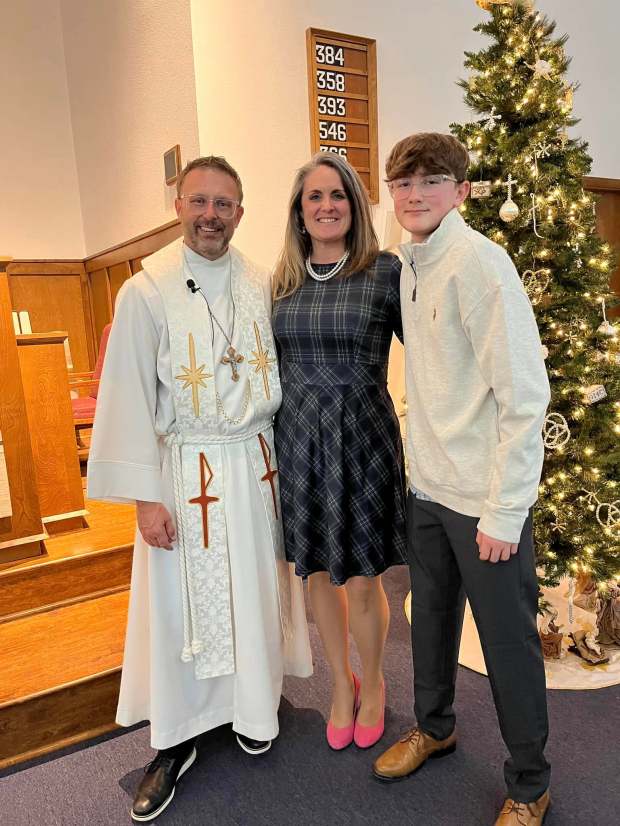
I read the poem to my oldest son when he was around 5 years old. He looked up at me, bewildered and confused, and said, “That’s a big heart.” Maybe it was time to remove my uterus so I could have more room for the heart.
My Only Son with Type 1

By Melissa DeGroot


June 9, 2023, is a date seared into my soul.

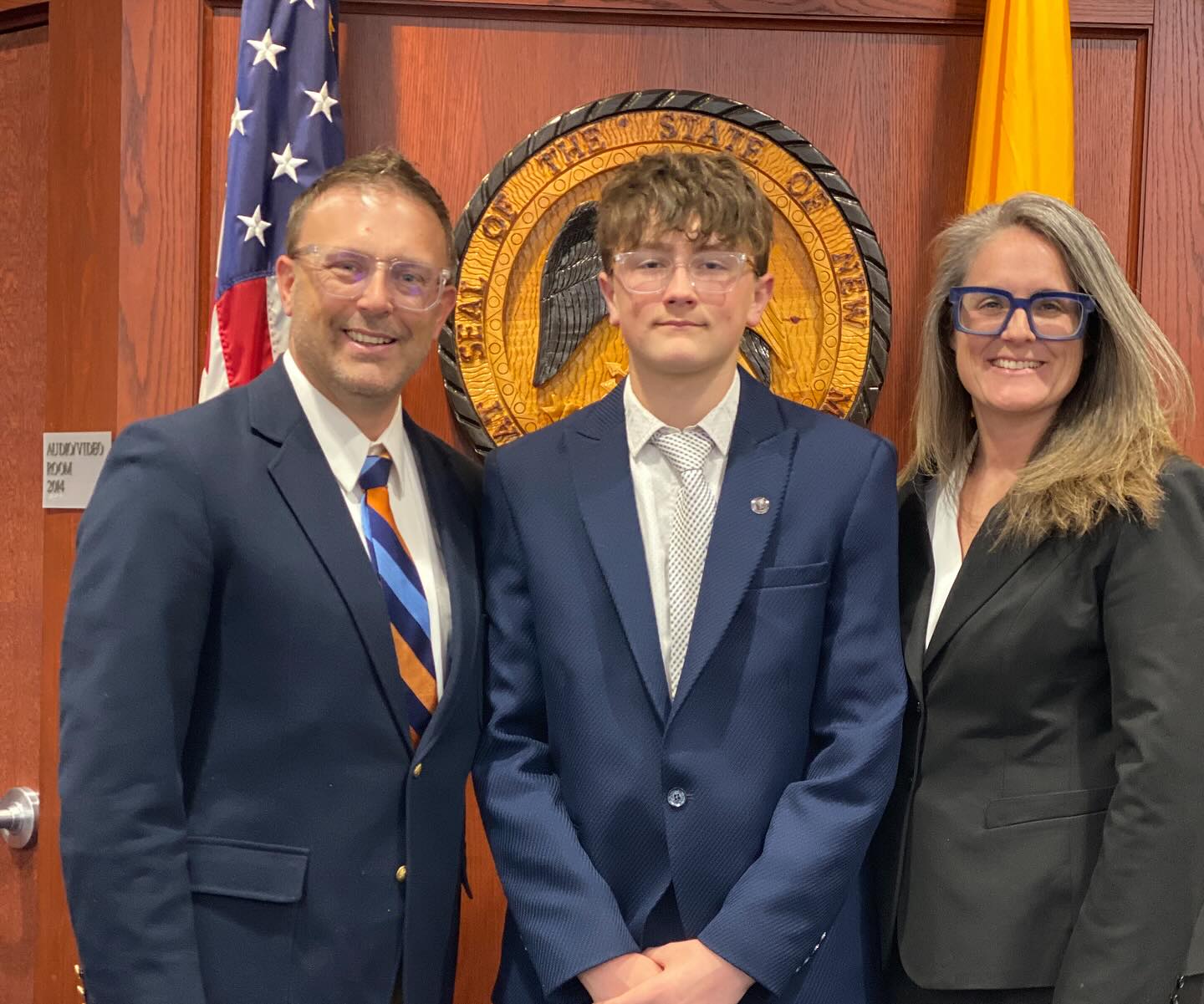
My one and only son, Knox, had lost fifteen pounds in a span of two weeks. He was frail. He was going to the bathroom constantly. Then, he started telling me his eyesight was blurry and that he thought he needed new glasses—even though we had just been to the optometrist a few months earlier. He was sleepy and sluggish. His eyes looked glossy.

Something was clearly wrong. But I had no idea what.

Was he anemic? Was he going through a growth spurt? Was there some vitamin deficiency? Like any concerned mother with access to Google, I was running through every possibility I could think of.

Finally, and thanks be to God, my husband and I had enough sense to take him to urgent care.

The doctor took one look at the situation and immediately sent us to the emergency room. Then, he was taken by ambulance to the Pediatric ICU.

Knox was in full-blown diabetic ketoacidosis.

He was diagnosed with Type 1 diabetes.

The New Normal

I knew almost nothing about Type 1 diabetes. I had heard of it, of course, but I didn’t understand what it actually meant to live with it. No one in my immediate family had it. There was one relative on Adam’s side of the family who had it (and died from its complications more than 40 years ago), but Type 1 had never been something on our radar.

Suddenly, it was something we would think about every. single. day.

To say the diagnosis was traumatic is an understatement.

Knox spent a week in the hospital. I slept and held vigil on the little uncomfortable couch beside his bed while he was poked and prodded, hooked up to IVs, subjected to constant glucose checks, and given insulin as the doctors worked to stabilize his body.

And then we were sent home to begin what everyone calls a “new normal.”

Except it wasn’t.

Those of you who live with Type 1—or have a child who does—know the deal. From the moment of diagnosis, everything changes.

Food changes.

Sleep changes.

Sports. School. Travel changes.

Even the simple act of sending your child to bed changes.

For months, Adam and I woke up at 3:00am to check Knox’s blood sugar. Even now, more than three years later, a glucose monitor alarm in the middle of the night can still send one of us scrambling out of bed. A dangerous low isn’t something you can just ignore.

Current technology has given people with Type 1 diabetes exceptional tools to manage the disease and live incredibly full lives. I am profoundly grateful for them.

But the disease is still there.

And for a mother, that reality has been difficult to accept.

Unexpected Grief

After Knox’s diagnosis, all three of us grieved.

Denial. Anger. Bargaining. Depression. Eventually, some measure of acceptance.

Watching my son go through those emotions, too, broke my heart. I couldn’t take the injections for him. I couldn’t make his pancreas begin producing insulin again. I couldn’t guarantee that he would never experience a dangerous low.

I couldn’t fix it.

That helplessness nudged another wound I had carried for years.

Knox is my one and only child—not because we planned it that way. I spent years carrying the sadness and inadequacy that can accompany secondary infertility.

My body didn’t give me another child. And now I couldn’t fix the body of the only child I had.

We parents spend so much time trying to protect our children that we can almost convince ourselves that it is actually within our absolute power to do so. Then something happens that reminds us how little control we really have.

I could count carbohydrates, calculate insulin, advocate at school, educate coaches, pack emergency supplies, stay awake at night, pray, worry, research, prepare and watch.

But I could not heal my son.

Why Him?

Knox and I have talked about this. Why did God allow this? Why Type 1? Why him?

I don’t know.

And while it hits my pride at times, I have become more comfortable saying those three words.

I don’t know.

I don’t want to give my son some tidy, rose-colored answer God hasn’t given us. I don’t want to tell him that God gave him diabetes because He knew Knox was strong enough to handle it.

Because there have been days when Knox wasn’t strong enough. Neither was I.

And perhaps that is precisely where the faith we confess becomes all the more comforting.

God never promised we would be strong enough for everything that happens to us.

He has promised us Christ, who is the strongest.

In this fallen creation, bodies fail. Pancreases stop working. Women experience infertility. Children get sick. Parents discover there are things they simply cannot fix.

The one true faith doesn’t say that suffering itself is good.

Death is still an enemy. Disease is still part of a creation groaning under the consequences of sin.

And though suffering carries meaning of epic, spiritual proportions, it does not get the final word.

Jesus, who took it on the cross, died, and rose for us, does.

Not Mine to Save

This is the lesson I keep learning as a mother.

Knox was never ultimately mine to save.

God revealed that truth to me when I was young, even if I wasn’t fully prepared to accept it in every stage or context of my life.

On January 15, 2011, when Knox was just days old, God gave me something to cling to that would become infinitely more precious twelve years later.

Knox was baptized.

Water and God’s Word were poured over my tiny son, and the Lord placed His name upon him: Father, Son, and Holy Spirit.

Long before I knew the words continuous glucose monitor, insulin-to-carb ratio, ketones, or diabetic ketoacidosis, God knew Knox.

Before I ever heard an alarm warning me that my son’s blood sugar was falling, God had already made a promise to him.

Before I discovered how helpless I was to keep my child safe, Christ had already done what I could never do.

He had died for him.

He had risen for him.

And in Baptism, He had claimed him.

My job was never to be Knox’s savior.

He already has One.

Now

Today, Knox manages much of his Type 1 himself. His teachers understand. His coaches understand. His teammates know. Whether he’s sitting in class or playing hockey, there are people around him who know what is happening and how to help.

God has provided people. He has provided medicine and technology.

He has provided other parents of children with Type 1 who understand the strange world we entered that June day.

And He has slowly given our family something resembling normalcy again.

Not the old normal. A different one.

I still wish I could take Type 1 diabetes away. I still wish I could have given him brothers and sisters.

But God is teaching me that motherhood was never about my ability to control the outcome. It was always about stewardship.

This child was entrusted to Adam and me for a time. We love him, feed him, teach him, protect him, advocate for him, laugh with him, worry about him, watch him play hockey, wake up when the glucose monitor screams, and do every ordinary thing parents do.

But ultimately, we entrust him to the One who loves him more than we ever could.

June 9, 2023, taught me how little control I have over my son’s life.

January 15, 2011, reminds me who does.

My one and only son belongs to Christ.

And when I cannot fix what is broken, when I cannot control what happens next, and when I cannot protect him from every suffering this fallen world may bring, our Lord returns me to that promise.

Knox is baptized.

Christ has claimed him.

I often parody-sing Stevie Wonder’s line, “Signed, Sealed, Delivered… He’s YOURS!” as a humorous, yet true reminder.

And that is a comfort no diagnosis can take away.

Fearfully and Wonderfully…Hormonal

By Melissa DeGroot


When I turned 41, my body entered the Twilight Zone.

Up until then, things had been clicking along pretty well. I was eating low-carb, going to the gym, feeling pretty good, and generally thought I had figured out what worked.

And then, seemingly overnight, my body said . . .Nope.

My thyroid tanked. My metabolism, pshh, what metabolism? seemed to pack its bags and leave. Things that had worked for years suddenly stopped. I gained 50 pounds despite continuing to exercise and trying to adjust my diet. I felt anxious, depressed, angry. . . and let’s not even get into libido. As far as east is from the west did I even want to think about that. I remember feeling so disconnected from my body, yet thinking, What in the world is happening to me?

Welcome to perimenopause.

Thankfully, I eventually found a doctor who helped me sort through some of what was going on. With medical care, supplements, hormone replacement therapy, and a few other things, I slowly began feeling more like myself again. The weight eventually came off—slowly, but surely—and over the last few years, I’ve managed to maintain some semblance of normalcy.

And I use the word normalcy loosely.

Because, apparently, perimenopause also means if you “do the supplemental things,” you may discover hair growing in places where hair has absolutely no business growing. Sorry. Just the truth! Then PMS sometimes decides to become PMDD—and other months, nothing at all. Thankfully, I haven’t struggled with hot flashes yet. Sleep, however, occasionally goes off the rails, though certain supplements have helped tremendously with that.

And by the way, if you are low in testosterone and do take a supplemental version of it, both you and your husband will thank you. Wink. You’re welcome.

Story time: One of the more surprising episodes happened last year shortly after I began a new vocation as a deaconess. I was settling into this new job and a completely new season of life post-homeschooling when suddenly my period was two weeks late.

I thought:

Oh. My. Gosh.

What if I’m pregnant?

After years of secondary infertility, there I was in my mid-forties, beginning a new chapter of life and wondering whether God had decided to throw the ultimate plot twist into the story.

Breaking news: I was not pregnant.

Just perimenopausal.

And honestly, that story pretty well sums up this season of life. It is a wild ride of hormonal shifts, strange symptoms, unpredictable cycles, and occasionally wondering, What in the new, fresh H-E-Double hockey sticks is going to happen next?

Thankfully, my husband has been wonderfully supportive and loving through all of it. (Again. Thank you, testosterone.) We understand a little better now what may be happening when I suddenly don’t quite feel like myself.

Sometimes.

Because beneath all the unpredictabilities that is this body of mine, something much deeper is happening.

My body is moving toward menopause. And menopause means that the possibility of conceiving another child will finally and permanently be off the table.

For a woman who has lived through secondary infertility, that realization could have been devastating at another point in my life.

But strangely, now, I think I’m okay.

Somewhere along the way, I learned to let go.

Not because the longing and hurt didn’t matter, but because life has continued unfolding around it. God continued providing. He gave me people to love, work to do, neighbors to serve, a husband and son to cherish, and fulfillment in vocations I never could have imagined. And healthcare to help me feel a little bit better!

There has been purpose, meaning, and even flourishing in places I wasn’t looking. Thanks be to God.

But perimenopause is another reminder that my body is changing. I’m getting older.

That can stir up other fears and questions. What will aging look like? What will happen to my health? What will life look like twenty or thirty years from now? Who will be there? What losses will come?

Some of those questions require practical and faithful wisdom since, ultimately, planning and healthcare can’t answer the deepest problem.

Our bodies are headed toward dying.

Perhaps dramatic for a blog post that began with chin hairs. But there it is.

Our bodies bear the effects of a fallen world.

And yet these bodies are also fearfully and wonderfully made. So much so, they are redeemed.

Christ did not come merely to rescue some spiritual part of us from our troublesome meat suits. He took on a body Himself. He suffered in that body. He died in that body. And He rose bodily from the grave.

Which means my hope isn’t that I can keep this body looking 35 forever.

Thank God, since that ship’s sailed.

My hope is the resurrection of the body and the life everlasting.

So for now, I can laugh (if my estrogen or testosterone haven’t dipped) at some of the unpredictabilities of perimenopause. I can seek good medical care. I can exercise, eat reasonably well, take the things that help me sleep, and occasionally pluck the mysterious hairs that seem determined to spring forth.

But I can also receive this strange season for what it is: another reminder that I am a creature whose life and body belong to God.

Fearfully and wonderfully made.

Currently somewhat hormonal.

And waiting, with all creation, for the day when Christ returns, raises, and restores our bodies.

15 Years Later

by Rebecca Mayes


How do I even begin to describe all the blessings, all the pain, all the mercy I’ve experienced these past 15 years? But I will try this month, thanks to Katie’s invitation.

Maybe you’ll want to know about the ongoing challenges of parenting adopted children into adulthood, or what the finality of a hysterectomy meant to this barren woman, or how my faith has deepened and matured as a result of our Lord’s testing. I will share these stories – the ugly and the beautiful – in the weeks to come.

But first, allow me to share where my family is now and remind you where we came from.

When we first started blogging, our family was in St. Louis, but for the past 10 years we’ve been in Indiana. My husband has gone from a nine-to-five editor in a cubical to a well-known professor, scholar, and writer. I had to wrap my mind around this fact most recently when, during our visit to the Grand Canyon this past summer, we were stopped by a stranger who recognized him.

I’m so proud of the work he is doing and the way he is serving his students and the Church. I feel so blessed to be his helpmeet and cheerleader.

Our oldest (just eight-years-old when I published my first post) has been on his own for several years now, living and working nearby. It is a strange transition, this parenting of an adult. Once upon a time we provided for his every need. Now we have to beg him to come over for dinner just so we can see him and hear about his life.

The transition was not only strange but tumultuous, and it left some scars. Right now I find great joy in receiving his phone calls, hearing how his skills are developing at his job, and seeing his texts requesting another favorite recipe. We were a bit terrified about this little bird leaving the nest…but it looks like he can fly after all!

Speaking of strange transitions…our newly adopted infant son from 15 years ago is now a sophomore in high school and crossing that bridge from boyhood to manhood. This awkward stage is most evident when I call his phone and hear this much deeper voice on the other end enthusiastically answer, “Buddy the Elf, what’s your favorite color?”

Out of the blue one day a couple years ago he asked if his birthmother lived nearby. He revealed that when he sees a woman in a store with big brown eyes like his, he wonders if that’s her. That is the only question he has ever asked about her, but there must be more questions stored up in his heart. I hope they surface when he’s ready.

What has surfaced is a love for piano (which I delight in every time I hear him practicing Rachmaninoff or Debussy) and a quick wit which he wields in many a conversational spar around the dinner table. None of us seems to know where life will lead this one–except that eventually he’ll be the one doing the leading.

In my current vocations I find the most joy in continuing to care for the children that surround us in our various communities, whether that’s being in front of a Sunday School class, driving a carpool of kids home from school, or babysitting for family members and friends. What a blessing from our Lord that this barren woman is now part of a church and school with SO. MANY. CHILDREN. How ironic that I am, at the beginning of my “senior” years, surrounded by more children to care for than ever.

I can only imagine what changes the next 15 years might bring.

HRTB Reflections: An Ides of Marching Forward

By Melissa DeGroot


I can hardly believe fifteen years have passed since the beginning of He Remembers the Barren. When Katie contacted Kristi, Rebecca and me a couple months ago to commemorate this blog, it gave me pause to reflect on so many things. Looking back to where this all started, I remember how new, exciting, and nerve-wracking it all felt—the blogging world itself, wondering how people would receive what we were writing, and hoping that ultimately in the midst of it all there would be real talk, real comfort and faithful theological grounding for people who were suffering. 

I can also look back at myself and cringe a little. Okay, maybe a lot.

I’m sure most writers (a title I hold very loosely) feel that way when they look at their early work. I was in my early thirties then. I was definitely more immature than I realized. I had professional, diaconal and mental health training and, if I’m being fair to my younger self, some good theology. But I was also a little zealous. Overconfident, even. Ego and pride were mixed in there, too. 

Seemingly an Old Eve disease that I am still getting medicine for each Lord’s Day. 

The chronology is a little muddled in my head (thank you, perimenopause!) – though I recall talking to Katie about this topic well before the blog took shape and before my son was born.  After a miscarriage early in my marriage, I recall having the fear that I was going to be barren, too. Like it was somehow contagious? There was this superstitious, self-fulfilling prophecy of sorts in my head that if I kept talking about barrenness, it was going to be my “fate.” 

So much for good theology.

Then, right around the time this blog started, my husband and I had been blessed with a son. Parts of me thought this conversation wasn’t really for me at that point, even though I knew it was still good to spiritually comfort those who were suffering with it.   

However, not too long after that, my husband, Adam, and I began walking through secondary infertility. It was a decades-long trek of fear, prayer and wondering whether we would have more children. I spent so many years worrying about it. I put so much pressure on myself.

HRTB hit me from a different angle, and it was one that I needed.

You see, I had high hopes of being a large, Lutheran family. I came from a larger family myself. Bring on the multi-passenger van transporting a gaggle of homeschooled, slightly-nerdy-but-athletic DeGroots! 

It was the dream. 

It never became a reality. 

And here is what made the conversations surrounding He Remembers the Barren so important to me.

During the fretting and faithful reckoning throughout my thirties, I felt this was a conversation our church body needed to have more openly anyway. Within the Lutheran Church—Missouri Synod, I was seeing a renewed appreciation for our confessional and liturgical heritage. There was much good in that. Along with it came a strong and thoroughly biblical affirmation of marriage, children, and family.

Thanks be to God for that.

But I felt pressure, too. It was compelling at times – yet not always in the best way: like there existed a stress to have “all the kids” to not only grow the church but have more joy in your life. I had pious people say some well-meaning yet off-putting things to me (“Just stop working and go have kids,” “Relax, and it will happen”) that simply didn’t fully align with what God says and our good understanding of the doctrine of vocation. I don’t begrudge them or hold any resentments. I certainly held some of those beliefs, too. It just didn’t happen for us that way.

Singleness. Barrenness. Miscarraige. Secondary Infertilty. Adoption. Families that don’t look the way we imagined they would. Our doctrine of vocation is beautifully spacious precisely because the Lord is the One who gives and takes away our callings.  

Those were some of the conversations Katie and I began having all those years ago. I was (and still am) grateful to be a cheerleader and small contributor in the arena—to encourage the conversation, to have seen this blog created, and the book published.

And then there were Kristi and Rebecca, whose experiences helped fill in still more of the picture. Different women. Different stories. Different kinds of suffering connected to barrenness and their own way of articulating it. Yet the same need for substance.

Fifteen years later, I think that is what I appreciate most.

Barrenness has a way of confronting us with just how little control any of us actually have. We can enjoy the intimacy of marriage. Make appointments. Try treatments. Change diets. Track, plan, pray and de-stress! Those things can be good and worthwhile. But eventually, we run into the limits of our own ability to make life happen according to our plans.

Which can be terrifying, but also expose some of the false gods we didn’t realize we were carrying.

For me, one of them was the idea that my family needed to look or be a certain way for me to feel that I had somehow measured up. “Image Manager” was a false calling that I created to feel valuable and worthy. I put pressure on myself that God simply had not put on me. Perhaps I even put that pressure on others, too.

And suffering has a way of bringing those things into the light.

I’m 47 years old now. My perspective has definitely changed over the past fifteen years. Marriage, motherhood, ministry, friendships, disappointments, and simply getting older have shaped and refined how I think, speak and serve. As a result, I have let go of so many things. But acceptance of what is doesn’t require me to pretend that all my thoughts, hopes and feelings weren’t somehow real, unholy or unwarranted. 

The longing for a child is real. The disappointment is real.

Yet Christ is just as real yesterday, today and forever.

That is where I hope this conversation continues to lead.

Christ does not meet us merely as an idea or a theological explanation for why suffering exists. He comes to us in the flesh. He comes every time His Word is preached and His Sacraments are administered. He surrounds us with sisters and brothers in Christ, with pastors, deaconesses, pious friends, and the whole family of God. Because we still need forgiveness and the Church, no matter what stage of life we’re in.

And sometimes, through those people, He even gives us the gift of feeling some (or a lot) of the comfort He has already promised to us.

What a gift it is when a sister in Christ sits beside me and says, “I know this hurts.” What a gift when a pastor speaks Christ’s promises into suffering. What a gift when another woman’s story reminds me that I’m not alone.

Though, whether we feel it or not, assurance is based on the truth of God’s Word. We are redeemed, precious, and loved. Christ’s death and resurrection has power, even now, to bring us faith to trust that no matter the trial, He is still with us.

So fifteen years later, I’m grateful to contribute to this conversation again. I’m grateful for Katie, Kristi, and Rebecca, and the many women and men who have been willing to speak honestly about barrenness, infertility, miscarriage, adoption and a host of other life issues. I’m grateful that He Remembers the Barren became a place where these conversations could happen.

And I’m curious about where it goes from here.

Maybe fifteen years have given us a little more perspective. Maybe we can speak about these things with greater spiritual maturity—without minimizing suffering, but also without allowing suffering to have the final word.

Because while it’s real, Christ is more real still.

And He has not forgotten us.

Looking back and moving forward, God is always remembering us, even when our memories fail and fade.

God continue to bless and strengthen us as we seek to share our unique experiences, strength, and hope in Him now in our midlife years. Perhaps this blog commemoration is a connection point to a new generation who are walking through these hardships, a generation who may be seeking a sisterly, motherly (gosh, some might even say, grandmotherly), ear to listen, receive love and care with greater understanding and grace. I hope so.

Because while striving to serve each other well, to care for and raise faithful children, God reminds us Christ crucified and risen for us is the only Way, Truth and Life certain in this world.

Ides years later, God continue to bless these conversations and this blog as He sees fit.

Submissions: Received.

Dear contest participants:

Your submissions have been received and distributed to the judges. Thank you for sharing your words of wisdom with us. We will treat them with the greatest care and respect.

God willing, look for the winning post here on Easter Sunday.

God’s blessings to all of you this Lenten-tide,

Your humble judges