Infertility

Is procreation an intrinsic quality of marriage?

Portrait of a young boy crossing guard standing on the road holding a stop signQuestion Submitted: At a recent theological symposium, I posited that we in the Church need “to return to teaching properly about the positive locus of marriage – teaching about its procreative purpose and nature.” Another attendee replied in part that “procreation is NOT an intrinsic quality of marriage, as we do not say the infertile are not married.” If I had had a chance for rebuttal, I would have pointed out the error of his logic. Bipedalism is an intrinsic quality of humans, despite the sad reality of paraplegia. It would be very helpful to hear how you would counter the idea that infertility invalidates the argument that procreation is an intrinsic quality of marriage. I have my own answers to this false argument, but I would like to make sure I have an answer that is sensitive to the minds of those who suffer from infertility.

My pastors taught me that God institutes and defines marriage in Genesis Chapters 1 and 2. We learn in verses 1:27-28 that God created man in His own image; male and female He created them, and He blessed them. He told them to be fruitful and multiply, and God saw that “it was very good” (Gen 1:31).

The gift of procreation is not only a blessing God speaks over marriage, but God sees the blessing of children as good.

Barrenness is not good. Barrenness is a brokenness of God’s good creation. Endometriosis, PCOS, fibroids, hashimoto’s thyroiditis, low sperm motility, ovarian and cervical cancers, miscarriages, childlessness, and the groaning of all creation came about as a result of man’s fall into Sin; and we don’t use the effects of Sin to redefine that which God institutes and calls “good” in His Word, nor do we use the effects of Sin to defend the notion that procreation is somehow not a part of God’s intrinsic design of marriage. That is my biggest qualm with the other attendee’s rhetoric. His thesis does not fully confess barrenness as a post-Fall reality. Barrenness proves nothing about God’s procreative intent for marriage other than that God, post-Fall, allows the cross of barrenness to burden the shoulders of some married couples.

In regards to being sensitive to the barren, we should be careful not to turn God’s good, fruitful blessing for marriage into man’s good work. Scripture tells us that having children is not a law of God for us to keep but a heritage from Him for us to receive (Psalm 127:3). None of us would have children apart from God’s merciful blessing and giving. Only God in His wisdom knows why He does not open the wombs of the barren, and we should not burden the consciences of those who are unable to have children by suggesting they should be able to outwit the very Author of Life.

And as for using the existence of barrenness as an excuse to avoid the gift of children in marriage, I can think of no place in Scripture where God calls that good.


Barren . . .with Children?

Whoozeewatsit? Barren with children?

Well…yes. Stay with me.

When I sadly and too often see parents prioritize sports over Sunday School, sleepovers instead of sermons, poke fun of or complain about their pastors in front of their kids, or send their children to confirmation yet never darken the church’s door themselves, I have to wonder where the real LIFE of that family is. How can they keep their spiritual hearts beating when they aren’t receiving–or are blatantly denying–any quality spiritual food? One might say they are fast approaching a barren spiritual life, since where there is no Jesus, there is no spirituality or life. And that can’t be good for anyone, nevermind their children.

But readers, please don’t take this as a motivational speech, scared straight talk or condemnation (from me). We are all condemed who are born into sin. Yet Jesus is on the heels (the eyes, ears and knees, etc.) of the baptized; convicting and beckoning us all to Him, so that we might repent and confess Christ crucified for us, and be forgiven.

And when that conviction and peace comes, how can anyone stop it from overflowing from their own hearts and minds and onto our little ones? It simply can’t not (yup, I love double negatives). It can’t not compel a mother and father to bring their child into the sanctuary. It can’t not move parents to baptize their infants. It can’t not motivate them to discipline their young to listen to the Sermon, participate in the liturgy, and receive Christ in His body and blood. It can’t not… for where His Word is proclaimed and Sacraments administered, there too is Jesus, with all the promises and benefits therein to sustain his Church into eternity.

That is our true life, devoid of barrenness, and what faithful albeit sinful parents believe, teach and confess for their God-given little miracles. Our children need nothing more…and will certainly suffer with anything less.

I pray this post also encourages the childless who also faithfully gather around the altar, pulpit and font to know God’s wisdom in the face of their afflictions. But barrenness in this context points to the ultimate ail in all of existence… separation from Jesus, the one true, Fruitful Mulitiplier of His Church. The fruitfullness comes both in numbers and in faith, sometimes one more than the other, but it always comes, because He promises it will, in order that we might know Him and where He is. In Him we’re whole– both here and in heaven–because of Christ crucified and risen for us, not because of how many proverbial arrows we’ve been endowed with or not.

Let us confess joyfully this full life that we share, and pray that all are compelled by the Holy Spirit to bring their families right to where Jesus, our life and salvation, is.

Elevensies

Playing Cards and Poker Chips“How long have you been married?”

In years past, it didn’t matter what number I answered. The interrogator always one-upped me.

“Three years? Oh, don’t worry! You’ve got plenty of time. My husband and I didn’t even start trying until year five.”

“Five years? No problem! My mother didn’t have me until she and my dad had been married for seven years.”

“Seven years? No sweat! Mrs. Smith finally got pregnant on her eighth anniversary, so you better hurry up and finish that book before you get pregnant.”

“Eight years? You haven’t even been married a decade. God is just making you wait, so you will appreciate children more.”

“Ten years? A couple in my church started the adoption process at ten years, and then they got pregnant.” 

But there is something different about the number eleven. This year, my interrogators are tripping over my answer. Their open mouths, ready to counteract the five or seven or nine they are anticipating, clam up in response.

Apparently, the eleven card is trump.

(Cue flood of emails from people whose family and friends got pregnant in year eleven.)

In all seriousness, I know that the comments listed above were meant to bring me comfort, but they actually made me feel sad, even angry. Not only had I failed up to that point to produce a child in my marriage, but now I had to bear other people’s hopes and expectations on top of my own. What if I didn’t get pregnant like Mrs. Smith? Double failure. Double disappointment. Double pain.

It is tricky business reassuring a barren woman of the inevitability of pregnancy during year X of marriage, because she knows better. She is no fool. God has not promised her in His Word that she will be given the gift of a child, and every year of her life thus far attests to that reality. She knows Who it is that gives the gift of children, and she can call to mind ten barren women who have not gotten pregnant in year X for every suggested one who has. Add to that fact the burning desire she has for a child of her own, and the calling to mind of others who have already been given that gift from God can lead her to covetousness.

What is a good, helpful response to the number she gives to the marriage question? How about the truth?

“God has richly blessed you with X years of marriage! I pray He will continue to bless you and your husband in the years ahead.”

See? No false promises + some celebration = a lovely, little bit of correspondence.

How Hannah Prayed

Holy BibleThe opening chapter of 1 Samuel begins with the birth of Samuel. His mother Hannah had been married to Elkanah, a Levite priest, for a number of years. It was hoped that Elkanah’s son would someday perform the sacrificial rites that were associated with the priests. Hannah went to the temple and prayed that the Lord might open her womb and give to her a child. She prayed so emphatically that Eli the priest thought her to be drunk. Hannah answered confidently that she was not drunk, but rather troubled in spirit. She had been pouring out her soul before the Lord.

Scripture does not tell us the specific words of Hannah’s prayer, but we do know that she was praying fervently. 1 Samuel 1:15 quotes Hannah as saying, “I am a woman troubled in spirit… I have been pouring out my soul before the Lord.” She had endured mockery by another woman for her barrenness. She was in danger of being unable to continue her husband’s priestly line. She knew that the Lord was capable of giving her a son. She didn’t know if that would happen, but she took her prayer to the Lord anyway. She did not tell herself, “I’m gonna get myself a baby.” She didn’t have to consider “which doctor can ‘make’ a baby for me.” Rather, she prayed the prayer of a believer in Christ, “Thy will be done, Lord.” She trusted that the Lord would grant to her those things that were best for her, and in His timing.

May each of us pray similarly, “Thy will be done, Lord.”

Knowing Is Half the Battle

“How are you?” my friend asked.

“I am really struggling, right now. I don’t know why.”

“You always do this time of year.”

“I do?”

“Yes.”

Huh. Thinking back. She’s right.

“I don’t know if it’s because you have such busy springs and then kind of crash or if it’s because of Mother’s Day and Father’s Day, but grief hits you this time of year.”

Something crazy in me calmed down. There is an explanation for this grief. There is a reason for this cycle. This is just how it is. This is how it was before. This, too, shall pass.

Thank you, friend.

MC900385436

Brave Warriors

There is empathy from all different walks of life.

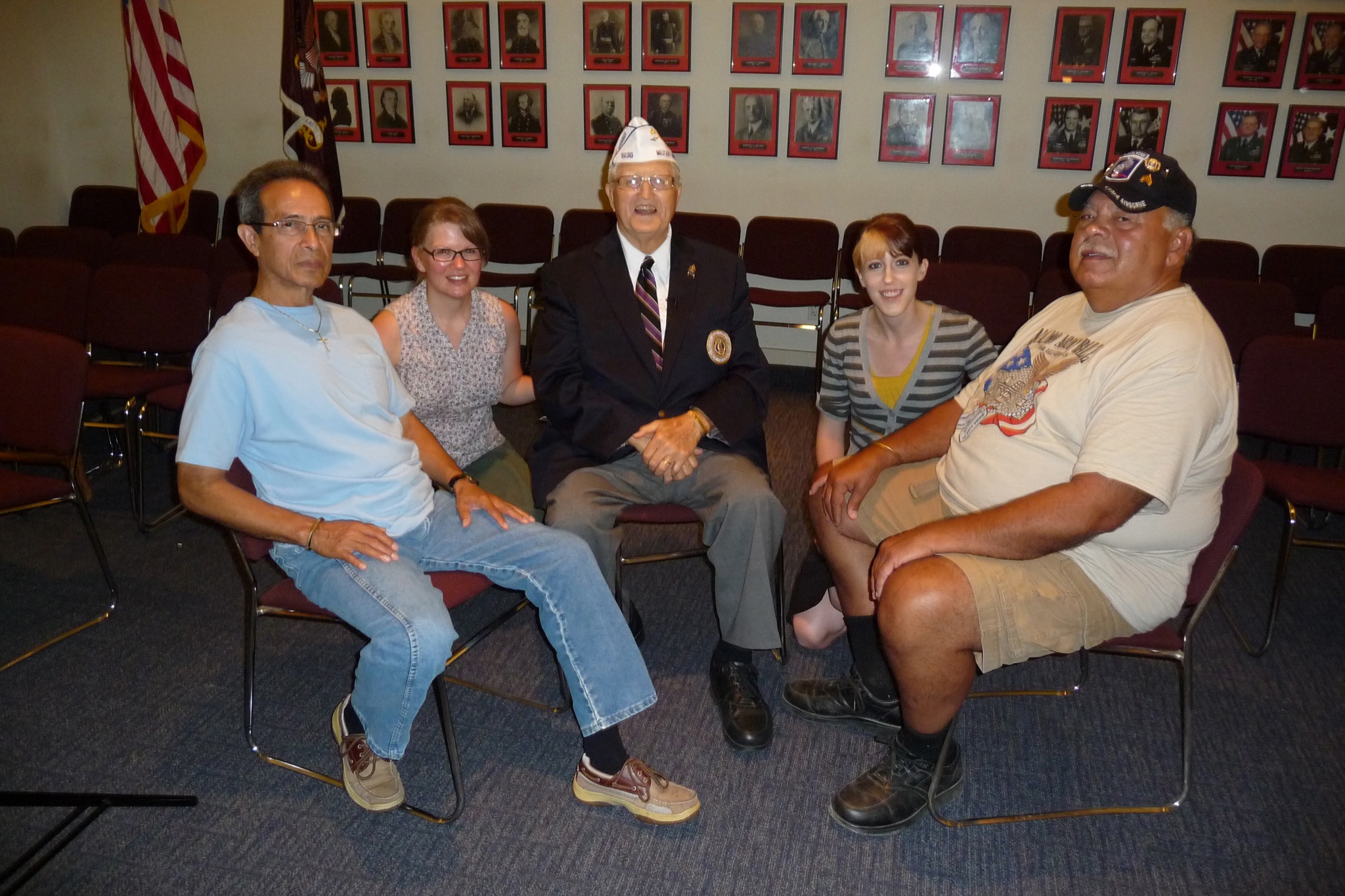
Last summer, my husband and I travelled with a communications team for The Lutheran Witness down to San Antonio, Texas, to learn more about the U.S. Army’s chaplaincy program. We visited Fort Sam Houston, Brooke Army Medical Center, Camp Bullis, and other significant military establishments to talk with chaplains, medics, apache pilots, wounded warriors, purple heart awardees, and hero after hero after hero.

P1070283 copy

I learned that there are brave men and women who risk their lives every day to protect me and the freedoms I enjoy in this country; I learned that there are faithful chaplains and their assistants who rush towards the boom of every battle to give the gifts of Word and Sacrament to the wounded and dying; I learned that there are many things I can do to support the families of military personnel; I learned that thousands of our nation’s warriors suffer from post traumatic stress disorder (PTSD) and struggle transitioning back into civilian life; and I learned that those who struggle with post traumatic stress speak my language.

For example, in High Ground (2012), a recent documentary on recovering warriors training and attempting a therapeutic climb of a peak in the Himalayas, a master at arms canine handler in the U.S. Navy admits, “Injuries are a very personal experience. I don’t like to talk about what happened. One of my main obstacles when I came back and was in a wheelchair for 3 1/2 years is [that] everybody looked at me as broken, and, um, they missed who I was. And so that became my identity…it was always about the injury, not about me.”

Yes. I resound with that. My identity to most of the world is not “Katie, that baptized Christian who loves people, music, words, herbs, mountains, and running pants” but “Katie, that barren woman.”

Another soldier in the documentary admits before the camera, “I have more in common, I feel sometimes, with an old man on his deathbed than I do with people my own age, emotionally, you know…I just feel like…I’ve lived out my life…like the tank is empty.”

Yes. I feel the life-sucking tentacles of grief wrapped around my bloodline, and I tend to gravitate towards friendships with people who are several generations older than me. We have a lot in common.

The same soldier elaborates, “You just see people enjoying life and being alive and you’re like, why don’t I feel that? I’ve had so many near-death experiences, shouldn’t I be happy to be alive?…It’s really hard to, like, reestablish yourself, I guess, in society because it’s just so different…Everybody looks at us weird. ‘Thanks for your service…Stay away. Keep your distance from me.’”

Yes. My suffering and grief and pain often ostracize me from the party of life.

Another soldier suffering from a traumatic brain injury (TBI) discloses, “People still don’t get it that not all pain is physical.”

Yes. Coping with life-altering circumstances and chronic health problems brings with it an invisible but all-consuming pain that really, really hurts.

So, because there are only so many of you courageous warriors in uniform and veterans’ caps that I meet gassing up at my local Casey’s or walking down the fruit aisle at my Wal-Mart on Dirksen, please allow me to thank you on this little blog. Thank you, not just for your brave service to our country on the battlefield but also for your brave face-off with the enemy of post traumatic stress off of the battlefield. I cannot fully understand the traumas you have experienced in trying to protect me, but I relate to the internal battle you so eloquently describe. I find comfort in your empathy.

God bless you.

P1070192 copy

Helpful

At our recent pastors’ roundtable in St. Louis, an attending pastor drew our attention to the following quote from Martin Luther’s lectures on Genesis Chapters 21-25:

And it seems that God wanted to teach and attest that the begetting of children is wonderfully pleasing to Him, in order that we might realize that He upholds and defends His Word when He says: “Be fruitful.” He is not hostile to children, as we are. Many of us do not seek to have offspring. But God emphasizes His Word to such an extent that He sometimes gives offspring even to those who do not desire it, yes, even hate it. Occasionally, of course, He does not give it to some who earnestly desire it. It is His purpose to test them. And, what is more, He seems to emphasize procreation to such an extent that children are born even to adulterers and fornicators contrary to their wish. How great, therefore, the wickedness of human nature is! How many girls there are who prevent conception and kill and expel tender fetuses, although procreation is the work of God! (Luther, 304)*

I don’t know why God tests us in our barrenness, but the mystery of God’s wisdom comforts me as much as it confounds me. We can rest in the knowledge that God loves the begetting of children enough to give the gift of them abundantly, even when He does not give them to us.

Belly of pregnant woman with pink bow

* Pelikan, Jaroslav, and Walter A. Hansen, eds. Luther’s WorksVol. 4. St. Louis: Concordia Publishing House, 1964.

A Good Reminder

I watched as my husband read his Father’s Day card. Silent tears of grief slid down his cheeks.

“I am sorry I have not given you any children,” I whispered. My own tears dripped down my chin.

My husband cocked his head to the side, slightly surprised. He smiled sweetly, knowingly at me.

“It is the Lord who gives children,” he said.

Oh, yes. That’s right.

Even I need a good reminder now and then.

Father Watching His Infant Sleep