Suffering

Unscripted

Life is unpredictable. (Isn’t that the understatement of the year?) Despite all of my organization, I’ll never be prepared for everything. If I could plan for every possible snag along the way, then I’d think pretty highly of myself.

However, I’ve experienced enough to know that there are plenty of unscripted moments. I couldn’t predict the trials that I have faced, and they have driven me to my knees in prayer. I have been reminded time and again to trust in the Triune God and His unfailing promises. God tells me that He will never leave me nor forsake me (Hebrews 13:5c). My times are in His hands (Psalm 31). He will never give me more than I can bear (1 Corinthians 10:13).

And so I offer a simple prayer: Thank you, God, for taking care of me. Amen.

Let Us Care for You!

A Middle Eastern woman with her daughter-in-lawI know one of the reasons you won’t confide in people about your barrenness. There are those who insist on fixing you. You know, the people who slip you a piece of paper with the name of a health book they think will cure your barrenness, or the people who tell you to relax or – my personal favorite – start the adoption process in order to get pregnant.

But not everyone wants to fix you. Some people just want to care for you. Leah Houghton, a mother and part-time social worker, is one of those people, and she has something she wants to say to you:

The journey to parenthood has certainly been very trying for my family. Just of few of these trials include a partial-miscarriage of my first pregnancy where I miscarried one of the twins with which I was pregnant. During a standard sonogram, our second child was diagnosed with a cleft lip and palate. We were told by doctors that he would be blind, deaf, and mentally delayed. We were also told he would have heart and lung problems and would be “grossly disfigured.” We would have to wait until his delivery to discover that none of these things were true about our son. Yet, we still faced (and are still facing) numerous surgeries, doctor’s visits, clinic appointments, speech therapy evaluations, etc.   

Just a little over a year after our son’s diagnosis, we experienced the miscarriage of our third pregnancy. I have also experienced moderate postpartum depression after the birth of my second child. Then, after I stopped nursing my daughter, I began experiencing severe anxiety and panic attacks (related to hormonal changes) that nearly incapacitated me for months. However, throughout all of these trials, the Lord has provided our daily bread and given us such grace and comfort. All these gifts truly surpass our understanding.

Sisters, I know from the outside that the woman who has a handful of young and energetic children may seem like the last person on earth to be able to provide you with any comfort when you are struggling with barrenness, and it is true that I cannot imagine the grief that an empty womb and an empty home must be. Yet, I encourage you to please tell your sisters in Christ your struggles. Let us care for you. Let us be a quiet ear to listen, a shoulder to cry on, and a comforting hand to hold. No, I don’t know what it is like to walk by empty nurseries that have been prayed over night after night with hopes that God would choose to fill that nursery in some way. No, I don’t know what it is like to have empty arms that so long to hold a child near. But, I do know what it is like to carry a child when you don’t know if you will ever get to bring that child home from the hospital; I know what it is like to grieve the loss of a child that you will never see on this earth; and I also know the strength and peace that can come from waiting on the Lord. And, sisters, I want to encourage you and carry that burden with you in prayer and love.

Please let us care for you!  Let us pray with and for each other and bear with one another in love!

Leah Houghton

I Just Can’t

LSome of you look at me like a deer in the headlights. You see the book I have in my extended hand. You see my intent to give it to you, and you flee.

“No,” you shake your head. Some of you even wave your hands. “No, I just can’t. I can’t read that.”

I am not into waterboarding, so I quickly slip the tool of torture back into my bag. Out of sight. “It’s okay. You don’t have to read it.”

This is usually when you start to cry. “I-I’m sorry. I’m sure it’s good. It’s just that…that…”

I know. I really do. You don’t want the word barren anywhere near you. You don’t want to read about someone else’s pain, because your own is already too much to bear. Your disappointment and fear and anger have all but extinguished the little flicker of child-fire inside of you, and you think this book is a swift wind that will snuff it out. You don’t want to be content in your childlessness. You want a child, and you will have one or go down fighting.

Most of us go down fighting, and that, dear sister, is why I wrote the book; not because I want your child-fire to die, but because I want you to be encouraged by the truth:

You are special, beloved by God, your Father. He has not forgotten you, nor has He forgotten that you want a child. Yet, children are not a prize for you to earn, a commodity for you to demand, nor an idol for you to worship. They are a gift which the Heavenly Father only has the privilege to bestow and to withhold. If God makes you a mother, then you can receive His good gift of a child with all joy and confidence in His love for you. If God does not make you a mother, then you can still know with all joy and confidence that God loves you completely in His perfect gift of the Child Jesus whose sacrifice on the cross atoned for your Sin and reconciled you to your Heavenly Father. You are God’s own child, purchased and won by the blood of Jesus, and God promises in His Word that He will work all things – even your barrenness – for your eternal good.

It’s okay to be sad. It’s okay to be okay. It’s even okay – Dare I write it? – to be content today without a child. His grace is sufficient for you. It really is.

Now, would you please go read the book? There are so many other comforting things I want to tell you.

Shifting My Focus

6903440032_ce4ef69a95Some words of wisdom from one of our readers:

I am reading The Spirituality of the Cross by Gene Veith Jr. and he quoted the following text by Richard Eyer (although it was written with euthanasia in mind, I find it still applies to the theme of “My Suffering Is a Blessing”):

Luther says, “Without the theology of the cross man misuses the best in the worst manner,” because the theology of the cross is the only way God works. “God wished to be recognized,” not in health, wealth, and success, but “in suffering.” As much as parishioners may want to see the hand of God in nature’s beautiful sunrises, moving stories of conversions, or success in parish programs, it is in the cross of Christ and in bearing their own crosses that God chooses to reveal His heart to them.

In speaking of the theology of glory Luther says, “A theology of glory calls evil good and good evil. A theology of the cross calls the thing what it actually is.”…

In short, the theology of the cross says that God comes to us through weakness and suffering, on the cross and in our own sufferings. The theology of the cross says, “My grace is sufficient for you, for my power is made perfect in weakness” The theology of glory on the other hand says that God is to be found, not in weakness but in power and strength and therefore we should look for him in signs of health, success, and outward victory over life’s ills. … All of us hold to a theology of glory at times, not wanting to surrender all to God, but holding out for how we want God to appear and do his magic in the midst of our troubles.

If we do not understand the distinction between the theology of the cross and the theology of glory, we will find ourselves drifting toward a theology of glory in which our culture believes God works though the self affirmation of pop psychology and instant gratification. We will begin to demand that God justify himself to us in our sufferings by giving us healing and success. We will demand a God who does what we want him to do and we will reject the way of the cross by which he comes to us. We will become fearful of suffering and preoccupied with its avoidance at the expense of truth and faithfulness, calling the evil of euthanasia “good” and the good of suffering “evil”.

Richard C. Eyer, Pastoral Care Under the Cross: God in the Midst of Suffering (St. Louis: Concordia Publishing House, 1994), 27-28.

Through our sufferings we are drawn closer to Christ and, more specifically, the cross. There we see God’s ultimate love and sacrifice for us undeserving sinners. We are reminded of the best gift we have through faith: the salvation that Jesus won for us through His perfect life, death, and resurrection. Even though I know this to be true, it helps to turn back to quotes like this one and remind my sinful nature to stop navel gazing in the midst of my suffering. Instead, I can shift my focus to the cross and what God has already done for me there.  

L. Meyer

True Sisterhood is Pew Sisterhood: A Review of Katie’s Newest Book

204152The term “sisterhood” conjures up images of sororities, family gatherings, or that classic song from the movie White Christmas (“…there were never such devoted sisters”). Throughout a woman’s life she meets other females like her, women who are “in the same boat” at the time and can relate to what she’s going through in life. This blog is a prime example of a place where sisterhood is fostered and common experiences shared. Our readers feel a connection with one another and a sense of belonging.

This is a good thing, of course, but it’s important to realize the pitfalls of exclusive sisterhood. Katie Schuermann’s newest book, Pew Sisters, is a wake-up call to all of us who may be tempted to think only of the crosses that we bear and forget the battles that other women around us may be waging. Pew Sisters, which is arranged as a small group women’s Bible study, dives into the lives of twelve real women who experienced emotional, physical and spiritual trials in their pasts and were guided through these valleys by the loving hand of their Savior. This book is a reminder not only to open our eyes to those around us, but most importantly to fix our eyes “on Jesus, the founder and perfecter of our faith, who for the joy that was set before him endured the cross” (Heb. 12:2).

Pew Sisters exposes the secrets of the women you see each week in your own congregation. What often lies behind the practiced smiles and the “Oh, I’m fine” responses to your flippant “How are you?” are hardships. Katie so delicately reveals these hardships from the lives of women she has personally known at different times in her life. These women, who have so courageously allowed their stories to be told, do not hold back their faults or cover over poor decisions they may have made. Because of their honesty, Pew Sisters does not shy away from showing both saint and sinner. This realistic perspective helps the reader better identify with the woman who is highlighted in each session by bringing to the surface those sins and struggles that are common to so many of us—worry, regret, weariness, guilt, anger, doubt, despair—and documenting those specific ways in which the woman was comforted, found peace, or was encouraged. Sometimes the help came through her spouse, friend, or pastor, but it always came from the mercy and grace of Christ Jesus, revealed to her from His Holy Word.

This help comes to us, too, as we follow along with the study questions at the end of each story and eagerly turn to the study guide in the back to find out how Katie’s own pastors answered each question. The reader is not left to wonder if she is interpreting God’s Word correctly; she is coached by the professionals, those who have been trained and called to teach her what they have learned from years of study. This is an amazing addition to the Bible study: to be able to hear how two different theologians reflect upon those really tough questions about suffering and pain, forgiveness and hope.

What Pew Sisters will do for you, as a barren woman, is engage you in the very healthy practice of getting outside yourself and identifying with the sorrows of others. Maybe you’ve never been through a divorce, like Marianne, or dealt with the serious illness of a child, like Anna, or been diagnosed with cancer, like Christine. But you know some of the emotions they’ve experienced, and as a fellow member of the Body of Christ you have a connection with them—a sisterhood, if you will— that qualifies you to reach out in love. Katie even includes suggestions for how you can show this love to them in the “Moment in the Pew” sections that go along with each story.

It’s true that sharing in the suffering of another inevitably brings you both closer together. But Pew Sisters‘ intent is not to show the bond that exists between women who suffer in various ways. Rather it highlights the familial bond formed between us by our Baptisms and adoptions as daughters of our heavenly Father. This unity should motivate us to treasure each of those sisters in Christ who sit in front of, behind, or next to us on Sunday mornings. It should drive us to our knees in repentance for not caring for or about them, and in thanksgiving for those whom our Lord has sent to care for and about us.

No More Hush-Hush

For years now, our talks at home about children have been somewhat restrained. We have endured years of waiting and hoping. It was painful to talk about growing our family. There were no guarantees that the Lord would answer our prayer. Yes, we talked about our hopes for a larger family, but those conversations were short and cautious. It was hard to imagine a larger family when nothing seemed to make that a reality. Meals were eerily quiet. Talking aloud about having children made the pain of not having them all the more real.Hush now.

As we draw closer to receiving our little girl, our dinner conversations have become more lively. We talk about the personality our little girl might have. Family vacations and birthday parties are being planned as we sit around our table. More smiles are shared together.

This does not mean to say that the Lord has abandoned us during our wait. On the contrary, He has carried us through the sorrowful days and meals. He has continued to provide food for our table and an environment in which we can continue to receive His good gifts.

Dear friend, I encourage you to speak aloud your pain. It’s okay to talk about wanting children, even if they haven’t been given to you. I wish I had shared those sorrows with my loved ones. I cheated them out of the opportunity to love me and help carry my grief. They had often told me that they loved me, but I was still too scared to actually talk about my barrenness with them. Share your sorrow with your spouse. Tell your pastor; then hear him read the psalms to you. God’s Word brings true comfort to a hurting soul. God says that He loves you. Now that’s something to share.

An Agonizing Absence

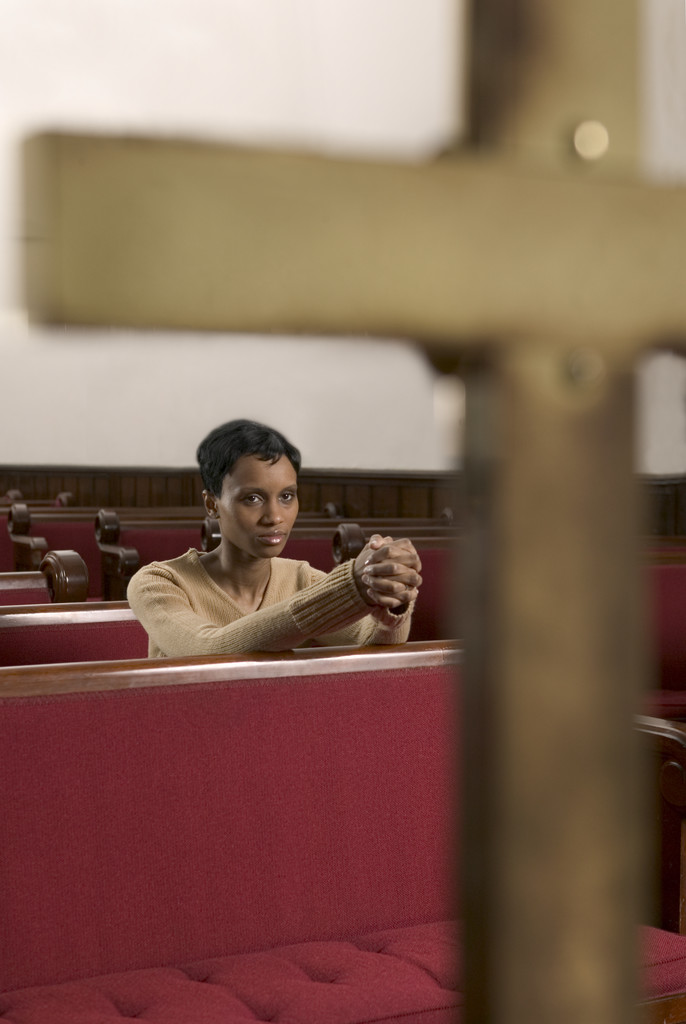
Woman Praying in ChurchA barren friend recently confided to me, “I broke down crying the other day. I don’t really know why. I mean, I thought I would be over this by now.”

I don’t think we ever get over this barrenness thing, because no matter how comfortable we become, no matter how content we grow in our childlessness, it is still not the way things are supposed to be. God commanded us via Adam and Eve in the garden to be fruitful and multiply, and we know that it is God’s good will for us to have the blessing of children in marriage.

Yet, we don’t.

Our barren wombs are a reminder, a manifestation even, of the brokenness of this Sin-sick world, and, even though we are blessed and fruitful beyond measure today in Christ, the wrongness of our childless marriage still stings. And so we grieve.

Rev. Gregory Schulz describes it this way in The Problem of Suffering: A Father’s Hope:

[G]rief is love. This means that grief is a kind of care…Grief as care is an obsession, an attention – not to “mortality” or to “the human condition” – but to a person who is at the same time dearly loved and agonizingly absent. (Schulz, 102-3)

We cry, because our dearly loved children are agonizingly absent.


Endangered Species

What happens when a girl takes the same drug that men with prostrate cancer take?

Well, she sweats through her clothes. She wakes up in the middle of the night. She cries uncontrollably. She twitches with edginess. She gains fifteen pounds in two-and-a-half weeks. She gets dizzy when she works out. She alarms her doctors with the changes in her cholesterol levels. She feels a strange pressure in between her ears. She loses her right eyebrow- .

Wait, what?!

(Yes, you read that correctly.)

She loses her right eyebrow.

Well, almost all of it. I have fifteen hairs left, and you better believe I am building a game preserve on my face to protect all endangered species. I knew hair loss was a side effect of chemotherapy, but I had no idea eyebrows were fair game. After six months of Lupron injections, the glass is no longer half full; my face is half empty. Thank God for friends who come to the rescue!

IMG_0493

Suffering for My Own Good

woman in prayerThis week marked seven full years since we signed the papers to begin an international adoption. How long, O Lord? How long until you grant my heart’s request? How can seven years of waiting for another child be a good thing? I have mourned because more children have not been given me. I have been jealous for the children that were given to others. My anger towards God has been lashed out on those I love. Left to my own devices, all my sinful desires would be fulfilled. I would be surrounded by false idols and eventually loathe all things.

However, the Lord has blessed me numerous times. In the past seven years, I have been part of a trio that brings joy to residents in nursing homes. My husband and I have been able to coach our daughter’s softball team together. The Lord has allowed me to sing the faithful hymns with 300 other Lutheran women at a district gathering. During the long wait, I have traveled with Katie and shared the joys and burdens of barrenness with others. If we had been traveling to China right now, I would have missed the funeral of a beloved friend. If December had taken us to our newest daughter, I would not have been able to sing the Christmas hymns with our Sunday School children.

Suffering never feels good. How could it? God never deigned for man to suffer. Our sinful nature grabs hold of us and strives to push us away from our loving Lord. The devil tempts me to think that I have endured more than my share of suffering. Satan would lead me to turn my back on God. The truth is that I should endure the torture of eternal hell. In my sin I have turned my back on God.

Jesus, though, has come to my rescue. He has endured suffering and death in my place. I don’t have to suffer eternal punishment for my sin. As a baptized child of God, I can face suffering and know that Jesus has endured far worse. The Lord has used (and is still using) my suffering to remind me that He knows what is best for me. I know with certainty that the Lord loves me and is using my suffering for good. The Lord has used the past seven years to remind me that He works all things for my eternal good.

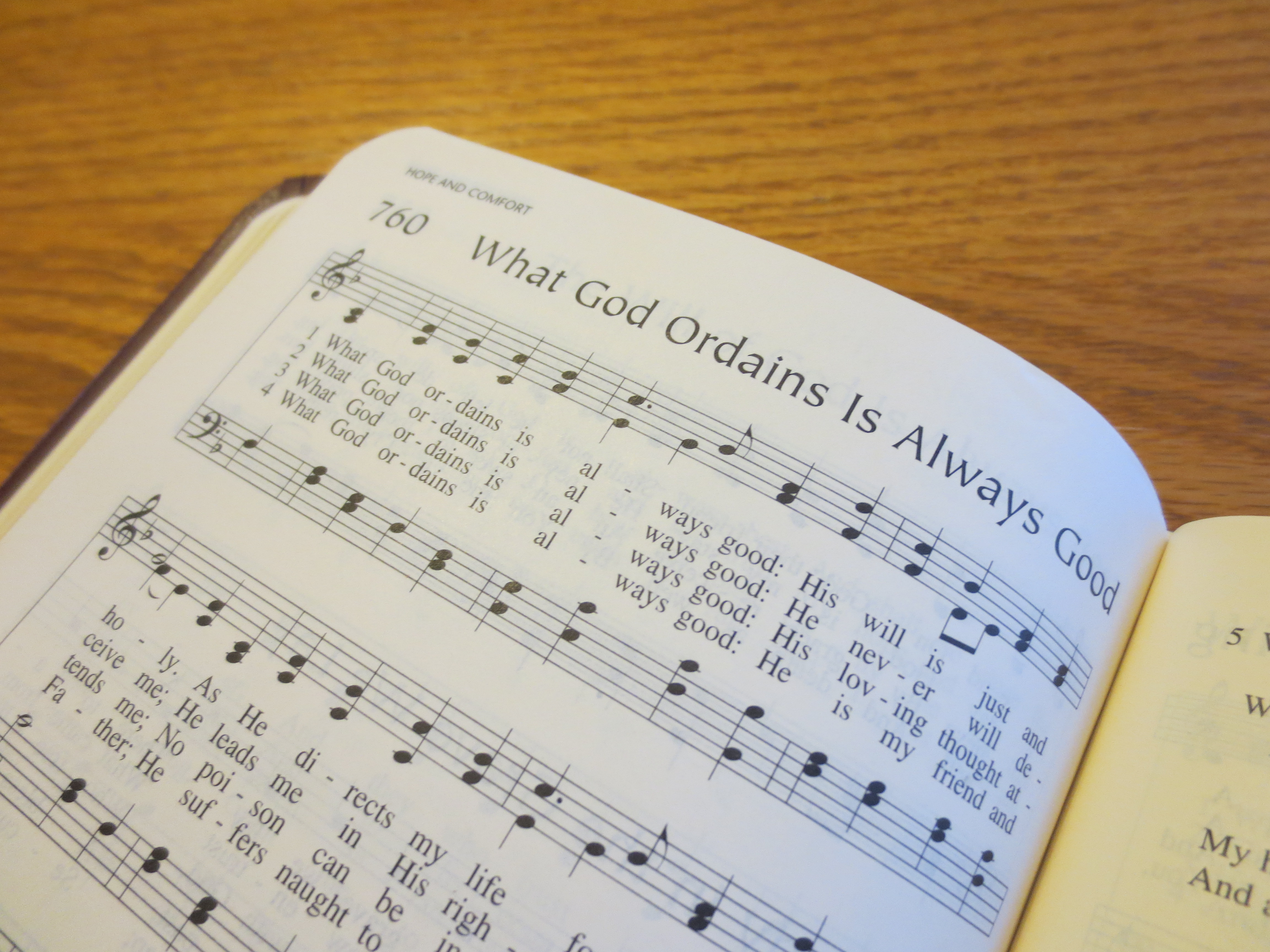
a hymn of comfort

What God ordains is always good: He is my friend and Father;

He suffers naught to do me harm Though many storms may gather.

Now I may know Both joy and woe;

Someday I shall see clearly

That He has loved me dearly.

Lutheran Service Book 760:4

Blessed to Suffer

Nurse Behind Intravenous TubeJane Jensen reminds us in her reflection on “My Suffering Is a Blessing” that God blesses us with His good gifts even while we suffer.

Three years ago I heard the dreaded words, “the biopsy came back cancerous.” I remember counting the tears that fell, only three before hanging up the phone. Crying is not going to do you any good, I told myself, start your stunned brain, instead. What should I do first? Pray? I’d already been doing that since the mammogram found the tiny spot. I decided it was time to put my head down and walk this path the Lord was showing me.

My friend, Cheryl, had taken me up to the hospital for the needle biopsy. She never hesitated when I asked if she could take a day off and go with me. A needle passing through your breast is terrifying. However, the technology, the doctor, and the nurses were all blessings from God. There was no pain, none. Those were the first of many blessings to come.

The Lord had the scheduling all planned out, another blessing.  Everything fell into place.  My daughter and son-in-law were with me when I had the lumpectomy surgery. Best friend, Bill, went with me to find out my treatment options. Friends called every day to check on me.  When the chemotherapy began, the support increased. Four times I sat in a chair to receive the drugs by IV that was mixed before my eyes. People almost fought over who would take me to the cancer center and wait with me.

The cancer center was only 30 miles away. I did not have to travel to Omaha which would have been 3 hours away. Here again the Lord had the best place all provided.

I received the blessing of new friends through chemo and then radiation. One is especially dear to me, keeping in touch by phone, letters, and lunches. Cards and letters of encouragement came four and five at a time. I started to scrapbook them, but they were so great in number I gave up and bought a beautiful rose covered box. I had to weight them down for the lid to stay on. People prayed for me. My church family and I grew especially close all because of their concern and love for me. It was humbling.

I lost my hair, and my complexion turned a strange color. Still, my friends comforted me and asked about me. Could they bring anything to me? That was when the tears came, not when I went under the knife, not during the torments of chemo or the exhaustion of radiation. The LORD God of heaven had provided sinful, sick me with a family that spoiled me and friends who did everything they could to cheer me. It was humbling and overwhelming. God had sent them all to me at just the right time. My cancer journey was a blessing. I can explain it no better than that.

Jane Jensen