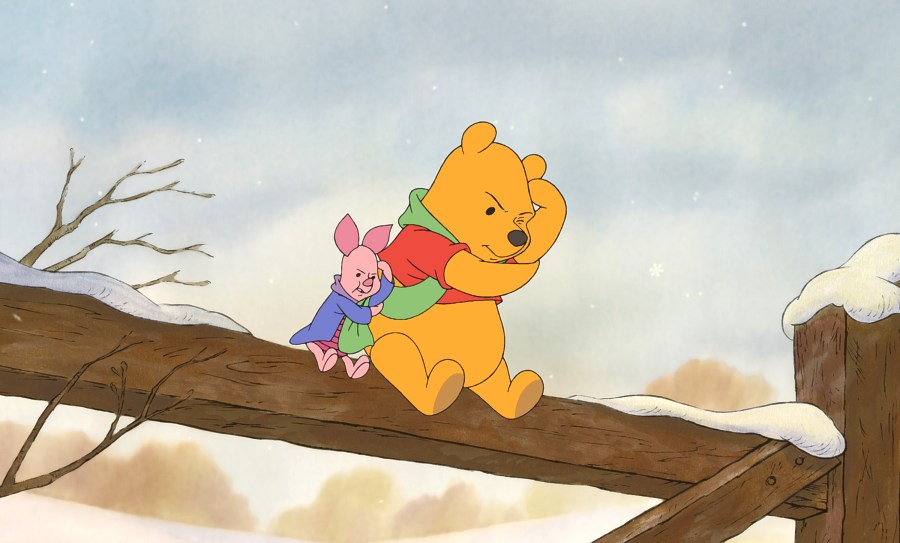
Suffering

You Do Not Suffer Alone

Friends are having babies. Neighbors are celebrating a new grandchild. Teenagers are welcoming twins. We sit at home, in our quiet homes, alone. But take heart, dear friend, you are not alone in your suffering. Christians around the world have been suffering for years.

“Resist, steadfast in the faith, knowing that the same afflictions are accomplished in your brethren that are in the world.” (1 Peter 5:9)

Take comfort in the pastor’s words on this passage of Scripture: In such temptations St. Peter comforts the suffering Christians by telling them that they are not the only nor the first souls to be so tempted, as though they had to bear a peculiar, rare, and unheard-of cross and suffering and should think and feel that they alone had to bear it; rather they should know that all their brethren in Christ scattered everywhere have at all times had to suffer thus from the devil and his onslaughts because they were in the world. For it is an immense help and comfort when the sufferer knows that he is not alone but is suffering with a great multitude.

Therefore no man should regard his own anguish and distress as so horrible, as if it were new and had never happened to anyone before. It may well be new to you and you may not have experienced it before, but look around you at all the Christians in our beloved Church from the beginning to this hour, planted in the world to run the devil’s gauntlet and unceasingly winnowed and fanned like wheat.

For where God through His Word and faith has gathered together a Church, the devil cannot be at peace, and where he cannot achieve her destruction through sectarianism he strikes at her with persecution and violence, so that we must risk our body and life in the fight, and all we have.

From Dr. Martin Luther’s sermon on the third Sunday after Trinity in the year 1544.

We Must Wait

From yesterday’s reading in the Treasury of Daily Prayer:

Christ is risen from the dead, has ascended to heaven, and sits at the right of God in divine power and honor. Nevertheless, He is hiding His greatness, glory, majesty, and power. He allows His prophets and apostles to be expelled and murdered…He allows His Christians to suffer want, trouble, and misfortune in the world. He acts as He did in the days of His flesh, when John the Baptist had to lose his head for the sake of a desperate harlot, while He, the Savior and Helper, said nothing about it, departed thence in a ship and withdrew to the solitude of the wilderness (Matt. 14:10ff, Mark 6:17, 32). Is He not a petty, childish God, who does not save Himself and allows His children to suffer as if He did not see how badly they were faring?…[I]f He sees and knows but cannot help, then He has no hands that are able to do anything, nor does He have power to enable Him to save.

Hence the prophet Isaiah correctly says of God: “Verily Thou art a God that hidest Thyself, O God of Israel, the Savior” (45:15)…Now He lets our adversaries treat His Word, Sacraments, and Christians as they please. He lets us call and cry and says nothing, as though He were deep in thought or were busy or were out in the field or asleep and heard nothing as Elijah says of Baal (I Kings 18:27)…

Meanwhile Christians, baptized in His name, must hold still, must permit people to walk over them and must have patience. For in the Kingdom of faith God wants to be small, but in the (future) kingdom of sight He will not be small but great. Then He will show that He saw the misery of His people and heard their crying and had a will inclined to help them, also power to help them…For this appearance of the glory of the great God we must wait.

Martin Luther

Family Grief

Sometimes I forget that my barrenness affects more than just me and my husband.

My nephew stood at my elbow in Chick Fil-A last week, holding out a Berenstain Bears book that had come with his meal deal.

“In case you have a child someday,” he said.

There was a momentary, esophageal struggle between the bite I was trying to swallow and the wave of emotion that suddenly rushed up my throat.

“Thank you, B,” I managed, trying to play it cool. My nephew could have no idea that he had just shined a bright beam of sunlight across my insides. This book was more than just a gift. It was hope. “Do you think Uncle Michael and I will have a child someday?”

“Uh, huh.”

“A boy or a girl?”

“A boy.”

“Will you mind that he will be so much younger than you?”

“Na, I’ll let him ride on my back.” B smiled, and I suddenly realized that this dreamchild lives in more than just my own heart. My nephew, too, yearns for a boy cousin, a playmate, and a friend. “He’ll probably follow me around the yard. I’ll teach him to wrestle.”

You know, I think he probably will.


Misery

From our dear Joanna…

Today I had a lovely conversation with one of our church’s homebound members. This dear lady in her late eighties is widowed and mostly homebound due to severe chronic pain. Despite the suffering she endures each day, she is one of the most joyful and encouraging Christians I’ve ever met. As we got off the phone, I told how much I admire her and the beautiful, grace-filled woman that God has made her to be. It was then that she said something profound, something that I think is key to getting through the difficult days that all of us encounter: “Misery,” she said “is optional.”

As a barren women who’s now past the age of childbearing, I can tell you that this is true — misery is indeed optional. God’s mercy and goodness have been present every day of my life, but there were days when I opted for misery — opted to wallow, opted to feel sorry for myself, opted to push the limits of legitimate grief past its boundaries to the place of selfishness and self-pity. I wanted to feel sorry for myself, I wanted others to feel sorry for me, and most of all, I wanted God to feel sorry for me. In the end, the only person I made miserable was myself. 

I think that as I go through my days, I will remember what my dear friend told me. Grief and pain are legitimate, but misery is optional. I opt for Christ’s joy and His peace that passes all understanding. 


The Right Perspective

In the most recent issue of The Lutheran Witness, Janet Frese reminds us to view our present suffering through the lens of vocation. She is writing specifically as the wife of a deployed chaplain, but, as is true with most Christian suffering, her words of wisdom apply to any cross we may bear, even the cross of barrenness.

Being separated during deployment is an enormous sacrifice. You become a situational single parent, bravely juggling a myriad of new roles while praying fervently for your spouse’s safe return…Putting deployment in the framework of vocation gives perspective to some of its challenges. Vocation is found in your present circumstances, in the here and now – not where you wish you could be. Parenting alone is difficult and certainly not ideal, but for the moment this is what God has given you to do. Serving the United States in the midst of war is both exhilarating and frightening, but this is the work that God has given your spouse to do at this time…[W]hile you wait for your loved one to return, remember that God does not leave you to fend for yourself. He has given you a community of believers, and He gives you a unique vocation through which to serve others.

You, in your barrenness, have a unique vocation through which to serve others. Yes, you do. It may not be the vocation of mother that you want, but your vocations of wife, daughter, sister, friend, babysitter, knitter, lawyer, or whatever are still distinct, special, singular, and specific to you.

If you are not sure what your present vocations are, simply look around and ask, “Where am I, and who is my neighbor?” Your answers to those two questions will make everything clear.

(To read Janet’s full article, snag a copy of the August 2012 issue of The Lutheran Witness.)

True Compassion

My husband drew my attention to an article in the most recent issue of Gottesdienst. Think on Rev. David Petersen’s words:

Compassion leads to action, but is not action. It is identification and suffering with the afflicted. The old saw “misery loves company” usually means we like to bring others down with us, but we might turn it around a bit. We might see the example of our Lord and recognize that compassion loves by joining misery. “For we do not have a high priest who is unable to sympathize with our weaknesses, but one who in every respect has been tempted as we are, yet without sin” (Heb. 4:15 ESV).

Compassion moves the compassionate to action eventually. That action is often material aid, practical assistance, or comfort to relieve the afflicted, or the proclamation of Law and then forgiveness and hope in Christ. But even before the action there is the sympathy and identification. Sometimes, maybe most times, those who are hurting need to hear and know that their hurt is valid and is also unjust. Strangely, it is comforting to know that our mental anguish, our sense of frustration, and our anger are legitimate reactions to a sinful and unjust world…

The first response to suffering isn’t a solution or a fix, but pain. This pain carries with it the realization that nothing afflicts any of us that is not common to man or that our Lord Himself did not endure in the greatest and most terrible measure. This is different from gratitude. It recognizes that it could have been us, such as we hear in the oft-used John Bradford line: “There but for the grace of God go I.” That is part of it, to be sure. But compassion is suffering that is felt in the heart and mind because someone else is suffering and shouldn’t be. They are like sheep without a shepherd. That sad plight moves the heart of the observer first to pity; then comes gratitude and action.*

* Petersen, David H.  (Trinity 2012, Vol. 20, No. 1). “Praying for Pity’s Sake.” Gottesdienst: The Journal of the Lutheran Liturgy, 9-10.

Comfort Food

When I’m going through an especially rough patch, I eat. You know those times – waiting for test results, receiving “the call” about a friend’s new baby, being bombarded with questions about your family life, wondering when or if you’ll ever add to your family. In those moments, I rummage through my snack cupboard. (Yes, I’ve upgraded from a drawer to a cupboard.) I’ve eaten my share of chips and popcorn. I’ve licked the ice cream bucket clean. Then I feel guilty about eating all that stuff and finish off with some yogurt and blueberries.

While those food items may make me feel better momentarily, they don’t satisfy completely. Do you know what helps me even more? There’s food that satisfies even more than the salty and the sweet. It’s the Body and Blood of Christ. In Him is full and complete satisfaction. He gives me my daily recommended allowance and more. He knows exactly what I need to remain balanced and healthy. His food cleanses my body of sin and makes me whole again. I can have seconds and thirds and fourths. The Lord’s Supper is an unlimited food buffet. Now that’s comfort food.

Baby or No Baby

You’re okay. Really, you are. Baby or no baby.

(Yes, I’m talking to you.)

In fact, in Christ you are more than okay. You are victorious. You are made new. You are eternal. You are beloved. In Christ, you are fruitful with or without a genetic reproduction of yourself.

So, cast all of that stress and anxiety about having a baby on Him who gives you life, saves your life, and sustains your life. Put a towel over your mirror and give your reflection a break. (No peeking!) Let’s not gaze at our navels today. Instead, let’s rest beside still waters in those luscious, green pastures to which the Good Shepherd has led us.

He who restores your soul will tend to all of your needs and disappointments and sorrows and joys, right now and forevermore, baby or no baby.

I promise.

Why I Love Katie’s Book

How is it possible that Harriet Beecher Stowe never met Katie Schuermann? Perhaps Harriet was given the gift of prophesy…

“There are in this world blessed souls, whose sorrows all spring up into joys for others; whose earthly hopes, laid in the grave with many tears, are the seed from which spring healing flowers and balm for the desolate and the distressed.”

-From Uncle Tom’s Cabin, pg.99