+ Mrs. Jeanne Korby +

Mother’s Day 2009 was particularly gruesome. I was living in that tortured season of hope that is a barren woman’s early thirties, and every month brought a fresh wave of pain, guilt, anger, and confusion. Mother’s Day was a fat, juicy lemon whose acid was being mercilessly squeezed into my open wound.

To make matters worse, I was without my husband that day. I can’t remember why – perhaps he was guest preaching out of town or on some seminary trip – but I walked into the church all by my lonesome that morning.

I had to walk past the table where corsages were being handed out to mothers in the congregation. The dreaded walk of shame. My cheeks burned red with humiliation.

A be-flowered friend stepped up to me in the narthex. She fingered her corsage while she spoke. I can’t remember what she said, but I remember the tightness in my throat as I willed the tears not to spill. If I could just make it into the church. Someone special was waiting for me there.

I slid onto a cold pew in the side wing of the nave. Next to the wheelchair.

“You can be my daughter today, and I’ll be your mother.”

“Thank you, Jeanne,” I whispered, the tears falling freely, now. I didn’t need to hide them from Jeanne. She already knew. Still, I wiped at them, not wanting anyone else to know.

We sat by each other through the whole service. I probably even leaned on her, she with the fragile back and weak cartilage. She was always stronger than she looked.

We took and ate the Body and Blood of our Lord together in the side chapel reserved for those who have trouble making it up to the altar. As we knelt at the rail, I whispered in her ear, “Jeanne, what do you think about when you take the Lord’s Supper?”

She didn’t balk at my imprudence. She and I always talked like this. Forthright. Familiar. Honest.

“I think,” she whispered back, “‘Lord, I am a sinner. Give me all.'”

Thank you, Jeanne, for being a mother to me in my grief, for mentoring me as a pastor’s wife, and for teaching me the prayer I still pray at the altar today. I rejoice in knowing that Christ Jesus has, indeed, given you all. I wait with you for the resurrection day, dear friend. +

P1020215

Shepherds Who Point Us to the Lamb

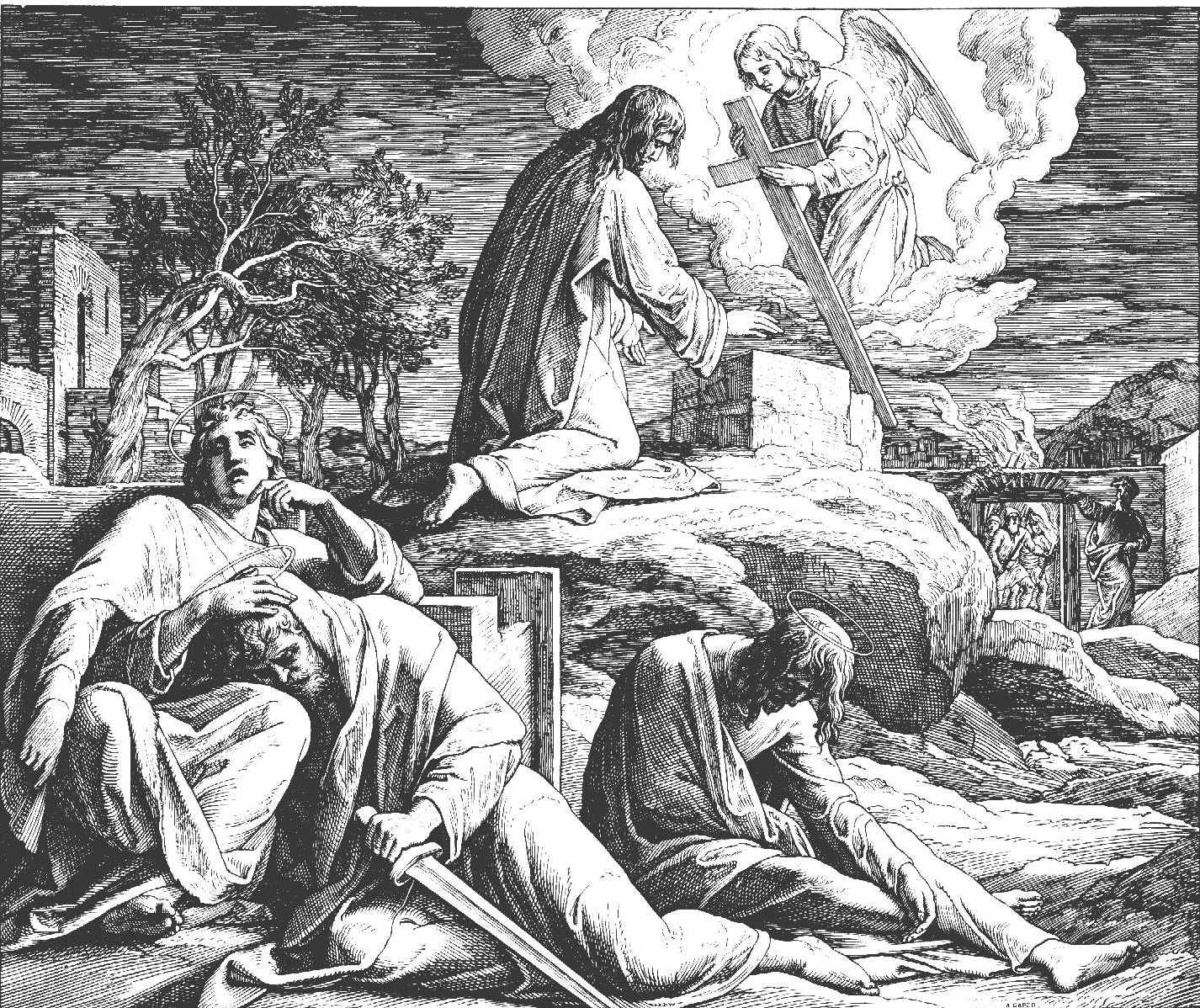
gethsemaneThere is no better time to talk about suffering than Good Friday, and our church body is blessed to have so many learned, compassionate, and insightful shepherds who know that the life of the Christian is one of taking up our crosses and following Christ, the Lamb of God, who takes away the sin of the world. Take some time this weekend to watch, listen, and read the following as we focus on the suffering and death of our Lord:

Rev. Bryan Wolfmueller’s comments on Issues, Etc. about Sanctification and Suffering

Synodical President Rev. Dr. Matthew Harrison’s video, “Suffering is Purposeful through Repentance”

and Rev. Dr. Gifford Grobien’s comments specifically to you, the barren:

When couples experience barrenness, with Job we should want to worship God and to say,  “The LORD gave, and the LORD has taken away; blessed be the name of  the LORD” (Job 1:21). But in the midst of the devil’s temptations such  faithful action and confession seem out of reach. We are distraught. There really isn’t any reason we can hear that will ease the questioning and the sadness. Once again, suffering has overshadowed the way things ought to be. Suffering overtakes even the faithful person. The cross looms and gives no reason.

Instead, the cross calls the church faithfully to follow. Faithfully. That is, even without seeing. Even without perceiving or  understanding. The cross beckons us to see suffering and to see deliverance through suffering. It does not explain suffering; but it promises deliverance from suffering. More than this, the cross of  Jesus Christ promises deliverance through suffering to fellowship with the one who suffered ultimately. The church is a fellowship of  suffering; a fellowship with the passionate One; a fellowship with God of the universe who nevertheless stooped to suffer not just with you, but for you.

Suffering, by its very nature, takes time. We, on the one hand, desire immediate results. We have our food through the drive-through, our information at the touch of a screen, our friends at the click of a  mouse. Even our sins are forgiven in a moment, at the Word of  absolution. That much is true. Yet suffering connotes experience. It  implies time. Deliverance comes after a time of suffering, and this time is not in vain. During this time we are sanctified. We grow in the love of God through the Spirit of God. We are sustained by this  same Spirit through God’s indomitable gifts, so that no temptation overtakes us that is beyond our ability. God is faithful, and with the  temptation he will also provide the way of escape.

Escape. Deliverance. God provides the way of deliverance from suffering. He conforms us to the cross so that we would die and live in Christ. God delivers from infertility. It takes time. It may take a  lifetime. But there is deliverance in the cross.

One of the ways to endure suffering as we await deliverance is to hear God’s Word and to pray. When we pray the Psalms we do both. God knows what it is to suffer, for He gives us psalms to pray even in  suffering–psalms of lament. Thus we pray the psalms of lament. Psalm  13: “How long, O LORD? Will you forget me forever?” Psalm 59: “For the  cursing and lies that [my enemies] utter, consume them in wrath; consume them till they are no more, that they may know that God rules.”

Pray these psalms, knowing that the enemy spoken of is the devil, the tempter overcome by suffering. He is overcome by Christ’s suffering, indeed, but it is true that Satan is overcome in his work in our lives when we persevere through suffering. When we are afflicted, the root temptation is to curse God and turn away in unbelief. God is all powerful, so our affliction must be his fault! That is the temptation of Satan. That is the theology of glory. So, when we persevere in faith, in spite of affliction, the work of the devil in our particular circumstances is also overcome through the power of the Spirit in the Word.

nosh on this

 The eyes of all look to you,
    and you give them their food in due season.
 You open your hand;
    you satisfy the desire of every living thing. Psalm 145:15-16

Food serves manifold purposes, doesn’t it? As a health enthusiast I often ponder the efficacy (or lack thereof) of the food we eat. As common sense would have it, this is what I’ve come up with: Real food nourishes, sustains, it delights us and brings people, most especially our families, together.

Awhile back, host Kristi Leckband wrote a beautiful post found here. In a nutshell, she recounts how her family dynamics around the dinner table were more sullen and silent at times of sorrow over dashed adoption efforts. And now, the dinner conversation jags lively and joyful as they delight in their new daughter adopted from China.

From this post I began to think about the dinner table. It’s compelling how gathering around it with family in either joy and sorrow is so necessary. It strengthens us in that unit. While the food is often the impetus for the gathering, the dinner table can be the weigh station where rest, conversational refreshment and, perhaps, just silent presence is needed.

This certainly has spiritual implications within our church families, too. What about that first Maundy Thursday? Jesus and his disciples are gathered in the upper room. This was one of many occasions in which they’d dined together. While the bible doesn’t say, I’m not so sure laughter, unless it was nervous or out of ignorance, set the tone that particular night. No. That night was focused on just being in each other’s presence and with their Master. In fact, Jesus is doing most of the talking and doing. In spite of the feelings and thoughts around the room about the impending event, food is the one of the reasons they gather. But Jesus is nourishing his disciples on a new spiritual plane; uniting them to Him through bread and wine, reminding them they are forgiven through what He is about to do on the cross.

This must have been a terrifying “church family night.” But they were reminded of who they were in relation to Christ and each other. They gathered around that table to receive food, physical and spiritual, to nourish, sustain and bring them together.

Think back to your childhoods. Hopefully yours are filled with comforting and joyous memories. Did our families turn us away from the table if we had a heavy or anxious heart? Did they require us to have a contrived zeal to be there? No. Simply being born or adopted into our families granted us a seat. Sure, we might have had to munch on pureed veggies, small and soft foods until our bellies could digest the more solid stuff on the table. We also (for the most part) learned manners there, too. This private order of service is all part of what it means to grow into our families.

So too, our Lord’s Table does not turn away heavy hearts or require pietistic zeal. Simply being God’s child grants us a seat. Yes, there may be a time in which the Word and baptism are the primary sustenances until a proper examination of communion is confessed. But this is all part of the gifts of learning what it means to grow in God’s church. Jesus knew the right time to teach and administer this holy meal to his disciples, just as we with our pastors are examined in order that we may come to the Lord’s table to receive Christ’s body and blood at the right time, too.

Food conjures up so many thoughts in our minds …the things we crave, what makes us feel good and how we share it with others. How interesting that God uses food and is the food for the strengthening of our faith. This faith craves and confesses Christ crucified for our sins. It desires to be united to Him and to share it with others. And with the substances we see before us: a pastor, the Word, bread and wine, Jesus is the Host, Servant and Meal of this fine dining reality. Blessed Maundy Thursday as we remember our Lord’s death until He comes.

Oh, taste and see that the Lord is good! Blessed is the man who takes refuge in him! Psalm 34:8

It Should Have Been Me

I have some news.“Did you hear? Alyssa is pregnant!”

“Guess what. My neighbor is expecting twins!”

“Has anybody told you? The Greenbergs are adopting!”

I’m certain we have all been privy to such conversations. In those moments, I have done my best to show genuine excitement for the couple. However, I am falling apart on the inside. That good news should be mine. I should be buying maternity clothing. I should be shopping for a double-stroller. I’ve been eating well, exercising faithfully, attending church on a regular basis. We submitted all of our paperwork to the adoption agency. Birthmothers should be choosing my spouse and me to adopt her child.

If left up to us, our wishes would be fulfilled. The pregnancy test would be positive. The twins would have matching cribs. The adoption process would be smooth as silk. It should be me! I should be the one shouting out such good news. But, no, I’m on the receiving end of good baby news once again.

There’s something else that should have happened to me. I should have been the one who was scourged, spit upon, mocked, pierced, and crucified. Yes, I’m the sinner who has broken every single one of the Ten Commandments. It really should be me who’s dead. I really don’t deserve any of the goodness that has been bestowed upon me, for I am a conceited, selfish sinner, who deserves death.

Thanks be to God that He gave His Son to take that punishment for me. Jesus Christ endured the scorn, the pain, and even the death you and I deserved. During this Holy Week, I humbly bow before the Lord God and thank Him for taking away the death that should have been mine.

crucified

Ouch

I admit that I neglect the topic of physical pain on this site. It is a selfish decision on my part. I don’t like to dwell on it. Physical pain simply is, and I can’t do a whole lot about it. It is something to be managed and endured for the long run, and I am the queen of self-numbing when it comes to long runs. Deep breath, chin up, eyes ahead, slow and steady.

However, I do not mean to neglect or ignore your own physical pain, dear reader. I know you are weary. I know you have to stay home two days a month from your job because of the searing pain. I know your menses are more than inconvenient; they are debilitating and socially impossible. I know you can neither stand nor sit nor lie down when the pain hits, and I know you vomit and writhe and pass out from the experience. I know the injections, therapies, surgeries, and crazy dietary restrictions are giant feet kicking your already dead horse. I know you shake your head at heaven every time a cyst bursts and ask “Really, Lord? Isn’t my childlessness alone already painful enough?”

Yet, physical pain is a symptom, not the root, of the problem of barrenness. Sin is the culprit which leaves our bodies twisted in pain, and only Christ’s atonement for that Sin will do. His blessed exchange on the cross, His loving sacrifice of Himself for the Sin of the world, is the reason we have hope in the midst of our pain. For, we know that our Redeemer did not stay dead but lives, and though fibroids and cysts and scar tissue and cancer and worms may destroy our bodies, yet in our flesh will we see God.

So, by all means, consult your doctors, your naturopaths, and your pharmacists for help in managing your physical pain, for they are God’s good gifts to us in this life; but, when the pain cannot be managed and simply must be endured, remember your suffering Savior on the cross and cry out, “Lord, have mercy!” and know that He does.

Crucifix on a Wall

One More Thing

Speaking of our tendency to seek purpose in everything, our dear Joanna just brought the following quote to my attention:

“The natural view of God, which we construct by our own powers, is one in which we try to fit everything into the concept of the One, the True, the Good, and the Beautiful. For the theologian of the cross, however, this view has been shattered by painful disillusionment. Therefore, the death of the old nature means the end of…all attempts to anticipate [meaning] by postulating it hypothetically.” (Theology the Lutheran Way by Oswald Bayer, 26).

Exactly.

bayerTheologyLutheranWay.qxd

A Mother of Mothers

You’ve probably noticed by now that I rarely blog about the specifics of my vocations in life. It’s not because I don’t have them, and it’s not because I don’t rejoice in them. It’s simply that I am wary of suggesting that your barren life should look anything like mine. God gives each of us different neighbors to serve in life, and there is no sense in comparing.

(That, and the temptation to over-define God-given vocation as purpose can be too overwhelming.)

Yet, there are moments when my joy in my barrenness is such that I have trouble not waxing on all things vocational with you, so if you would indulge me for a few sentences…

Do you know what I love about being barren? I get to be a mother of mothers. God keeps putting more and more of them in my life. These beautiful, hard-working, self-sacrificing, sleepless women keep showing up on my humble path, and I get to serve them. I get to listen to them, nurture them, encourage them, comfort them, cook for them, clothe them, offer them hospitality, render them retreats, take them out for dinner, sing with them, dry their tears, watch their children, do their laundry, clean their bathrooms and floors, invite them over for coffee or tea, play with them, and commend them to my Father in Heaven in prayer.

What a beautiful thing it is to be barren of children but a mother of mothers!

The Purpose Driven Barren Life

MP900449090pur-pose
noun
1. the reason for which something is done or created or for which something exists

We are obsessed with purpose these days. We seek purpose in everything we do to give our very lives meaning. It comforts us, even puffs us up.

We even seek purpose in the things that happen to us. Take barrenness. If we can determine some reason as to why God is making us barren, then our suffering suddenly has a meaning, an objective, maybe even merit. If there is a purpose to our barrenness, then we are somehow elevated from miserable victim to blessed martyr. We suddenly have a life worthy of the interest of Oprah, Joel Osteen, and Rick Warren, and the prominence of this self-ascribed, higher purpose makes our wretched barrenness not sting so much.

But barrenness should sting. It is a result of Sin in the world, a devolution of the way God created things to be, and no amount of purpose changes that terrible truth.

The danger in trying to assign a particular purpose to our barrenness is that we are actually attempting to define the hidden will of God. We are trying to explain something that has not been explained to us in Holy Writ. We are trying to reveal that which has not been clearly revealed, and we should be wary of putting our hope, trust, and comfort in something that God has not made known to us in His Word. For, most likely, that self-assigned purpose will fail us in the face of the devil, Sin, and our flesh.

This is why it pains me so much when other people try assigning purpose to my own barren state:

“God made you barren so that you could write a book to help other people.”

“God made you barren so that you can be a better mother to all of the youth in your church.”

“God made you barren so that you will have more compassion for orphans and embryos.”

“God made you barren so that you will better appreciate having children when He gives them to you.”

Is any of this true? I certainly don’t know, because God has not revealed any of this to me in His Word, and, I suspect, neither has He revealed it to you.

Then, what true purpose is there in my barrenness? Outside of knowing that my womb is unfruitful because of Sin in the world and that God is allowing my womb to stay unfruitful, I don’t know from God’s Word why I am barren.

Here’s what I do know from God’s Word: Whatever purpose my barrenness serves, God is working it for the good of me and my neighbor; and, because God’s good grace is sufficient for me, I am free to serve the neighbors He has given me in abundance. Yes, that even includes the youth in my church, orphans, embryos, and you.

But, dear church, that is my vocation, not my purpose. Let’s not confuse the two.