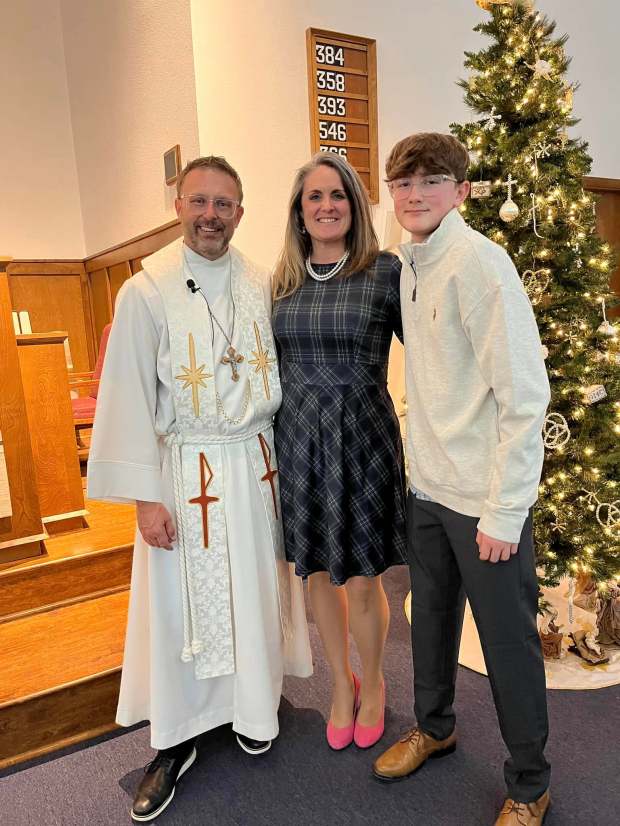
By Melissa DeGroot
I can hardly believe fifteen years have passed since the beginning of He Remembers the Barren. When Katie contacted Kristi, Rebecca and me a couple months ago to commemorate this blog, it gave me pause to reflect on so many things. Looking back to where this all started, I remember how new, exciting, and nerve-wracking it all felt—the blogging world itself, wondering how people would receive what we were writing, and hoping that ultimately in the midst of it all there would be real talk, real comfort and faithful theological grounding for people who were suffering.
I can also look back at myself and cringe a little. Okay, maybe a lot.
I’m sure most writers (a title I hold very loosely) feel that way when they look at their early work. I was in my early thirties then. I was definitely more immature than I realized. I had professional, diaconal and mental health training and, if I’m being fair to my younger self, some good theology. But I was also a little zealous. Overconfident, even. Ego and pride were mixed in there, too.
Seemingly an Old Eve disease that I am still getting medicine for each Lord’s Day.
The chronology is a little muddled in my head (thank you, perimenopause!) – though I recall talking to Katie about this topic well before the blog took shape and before my son was born. After a miscarriage early in my marriage, I recall having the fear that I was going to be barren, too. Like it was somehow contagious? There was this superstitious, self-fulfilling prophecy of sorts in my head that if I kept talking about barrenness, it was going to be my “fate.”
So much for good theology.
Then, right around the time this blog started, my husband and I had been blessed with a son. Parts of me thought this conversation wasn’t really for me at that point, even though I knew it was still good to spiritually comfort those who were suffering with it.
However, not too long after that, my husband, Adam, and I began walking through secondary infertility. It was a decades-long trek of fear, prayer and wondering whether we would have more children. I spent so many years worrying about it. I put so much pressure on myself.
HRTB hit me from a different angle, and it was one that I needed.
You see, I had high hopes of being a large, Lutheran family. I came from a larger family myself. Bring on the multi-passenger van transporting a gaggle of homeschooled, slightly-nerdy-but-athletic DeGroots!
It was the dream.
It never became a reality.
And here is what made the conversations surrounding He Remembers the Barren so important to me.
During the fretting and faithful reckoning throughout my thirties, I felt this was a conversation our church body needed to have more openly anyway. Within the Lutheran Church—Missouri Synod, I was seeing a renewed appreciation for our confessional and liturgical heritage. There was much good in that. Along with it came a strong and thoroughly biblical affirmation of marriage, children, and family.
Thanks be to God for that.
But I felt pressure, too. It was compelling at times – yet not always in the best way: like there existed a stress to have “all the kids” to not only grow the church but have more joy in your life. I had pious people say some well-meaning yet off-putting things to me (“Just stop working and go have kids,” “Relax, and it will happen”) that simply didn’t fully align with what God says and our good understanding of the doctrine of vocation. I don’t begrudge them or hold any resentments. I certainly held some of those beliefs, too. It just didn’t happen for us that way.
Singleness. Barrenness. Miscarraige. Secondary Infertilty. Adoption. Families that don’t look the way we imagined they would. Our doctrine of vocation is beautifully spacious precisely because the Lord is the One who gives and takes away our callings.
Those were some of the conversations Katie and I began having all those years ago. I was (and still am) grateful to be a cheerleader and small contributor in the arena—to encourage the conversation, to have seen this blog created, and the book published.
And then there were Kristi and Rebecca, whose experiences helped fill in still more of the picture. Different women. Different stories. Different kinds of suffering connected to barrenness and their own way of articulating it. Yet the same need for substance.
Fifteen years later, I think that is what I appreciate most.
Barrenness has a way of confronting us with just how little control any of us actually have. We can enjoy the intimacy of marriage. Make appointments. Try treatments. Change diets. Track, plan, pray and de-stress! Those things can be good and worthwhile. But eventually, we run into the limits of our own ability to make life happen according to our plans.
Which can be terrifying, but also expose some of the false gods we didn’t realize we were carrying.
For me, one of them was the idea that my family needed to look or be a certain way for me to feel that I had somehow measured up. “Image Manager” was a false calling that I created to feel valuable and worthy. I put pressure on myself that God simply had not put on me. Perhaps I even put that pressure on others, too.
And suffering has a way of bringing those things into the light.
I’m 47 years old now. My perspective has definitely changed over the past fifteen years. Marriage, motherhood, ministry, friendships, disappointments, and simply getting older have shaped and refined how I think, speak and serve. As a result, I have let go of so many things. But acceptance of what is doesn’t require me to pretend that all my thoughts, hopes and feelings weren’t somehow real, unholy or unwarranted.
The longing for a child is real. The disappointment is real.
Yet Christ is just as real yesterday, today and forever.
That is where I hope this conversation continues to lead.
Christ does not meet us merely as an idea or a theological explanation for why suffering exists. He comes to us in the flesh. He comes every time His Word is preached and His Sacraments are administered. He surrounds us with sisters and brothers in Christ, with pastors, deaconesses, pious friends, and the whole family of God. Because we still need forgiveness and the Church, no matter what stage of life we’re in.
And sometimes, through those people, He even gives us the gift of feeling some (or a lot) of the comfort He has already promised to us.
What a gift it is when a sister in Christ sits beside me and says, “I know this hurts.” What a gift when a pastor speaks Christ’s promises into suffering. What a gift when another woman’s story reminds me that I’m not alone.
Though, whether we feel it or not, assurance is based on the truth of God’s Word. We are redeemed, precious, and loved. Christ’s death and resurrection has power, even now, to bring us faith to trust that no matter the trial, He is still with us.
So fifteen years later, I’m grateful to contribute to this conversation again. I’m grateful for Katie, Kristi, and Rebecca, and the many women and men who have been willing to speak honestly about barrenness, infertility, miscarriage, adoption and a host of other life issues. I’m grateful that He Remembers the Barren became a place where these conversations could happen.
And I’m curious about where it goes from here.
Maybe fifteen years have given us a little more perspective. Maybe we can speak about these things with greater spiritual maturity—without minimizing suffering, but also without allowing suffering to have the final word.
Because while it’s real, Christ is more real still.
And He has not forgotten us.
Looking back and moving forward, God is always remembering us, even when our memories fail and fade.
God continue to bless and strengthen us as we seek to share our unique experiences, strength, and hope in Him now in our midlife years. Perhaps this blog commemoration is a connection point to a new generation who are walking through these hardships, a generation who may be seeking a sisterly, motherly (gosh, some might even say, grandmotherly), ear to listen, receive love and care with greater understanding and grace. I hope so.
Because while striving to serve each other well, to care for and raise faithful children, God reminds us Christ crucified and risen for us is the only Way, Truth and Life certain in this world.
Ides years later, God continue to bless these conversations and this blog as He sees fit.

