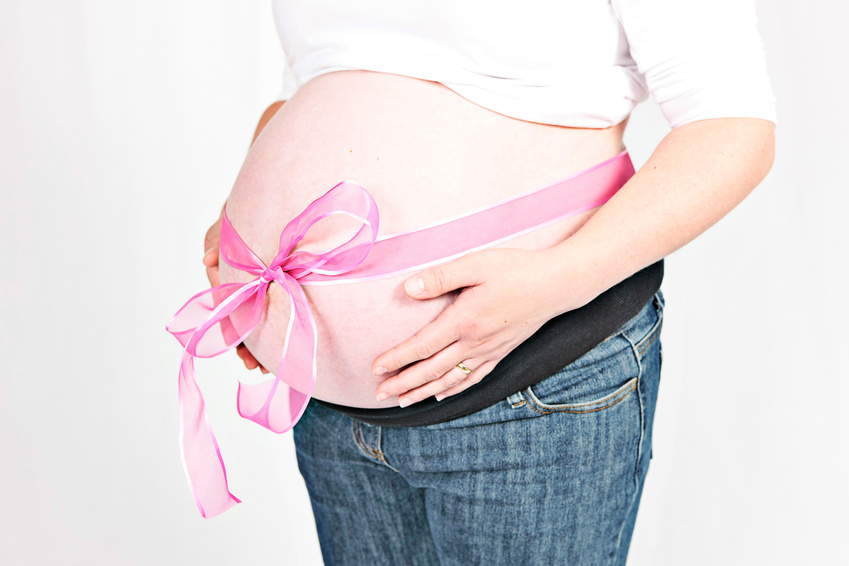
 Question Submitted: I am disappointed in your take on embryo adoption and IVF. Are you aware that many embryos never implant in nature? With normal, fertile people? So why, then, would you not want to give the frozen embryos (or snowflakes, as they’re often called) a chance at making it? I am currently 31 weeks pregnant through the miracle that is embryo adoption. We went through a home study and our clinic had strict requirements for health and eligibility. Why are you against having these babies thawed and given a chance at life outside the freezer?
A note to our readers: This is a response from both me and Katie. It is impossible for us to fully tackle the subject of embryonic adoption in one post let alone answer these complex questions in a paragraph or two. Out of a desire to honor those who submit questions we are forced to address these issues in segments, when ideally they should be dealt with as a whole and more thoroughly explained. Thus I would ask you to please read this post in its entirety to ensure that you are not taking comments out of context or focusing on only a portion of the whole message.
This question includes two assumptions, which I’d like to address separately.
Assumption#1: The risk of natural miscarriage is the same risk that occurs in the frozen embryo transfer (FET).
The end result of both miscarriage and FET is the same, it’s true: children die. But the situations are different in that a miscarriage is something that naturally occurs and is outside the hands of the parents. It is the result of sin being in the world as the result of the fall of Adam and Eve. The parents did not cause this death, nor could they have avoided it in most cases. “The Lord gives and the Lord takes away. Blessed be the name of the Lord” (Job 1:21).
The deaths that occur as a result of an attempted FET are explainable and are unnatural, meaning that they are the direct result of human decisions and actions–the responsible parties being the parents who chose to freeze them in the first place. And there’s just no avoiding the fact that, although this is not the desired outcome, the decision made by others to thaw these children and attempt implantation will lead to a hastened death for most of them. One party is choosing to neglect the child by placing him in a situation that will almost certainly lead to his premature death, and the other party makes the choice to risk the lives of many children so that one or more may possibly have the opportunity to live. The second party is attempting to do the right thing by making a rescue, but participating in this procedure is still a serious and sobering matter.
When a couple conceives a child, they have every reason to hope and believe that this child will grow normally and come to be delivered safely, even though sometimes this does not happen. When a couple participates in an embryo adoption, they should know ahead of time that most* of the children removed from the liquid nitrogen and subjected to an attempted implantation will die as a result. Again, the adoptive parents are not the cause of these deaths, but the deaths are still resulting because the children were placed in the hostile environment by human hands. Therefore, regardless of the intentions of the adoptive parents, there are so many differences between these two types of fetal deaths that I do not believe the two situations can be considered parallel.
Assumption #2: That we here at HRTB are against giving frozen children a chance at life.
Before I talk about what we may or may not be against, let me state clearly what we are for:
1. Loving the Lord your God with all your heart, with all your soul, and with all your mind (Matt. 22:37).
2. Loving your neighbor as yourself (Matt. 22:39).
These principles, given by Christ Himself as the sum of all the commandments, are what guide our discussions, our questions, and our concerns. They motivate us to look for the truth in all these perplexing and controversial situations, no matter how difficult that truth may be to hear. We want to eliminate as much of the gray areas as possible so that our precious barren brothers and sisters in Christ may be equipped to traverse this rocky road carefully, without endangering others along the way and without harming their blessed unions with each other or misinforming their consciences. We want people to think about and discuss the hard questions first–then choose action, rather than the other way around. Our words of caution are uttered because of our gratitude to our Lord and Savior Jesus Christ for His great sacrifice on our behalf, which frees us to live lives of faithfulness to Him, lives that bring glory to Him and, we pray, loving service to our neighbors, not ourselves. When presented with ethical decisions, we want to do whatever we can to ensure that our decisions will not negatively affect our relationship with God by tempting us to look elsewhere for our joy and peace. Rev. Heath R. Curtis summed up this concept well in a recent Gottesdienst article:
The job of the Church is faithfulness. Seeking any other goal will take the Church off God’s path. Just as in the individual Christian’s life, following faithfulness will bring both crosses and blessings. Seeking after one of the blessings instead of faithfulness (or, seeking a created blessing instead of the Creator) will bring judgement. (“LCMS and Demographic Decline,” Gottesdienst: The Journal of Lutheran Liturgy 21, no. 2 [2013]: 13-14)
This judgement, as the article goes on to show, is experienced by God’s people when we stray from His commandments. It can manifest in any number of ways, but it is a noticeable cross felt by God’s people as a direct result of their own unfaithful actions. When we pray, “Forgive us our trespasses,” and “Deliver us from evil,” we are asking God to help us avoid any thought, word, or deed which would cause us to stray. We are asking Him to reveal to us the clear and straight path to take so that we may avoid any pitfalls.
Now, are we against giving frozen children the chance at life? NO! Of course not. All children deserve a chance at life. But the reoccurring theme of our posts on this topic continues to be caution. Just because someone deserves to live does not mean that we should employ any means possible to save them, especially if that involves risking the lives of others, potentially breaking commandments of God, or paying money to an industry which continues to endanger more lives every day. Please understand, our caution is not born from a desire to forget and reject these children because their situation is so complicated but, instead, our caution is born from a desire to love, serve, respect, and protect all of these children in life and death. We believe they are fully human and are, therefore, in need of salvation. We pray for their lives and mourn for their deaths. This burden weighs heavily upon us, and we regularly seek counsel and guidance from others on what we can and should be doing to remedy this mess.
Embryo adoption has been the subject of many late-night talks, prayers and petitions, pastors’ roundtables and academic research for me and Katie. To say that we are against giving these lives a chance to survive is to misunderstand the depth of our love for all new life. We not only want these children to have a chance at full health and vitality outside of the freezer, but we want them to be raised by their biological parents whenever possible, as all children should be; we want them to be raised in Christian homes; we want them to be baptized; we want so many things, and yet sin always seems to get in the way.
It’s possible that we may eventually conclude that embryo adoption is the lesser of two evils, and that it is therefore acceptable when the right conditions are present; however, at this time, we do not have a definitive opinion on this.
To clarify our current position thus far, here’s what we are against:
1. The creation of children in a petri dish outside of the one-flesh union of marriage.
2. The luring of vulnerable couples into believing that IVF is truly the best medical option for them, without explaining that most, if not all, of their children created in this process will die.
3. The use of technology to create multiple children, whom parents have no intention of parenting.
4. The neglect of children, particularly the freezing of them.
5. The deceptive promise to couples that their leftover embryos can be easily adopted by other families.
6. The flippant marketing of embryo adoption as simply another type of adoption that is actually cheaper than the others, with the perk that you get to actually experience pregnancy. This marketing focuses on the desires of the couple and never mentions the deaths that often have to occur for the procedure to take place. Nor does it mention that we should strive to halt the further creation of embryos through the procedure of IVF. It implies that having frozen embryos available for infertile couples is a good thing.
7. The intentional marketing of embryo adoption specifically to the barren by adoption awareness centers, life organizations, and even the Church.
8. The financing of an industry that freezes embryos.
At this point in time (and in addition to the two points mentioned earlier), here’s what we can confidently say we are for when it comes to embryo adoption:
1. Individuals and couples ceasing the creation of embryos through the procedure of IVF.
2. Parents rescuing their own, embryonic children from the freezer.
In conclusion, may I make a plea to our dear readers and to the Church? Please be patient and wait to take action. Be patient with us and all of the Church as we further investigate embryonic adoption and formulate a thorough response to the entire issue. Be patient with your pastors who may not yet have had the time to apply God’s Word to this ethical question. You can help your pastors by inviting them to participate in one of our roundtable discussions. In fact, if you are interested in hosting a roundtable discussion at your own church, please contact us via the Submit a Question page on this website. We would be happy to facilitate such a discussion in your area. We want to help your pastors help you.
Above all, please pray for these tiny children who are frozen. Pray for God’s help and mercy and that His will be done.
* The Embryo Adoption Awareness Center presently reports a 65% failure rate of implantation after an FET.
 The opening chapter of 1 Samuel begins with the birth of Samuel. His mother Hannah had been married to Elkanah, a Levite priest, for a number of years. It was hoped that Elkanah’s son would someday perform the sacrificial rites that were associated with the priests. Hannah went to the temple and prayed that the Lord might open her womb and give to her a child. She prayed so emphatically that Eli the priest thought her to be drunk. Hannah answered confidently that she was not drunk, but rather troubled in spirit. She had been pouring out her soul before the Lord.







 He Remembers the Barren