Church

Gift Language

There is an eerie silence that surrounds the topic of barrenness in the church today. All of us are afraid to talk about it, and, in my humble opinion, it is because we have abandoned the use of “gift language” in the body of Christ.

Rarely do we talk about children as God defines them in the Bible, using His words of “heritage, fruit, blessing, reward.” Instead, we refer to children as the world does, adopting cultural phrases like “family planning, baby machine, reproduction, fertility science.” By our language alone, we suggest to each other that children are something to be planned for and controlled.

Blech.

This “control language” is a waste of breath in the church, because it isn’t true. It isn’t God’s language. It doesn’t come from His Word. It is something we humans have made up in an attempt to explain and define and harness that which remains mysterious and untamed. “Control language” falls short every time. Family planning? My family isn’t working out the way I planned. Baby machine? Mine didn’t come with a warranty, and I’m still trying to figure out the return policy on this thing. Reproduction? It’s procreation, dude. Fertility science? With a 33% success rate of implantation in IVF, even fertility’s most exact science can’t give me a baby 67% of the time.

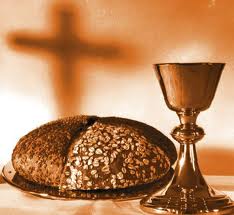
That’s why you, Church, are afraid to talk to me. The world has given you faulty language that fails to deliver truth, comfort, or babies. Give me God’s “gift language” every time. Remind me that children are a heritage from the Lord, a gift from Him that is received. And when I get mad that God has not yet given me the gift of children, keep watch with me in my grief and use some more of God’s “gift language.” Tell me about the gift of salvation won for me by Christ on the cross and applied to me in my baptism. Tell me about the gift of God’s Word which creates and sustains my faith in Him. Tell me about the gift of Christ’s Body and Blood given to me at the altar every Sunday for my benefit. And when I still grieve at my childlessness, gently remind me that God gives other good gifts in this life (fellowship, recreation, music, food, education, etc.), not just the gift of children.

So, don’t be afraid. Come up and talk to me. Just, please, leave all of that “control language” out in the world where it belongs and, instead, talk to me about the good gifts we share in Christ. I will try to do the same for you.

Fertility Guilt

Sometimes I feel guilty when I’m around barren couples. I have a healthy eight-month-old who I simply adore, and yet I find myself holding back that joy when I’m in the presence of the childless.

The truth is, three years ago I wondered if I might be barren, too. When I first met Katie, author of He Remembers The Barren, we both didn’t have any children. And we were both honest with each other about how that affected us. I was 29 at the time and two years into marriage. Not too old, but, by many physicians’ standards, losing ground fertility-wise.

Perhaps this is an affect of feminism (It couldn’t possibly be my personality, ha!), but in that season of my life I built up emotionally stoic walls to safeguard against self-pity. And I entrenched myself in my work. Sure, my husband and I wanted children, but if it wasn’t going to happen, then I focused on what was in front of me. After all, I was a deaconess. I had God’s Word in my back pocket (literally), and knew where to go to receive everything I truly needed, rather than wanted.

Then I suffered a miscarriage in 2009. Even though it was very early on (five weeks) and we trust God’s promises for that little one, it shook me only further to think that I might never hold a child of our own. So when I became pregnant again a year later, I kept that stiff upper lip. I didn’t want to get my hopes up. Yet as each trimester passed successfully, the magnitude of motherhood began to sink in.

And then joy of all joys, Knox was born. As if making up for nine months (and perhaps years) of emotional avoidance, my whole being and demeanor bursted like a broken dam, as I embodied what I imagined Mary might have felt when she voiced the Magnificat. My soul doth magnify the Lord and my spirit rejoices in God my Savior!

To say I was overjoyed to hold this little person would be a vast understatement. Even now, my cup runneth over as I look at him.

So when I think about how to address this miracle and blessing with other women who cannot conceive, I hesitate. I mean, I don’t want to come off as insensitive to their thoughts and feelings while gushing about my own. But as dear Katie has encouraged and reminded me, it is important to express what a gift our children are to whomever we come into contact.

I am also reminded that the baptismal liturgy urges all Christians to support these little ones in the faith, to nurture and teach them what God says, and ultimately receive His gifts of Word and Sacrament together. This is the barren soul’s invitation to serve in a very important way, as Sponsor and/or fellow Christian.

So please, dear barren sister and brother, forgive those of us who hold back from discussing their children with you. Be patient with them as they get to know you. My guess is that this takes time–for both parties–to eventually feel comfortable speaking freely. Let us pray that God grants us healthy and open lines of communication, rooted in Christ’s love, to bless us all in our given vocations. This so we may rejoice together in His many, many gifts. In Jesus name, Amen.

God Gives Good Gifts

God commanded Adam and Eve to be fruitful and multiply.  I can get on board with that.  And yet, I haven’t been given several fruits of my womb, nor have they multiplied  around my table.  Are there other good gifts from God for me?

YES, dear friend, there are many good gifts for you!  We can start by looking at Martin Luther’s meaning of the First Article of the Apostles’ Creed.  I believe that God has made me and all creatures; that He has given me my body and soul, eyes, ears, and all my members, my reason and all my senses, and still takes care of them. He also gives me clothing and shoes, food and drink, house and home, wife and children, land, animals, and all I have. He richly and daily provides me with all that I need to support this body and life. He defends me against all danger and guards and protects me from all evil. All this He does only out of fatherly, divine goodness and mercy, without any merit or worthiness in me. For all this it is my duty to thank and praise, serve and obey Him. This is most certainly true.   God gives you His love each and every day.  He has designed you and created you. And while you don’t understand why you don’t have childlren, God still cares for you.   He has given you a long list of earthly possessions and takes care of you on a daily basis.  He has given us His very words in the Holy Scriptures.

God has given you more than earthly blessings, though.  He has given you His Son.  Look at Luther’s meaning of the Second Article of the Apostles’ Creed.  I believe that Jesus Christ, true God, begotten of the Father from eternity, and also true man, born of the Virgin Mary, is my Lord. Who has redeemed me, a lost and condemned person, purchased and won me from all sins, from death, and from the power of the devil; not with gold or silver, but with His holy, precious blood and with His innocent suffering and death, that I may be His own and live under Him in His kingdom and serve Him in everlasting righteousness, innocence, and blessedness, just as He is risen from the dead, lives and reigns to all eternity. This is most certainly true.  Sin is every thought, word, and action which goes against God’s will.  I have been been envious and angry at God regarding my barrenness.  I have lashed out at God and tried to dictate to Him how my life should go.  I have tried to be in control.  There is no way I can make myself right with God once again.  Thus, He gave His Son Jesus to be the sacrificial payment for all wrongdoing.  I am forgiven!  This all comes by God’s grace.  It’s FREE – nothing we can do can merit God’s favor.  All our righteous acts are now good because of Jesus.  That’s quite a gift.

We receive even more gifts through the Holy Spirit.  Examine Luther’s meaning of the Third Article of the Apostles’ Creed.  I believe that I cannot by my own reason or strength believe in Jesus Christ, my Lord, or come to Him; but the Holy Spirit has called me by the Gospel, enlightened me with His gifts, sanctified and kept me in the true faith. In the same way He calls, gathers, enlightens, and sanctifies the whole Christian church on earth, and keeps it with Jesus Christ in the one true faith. In this Christian church He daily and richly forgives all my sins and the sins of all believers. On the Last Day He will raise me and all the dead, and give eternal life to me and all believers in Christ. This is most certainly true.  There is no way that I can receive full comfort for my barrenness unless I have faith in the Triune God, who truly knows me and cares for my entire being.  By faith, I can say, with confidence, that God has given me all good gifts.

At times, it’s hard to remember that God gives such goodness.  Go, dear sister, to your pastor and share with him your hurts.  He will, in turn, share Christ’s good gifts with you.  You receive Christ in Holy Baptism.  You receive forgiveness of sins through Christ’s Body and Blood in the Lord’s Supper.  You hear God’s promises for you in the words of Holy Scripture.  You pastor will rejoice with you in your baptism and the promises of God.  Our Lord Jesus Christ has only good gifts to give, and we are blessed to receive them.

Interview on “Studio A”

Thank you to KFUO Radio and Roland Lettner for interviewing two of our site hosts on the “Studio A” program yesterday afternoon. We hope you’ll have a listen, too.

Click here for a direct link to the program’s MP3 file. (Our interview begins at 29:10.)

Or, if you would like to learn more about KFUO Radio and the “Studio A” program, click here. (To listen to our interview from this link, click on the hour 2 MP3 file of the Wednesday, September 7th broadcast. Our interview starts at 29:10.)

The Difference

I recently had the joy of spending a few days this summer in the home of my dear friend in South Dakota. From dawn ‘til dusk, my friend’s five, little blessings ran around in baseball caps and tutus (sometimes at the same time) alternately playing doctor, reading books, putting together puzzles, working in the garden, and “helping” Mommy. My friend’s home is delightful chaos, and I found myself basting in the youthful commotion until my barren-weariness was good and tenderized from all of the love and attention.

I stayed long enough to need a load of laundry done, and my friend generously offered me the use of her washer and dryer. I popped down to her basement with my laundry bag in hand, and I almost tripped over my own dropped jaw at the sight of her laundry room floor.

There, sitting in an organized row, were six, full laundry baskets. Six! Upon closer inspection, I noticed that some of the laundry baskets even had extra baskets stacked underneath them. I counted them all. Sixteen. My friend owns sixteen laundry baskets!

All of those blessings running around upstairs obviously came with some dirty, back-breaking responsibility. Their life of playing and growing and learning resulted in my friend needing more laundry baskets than I have fingers on my hands. The term “mountain of laundry” took on a whole new meaning for me. I looked down at my wimpy lavender and lime green polka-dotted laundry bag and felt kind of embarrassed at its meager size.

I went upstairs and asked my friend, “Do you ever use all of those laundry baskets at the same time?”

She blushed. “Yes. Don’t tease me!”

“Um, that doesn’t warrant teasing. That warrants a maid!”

Here is the difference: I yearn for more laundry, and my friend yearns for less. I crave a little more chaos, and she craves a little more privacy. We can see the blessings and the burdens in each others lives. What a gift it is to know and trust that God in His wisdom and love gives both of us good gifts, and what a privilege it is to pray for each other and support one another in the body of Christ.

I hope my friend can come visit me in Dallas. I think she will be refreshed by the quiet and solitude of my home, just as I was refreshed by the perpetual, snuggly motion in her own. Though I may leave my laundry room door closed when she comes…

The Importance of Listening

Maybe you can relate. When I am grieving over my childlessness, I don’t want someone to explain away my grief. I also don’t want someone to offer practical solutions to my pain. I usually just want someone to listen.

When discussing this fact with my husband this afternoon, he drew my attention to the following excerpt on the importance of listening for the consolation of the brethren from Dietrich Bonhoeffer’s Life Together:

“The first service that one owes to others in the fellowship consists in listening to them. Just as love to God begins with listening to His Word, so the beginning of love for the brethren is learning to listen to them. It is God’s love for us that He not only gives us His Word but also lends us His ear. So it is His work that we do for our brother when we learn to listen to him. Christians…so often think they must always contribute something when they are in the company of others, that this is the one service they have to render. They forget that listening can be a greater service than speaking.

Many people are looking for an ear that will listen. They do not find it among Christians, because these Christians are talking where they should be listening. But he who can no longer listen to his brother will soon be no longer listening to God either; he will be doing nothing but prattle in the presence of God too. This is the beginning of the death of the spiritual life, and in the end there is nothing left but spiritual chatter and clerical condescension arrayed in pious words. One who cannot listen long and patiently will presently be talking beside the point and be never really speaking to others, albeit he be not conscious of it. Anyone who thinks that his time is too valuable to spend keeping quiet will eventually have no time for God and his brother, but only for himself and for his own follies.

…There is a kind of listening with half an ear that presumes already to know what the other person has to say. It is an impatient, inattentive listening, that despises the brother and is only waiting for a chance to speak and thus get rid of the other person. This is no fulfillment of our obligation, and it is certain that here too our attitude toward our brother only reflects our relationship to God…But Christians have forgotten that the ministry of listening has been committed to them by Him who is Himself the great listener and whose work they should share. We should listen with the ears of God that we may speak the Word of God.” *

Amen.

* (Bonhoeffer, Dietrich, Life Together. New York: Harper & Row Publishers, Inc., 1954. pgs, 97-9.)

Words to Memorize

Other than the Lord’s Prayer, I can think of no better prayer for the barren woman to have engraved in her heart than the collect for the fifth Sunday after Trinity. I have pledged to memorize it myself this week so that it might be quickly recalled during those moments of heartache. It beautifully refocuses our desires to that which will never disappoint us.

O God, You have prepared for those who love You good things that surpass all understanding. Pour into our hearts such love toward You that we, loving You above all things, may obtain Your promises, which exceed all that we can desire; through Jesus Christ, Your Son, our Lord, who lives and reigns with You and the Holy Spirit, one God, now and forever. Amen.

In the Courts of the Lord’s House

How lovely is your dwelling place, O LORD of hosts! My soul longs, yes, faints for the courts of the LORD; my heart and flesh sing for joy to the living God. Ps. 84:1-2

There is no better place to go when you are at the breaking point, no place more suited to address your emotional wounds and your breaking heart, than the House of the Lord. I don’t just mean the building itself, of course, but the Divine Service that is held there weekly by the man who is in the stead of Christ and commanded by Him to administer to you the medicine you need. The cleansing, healing, and nourishing effects of what happens each Sunday to those gathered in the Lord’s House are supernatural and, though invisible to the naked eye, completely transforming to the soul.

In They Will See His Face (St. Louis: Concordia Publishing House, 2002), Richard C. Eyer highlights seven parts of the liturgy that speak to the frailty of our human existence and are particularly meaningful for the barren woman. The consistent and dependable flow of liturgical worship weaves Scripture throughout and includes all the promises that seem to be forgotten throughout the week. Our souls, so weak and weary from the crosses we carry and so easily distracted by worldly pursuits, have the opportunity to refocus on Him who is the true source of all help, comfort and joy—Jesus Christ.

At the beginning of the service we have the opportunity to confess those sins that always accompany the soul that feels deprived of something. There’s discontent, jealousy, impatience, even idolatry at times. Guided by the words written in our hymnals we admit that, “We have not loved You with our whole heart,” and we plead with the Lord to, “Forgive us, renew us and lead us, so that we may delight in Your will and walk in Your ways, to the glory of Your holy name.” That’s right, the sinner remembers, through Christ’s renewal and His guidance, I can find delight in His will, whatever that may turn out to be.

Having confessed our sins and then receiving absolution from our pastor, we seek to enter into God’s presence with what Eyer refers to as the “password,” the Invocation, where we speak the name that was spoken to us on the day of our baptisms, when we were brought into God’s family: In the name of the Father, and of the Son, and of Holy Spirit. “It is there,” says Eyer, “in the presence of God and lifted out of ourselves by God, that we find healing for all our anxieties, worries, and fears. And if we are willing, they can all be left behind so that we may return to our homes in peace” (p. 35). In God’s presence, under the shadow of His name, there is no need for those anxieties, worries, or fears. They are washed away once again.

The experience of barrenness can be so isolating and can cause one to feel separated from others who might not understand the depths of your pain. A harmful gap can occur between you and those around you who have experienced such effortless fertility. It is in the fellowship of our brothers and sisters in Christ, coming into the presence of God and joining together throughout the service in prayer and song that this gap is bridged and our focus becomes united. “Loneliness cries out for the solitude that comes from a maturing faith. Solitude is found in fellowship with God and the worshiping community, where we are fed the Gospel in Word and Sacraments by God Himself” (p. 46).

Depression is also one of many responses to barrenness, and Eyer helps us see how vital it is that those dealing with depression listen carefully to the Word that is read during the service. “The Old Testament, the Epistle, and the Gospel assure us that in the midst of our difficulties, disappointments, and depression, God is there to do what we cannot. … The importance of hearing the Word of God in times of depression, as well as any other, is that it provides a vision of what is objectively true regardless of how we feel at the moment. We need to hear the Word of hope even if we don’t feel it at the moment. God’s Word to the believer is always a Word of hope” (pg. 70). As opposed to what some well-meaning matron of the congregation might tell you, this “hope” that we trust in is not the hope of conceiving—it’s so much bigger than that. It is the hope that the One already conceived long ago by the Holy Spirit, our Lord Jesus Christ, will make all things new for us after we breathe our last breath on this earth. No more tears, no more longing, no more wishing for something that is not ours—only the acquisition of that heavenly reward which we do not deserve.

I encourage you to read Eyer’s book and learn more about “The Peace of the Lord and the Healing of Grief,” “The Prayers of the Church and Healing of our Sickness,” and “The Creed and the Healing of our Intellect.” So much more comfort and encouragement awaits the barren woman in these pages. She who understands what is truly offered in the Divine Service will cherish the relief that it brings and will be better able to acknowledge Christ as the only One who fully satisfies our wounded hearts and makes us whole again.

I come, oh Savior, to Thy table

For weak and weary is my soul.

Thou Bread of Life alone art able

To satisfy and make me whole.

Lord, may Thy body and Thy blood

Be for my soul the highest good.

                Lutheran Service Book #618