Infertility

Let Us Care for You!

A Middle Eastern woman with her daughter-in-lawI know one of the reasons you won’t confide in people about your barrenness. There are those who insist on fixing you. You know, the people who slip you a piece of paper with the name of a health book they think will cure your barrenness, or the people who tell you to relax or – my personal favorite – start the adoption process in order to get pregnant.

But not everyone wants to fix you. Some people just want to care for you. Leah Houghton, a mother and part-time social worker, is one of those people, and she has something she wants to say to you:

The journey to parenthood has certainly been very trying for my family. Just of few of these trials include a partial-miscarriage of my first pregnancy where I miscarried one of the twins with which I was pregnant. During a standard sonogram, our second child was diagnosed with a cleft lip and palate. We were told by doctors that he would be blind, deaf, and mentally delayed. We were also told he would have heart and lung problems and would be “grossly disfigured.” We would have to wait until his delivery to discover that none of these things were true about our son. Yet, we still faced (and are still facing) numerous surgeries, doctor’s visits, clinic appointments, speech therapy evaluations, etc.   

Just a little over a year after our son’s diagnosis, we experienced the miscarriage of our third pregnancy. I have also experienced moderate postpartum depression after the birth of my second child. Then, after I stopped nursing my daughter, I began experiencing severe anxiety and panic attacks (related to hormonal changes) that nearly incapacitated me for months. However, throughout all of these trials, the Lord has provided our daily bread and given us such grace and comfort. All these gifts truly surpass our understanding.

Sisters, I know from the outside that the woman who has a handful of young and energetic children may seem like the last person on earth to be able to provide you with any comfort when you are struggling with barrenness, and it is true that I cannot imagine the grief that an empty womb and an empty home must be. Yet, I encourage you to please tell your sisters in Christ your struggles. Let us care for you. Let us be a quiet ear to listen, a shoulder to cry on, and a comforting hand to hold. No, I don’t know what it is like to walk by empty nurseries that have been prayed over night after night with hopes that God would choose to fill that nursery in some way. No, I don’t know what it is like to have empty arms that so long to hold a child near. But, I do know what it is like to carry a child when you don’t know if you will ever get to bring that child home from the hospital; I know what it is like to grieve the loss of a child that you will never see on this earth; and I also know the strength and peace that can come from waiting on the Lord. And, sisters, I want to encourage you and carry that burden with you in prayer and love.

Please let us care for you!  Let us pray with and for each other and bear with one another in love!

Leah Houghton

Family Ties

Can you see the similarities? Those tell-tale,

family resemblances between an aunt and her niece?

IMG_1217

No? Look harder.

IMG_1217

Ah, yes.

They have the same smile;

the same eagerness to hug;

the same love of books and trees and the outdoors;

the same ability to turn Barbies into heroines;

the same preference for berries over candy;

the same irritation with Veronica Salt and Edmund Pevensie;

the same tendency to be a little too honest and blunt;

the same adoration of a certain Uncle Michael;

the same Baptismal markings of redemption on their foreheads and on their hearts;

and the same confession on their lips of Christ crucified for sinners.

They may have been born on different continents, but have no doubt. They are family, and their ties run deeper than flesh and blood.

Have you and your husband considered adoption?

I Just Can’t

LSome of you look at me like a deer in the headlights. You see the book I have in my extended hand. You see my intent to give it to you, and you flee.

“No,” you shake your head. Some of you even wave your hands. “No, I just can’t. I can’t read that.”

I am not into waterboarding, so I quickly slip the tool of torture back into my bag. Out of sight. “It’s okay. You don’t have to read it.”

This is usually when you start to cry. “I-I’m sorry. I’m sure it’s good. It’s just that…that…”

I know. I really do. You don’t want the word barren anywhere near you. You don’t want to read about someone else’s pain, because your own is already too much to bear. Your disappointment and fear and anger have all but extinguished the little flicker of child-fire inside of you, and you think this book is a swift wind that will snuff it out. You don’t want to be content in your childlessness. You want a child, and you will have one or go down fighting.

Most of us go down fighting, and that, dear sister, is why I wrote the book; not because I want your child-fire to die, but because I want you to be encouraged by the truth:

You are special, beloved by God, your Father. He has not forgotten you, nor has He forgotten that you want a child. Yet, children are not a prize for you to earn, a commodity for you to demand, nor an idol for you to worship. They are a gift which the Heavenly Father only has the privilege to bestow and to withhold. If God makes you a mother, then you can receive His good gift of a child with all joy and confidence in His love for you. If God does not make you a mother, then you can still know with all joy and confidence that God loves you completely in His perfect gift of the Child Jesus whose sacrifice on the cross atoned for your Sin and reconciled you to your Heavenly Father. You are God’s own child, purchased and won by the blood of Jesus, and God promises in His Word that He will work all things – even your barrenness – for your eternal good.

It’s okay to be sad. It’s okay to be okay. It’s even okay – Dare I write it? – to be content today without a child. His grace is sufficient for you. It really is.

Now, would you please go read the book? There are so many other comforting things I want to tell you.

The Downton Abbey Dilemma

Downton AbbeyI’m a Downton Abbey addict. I don’t really watch prime time television at all, you see, except that someone turned me onto this PBS Masterpiece series from Great Britain a few years ago and I just love, love, love it. But there wasn’t really ever a good reason to blog about this passion on a site about barrenness–until now.

This past week’s episode included a scene where Lady Mary is discussing how to change the home’s old nursery into a sitting room for herself and her new husband Matthew. Matthew, who heard that Lady Mary had been to see the doctor recently, gently touches his wife’s arm and, with a twinkle in his eye, wants to know when they should possibly be thinking about using the nursery as a nursery (as if she had some kind of control over this in 1920). Lady Mary nervously shrugs off his comment and casually replies, “Oh, there will be time enough for that later.” In true Downton Abbey form, this brief exchange foreshadows a new storyline that will inevitably take more shape in upcoming episodes. The audience is left to ponder these two questions: 1) Is Lady Mary embarrassed that she is not yet pregnant after being married for several months now? or 2) Is Lady Mary not particularly interested in having children and knows that this attitude will not sit well with her husband?

The dilemma that I face is that I may never know the answers. This is a difficult pill for an addict to swallow.

Why can’t I just tune in next week and the week after to find out? No, my TV is not broken, nor do I have any social responsibilities scheduled for Sunday nights. It’s because the producers of the show have decided to reintroduce the fact that one of the servants is gay, and his sexuality (which was implied but rather brushed over at the beginning of the series) is now going to be featured as a storyline. In watching some interviews with the cast on YouTube I discovered a little more about what’s to come, seeing as how there is a new and rather attractive footman who’s joined the show who has caught the eye of more than just the housemaids. There won’t just be talk anymore about homosexuality. There will be scenes. Downton Abbey is about to join the rest of prime time’s sleazy line-up.

The thing that gets me is that one of the main reasons I adored the show was because it takes place during an era where honor, integrity, and morality were thought of highly. Of course it wouldn’t be modern television if some of the characters didn’t fall from grace, but these indiscretions were not shown, and there was regret and embarrassment after the fact. There was confession and forgiveness demonstrated within the family. I found that refreshing. So refreshing, in fact, that the disgust over the upcoming storyline is not enough to make me truly want to wash my hands of the whole program. I keep pondering the other storylines and it kills me when I think about not being able to follow them. This is what addiction means.

I’m finding that these kinds of dilemmas are becoming more common for the modern Christian, and because there is so much good wrapped up with a little bit of filth, we often feel it’s ridiculous to make such a fuss. Take for instance a mother of an only son who loves him so dearly and wants so desperately to keep peace within her family that she bites her tongue when he announces that he is living with his girlfriend. It’s not what she would have wanted and she knows it’s not right, but he’s such a good son and a responsible young man, etc. They’ll probably get married anyway.  Or what about the father whose daughter has suffered for so long with barrenness that he sees no point in asking too many questions when she announces that she is pregnant following an IVF procedure. He wouldn’t have recommended this procedure, but she hadn’t asked for his advice and the procedure is over so why bring it up? Afterall, a child is on the way!

Living the Christian life is hard. Having an active conscience is stressful. It makes you unpopular and you often feel like you’re missing out on the fun. Don’t think I haven’t tried to find ways around this problem. It’s very possible that Downton Abbey may not focus on the gay servant next week. I don’t know when this is going to happen. I might be able to get a few more episodes in. I could find a friend whose conscience is not so burdened and ask for the summaries after each episode to make sure I know what’s going on. Or I could find the summaries online somewhere, I’m sure.

Such are the musings of an addict.

As obedient children, do not be conformed to the passions (addictions??) of your former ignorance, but as he who called you is holy, you also be holy in all your conduct, since it is written, “You shall be holy, for I am holy.” And if you call on him as Father who judges impartially according to each one’s deeds, conduct yourselves with fear throughout the time of your exile, knowing that you were ransomed from the futile ways inherited from your forefathers, not with perishable things such as silver or gold, but with the precious blood of Christ, like that of a lamb without blemish or spot. 1 Peter 1:14-19 ESV

Wow. I’ve been “ransomed from the futile ways” of my forefathers “with the precious blood of Christ.” This is vivid imagery. And speaking of imagery, I know that, just as I ponder all the possible outcomes of the innocent storylines of Downton, if I keep watching this show I will be thinking about all the storylines, and those scenes that are inevitably coming will be imprinted on my mind. Do I want to be thinking about these things?

Finally, brothers, whatever is true, whatever is honorable, whatever is just, whatever is pure, whatever is lovely, whatever is commendable, if there is any excellence, if there is anything worthy of praise, think about these things. Philippians 4:8 ESV

If I find out that the offending storyline ends at some point soon, I may make my way back to the Abbey. I know there is a season 4 coming up. Perhaps there’s still hope. In the meantime, I’ll have more time to read on Sunday evenings I guess. Oh, but how I will miss them all!

An Everlasting Name

A pastor friend drew my attention to the following excerpt from January 4th’s Old Testament reading (Isaiah 56:1-8) from The Brotherhood Prayer Book‘s daily lectionary, which includes this part:

3. Let not the foreigner who has joined himself to the LORD say,
The LORD will surely separate me from his people;
and let not the eunuch say,
Behold, I am a dry tree.
4. For thus says the LORD:
To the eunuchs who keep my Sabbaths,
who choose the things that please me
and hold fast my covenant,
5. I will give in my house and within my walls
a monument and a name
better than sons and daughters;
I will give them an everlasting name
that shall not be cut off.


Comforting, don’t you think?

Shifting My Focus

6903440032_ce4ef69a95Some words of wisdom from one of our readers:

I am reading The Spirituality of the Cross by Gene Veith Jr. and he quoted the following text by Richard Eyer (although it was written with euthanasia in mind, I find it still applies to the theme of “My Suffering Is a Blessing”):

Luther says, “Without the theology of the cross man misuses the best in the worst manner,” because the theology of the cross is the only way God works. “God wished to be recognized,” not in health, wealth, and success, but “in suffering.” As much as parishioners may want to see the hand of God in nature’s beautiful sunrises, moving stories of conversions, or success in parish programs, it is in the cross of Christ and in bearing their own crosses that God chooses to reveal His heart to them.

In speaking of the theology of glory Luther says, “A theology of glory calls evil good and good evil. A theology of the cross calls the thing what it actually is.”…

In short, the theology of the cross says that God comes to us through weakness and suffering, on the cross and in our own sufferings. The theology of the cross says, “My grace is sufficient for you, for my power is made perfect in weakness” The theology of glory on the other hand says that God is to be found, not in weakness but in power and strength and therefore we should look for him in signs of health, success, and outward victory over life’s ills. … All of us hold to a theology of glory at times, not wanting to surrender all to God, but holding out for how we want God to appear and do his magic in the midst of our troubles.

If we do not understand the distinction between the theology of the cross and the theology of glory, we will find ourselves drifting toward a theology of glory in which our culture believes God works though the self affirmation of pop psychology and instant gratification. We will begin to demand that God justify himself to us in our sufferings by giving us healing and success. We will demand a God who does what we want him to do and we will reject the way of the cross by which he comes to us. We will become fearful of suffering and preoccupied with its avoidance at the expense of truth and faithfulness, calling the evil of euthanasia “good” and the good of suffering “evil”.

Richard C. Eyer, Pastoral Care Under the Cross: God in the Midst of Suffering (St. Louis: Concordia Publishing House, 1994), 27-28.

Through our sufferings we are drawn closer to Christ and, more specifically, the cross. There we see God’s ultimate love and sacrifice for us undeserving sinners. We are reminded of the best gift we have through faith: the salvation that Jesus won for us through His perfect life, death, and resurrection. Even though I know this to be true, it helps to turn back to quotes like this one and remind my sinful nature to stop navel gazing in the midst of my suffering. Instead, I can shift my focus to the cross and what God has already done for me there.  

L. Meyer

What If It Doesn’t Work Out?

Joanna and I have been corresponding on the topic of adoption. Here is a tidbit of wonderfulness from one of her recent emails:

I think there may be a difference in the way children are gifts from God (and they are) and the way, for example, the Sacraments are gifts from God. The Sacraments are free gifts, given to us by God for the forgiveness of our sins. They are gifts from God that are purely for our benefit. 
 
It seems to me that children are gifts from God, but the purpose of the gift is not so much for the benefit and happiness of the parents (although that certainly comes along with it) but for the welfare of the child. The gift of a child is an opportunity from God to serve our small neighbor in love. 
 
I wonder if remembering this would be a healthy approach to the whole confusing world of adoption. The idea of loving our neighbor (rather than receiving something for ourselves) allows the whole fear of “what if it doesn’t work out” to be a little less intense. Because if God does allow you to adopt, you can love and serve your neighbor in the child. And if He doesn’t, you can still love and serve the neighbors all around you, because they are gifts from God, as well.  

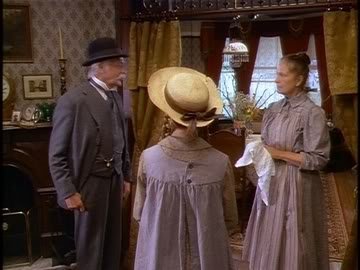
marilla-cuthbert-is-surprised

When did I start noticing Marilla’s fear and insecurity over Anne’s?

No More Hush-Hush

For years now, our talks at home about children have been somewhat restrained. We have endured years of waiting and hoping. It was painful to talk about growing our family. There were no guarantees that the Lord would answer our prayer. Yes, we talked about our hopes for a larger family, but those conversations were short and cautious. It was hard to imagine a larger family when nothing seemed to make that a reality. Meals were eerily quiet. Talking aloud about having children made the pain of not having them all the more real.Hush now.

As we draw closer to receiving our little girl, our dinner conversations have become more lively. We talk about the personality our little girl might have. Family vacations and birthday parties are being planned as we sit around our table. More smiles are shared together.

This does not mean to say that the Lord has abandoned us during our wait. On the contrary, He has carried us through the sorrowful days and meals. He has continued to provide food for our table and an environment in which we can continue to receive His good gifts.

Dear friend, I encourage you to speak aloud your pain. It’s okay to talk about wanting children, even if they haven’t been given to you. I wish I had shared those sorrows with my loved ones. I cheated them out of the opportunity to love me and help carry my grief. They had often told me that they loved me, but I was still too scared to actually talk about my barrenness with them. Share your sorrow with your spouse. Tell your pastor; then hear him read the psalms to you. God’s Word brings true comfort to a hurting soul. God says that He loves you. Now that’s something to share.

An Agonizing Absence

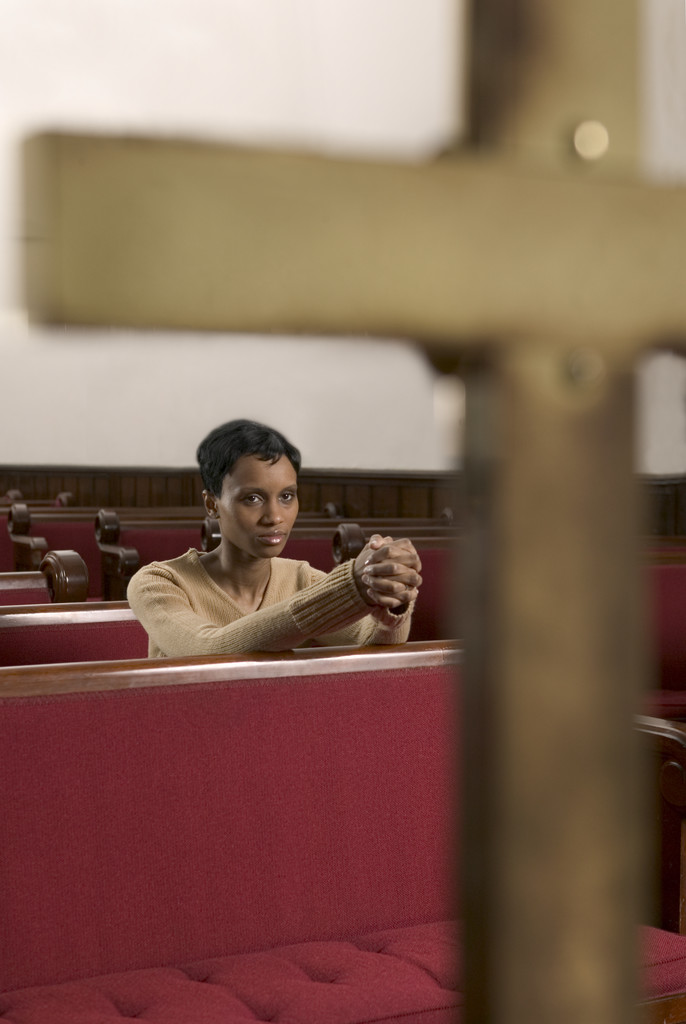
Woman Praying in ChurchA barren friend recently confided to me, “I broke down crying the other day. I don’t really know why. I mean, I thought I would be over this by now.”

I don’t think we ever get over this barrenness thing, because no matter how comfortable we become, no matter how content we grow in our childlessness, it is still not the way things are supposed to be. God commanded us via Adam and Eve in the garden to be fruitful and multiply, and we know that it is God’s good will for us to have the blessing of children in marriage.

Yet, we don’t.

Our barren wombs are a reminder, a manifestation even, of the brokenness of this Sin-sick world, and, even though we are blessed and fruitful beyond measure today in Christ, the wrongness of our childless marriage still stings. And so we grieve.

Rev. Gregory Schulz describes it this way in The Problem of Suffering: A Father’s Hope:

[G]rief is love. This means that grief is a kind of care…Grief as care is an obsession, an attention – not to “mortality” or to “the human condition” – but to a person who is at the same time dearly loved and agonizingly absent. (Schulz, 102-3)

We cry, because our dearly loved children are agonizingly absent.