The Failure of Sex Education in the Church

One of the aspects of barrenness that is so awkward is the fact that the “success” of your marital relations (more modernly called your “sex life”) with your spouse is often scrutinized by those around you, either privately in their own minds, or quite publicly to your face. The joining of two fleshes into one in the bonds of holy matrimony used to be treated with such modesty and respect. No one would dare ask you whether you’re “doing it” right or if you’ve tried such-and-such a method. But the sexual revolution changed all that, and in numerous Christian publications we read that the act is a beautiful, natural part of marriage and there’s nothing to be embarrassed about. We should celebrate our gift of sexuality and teach the children in our Church all they need to know to be prepared for utilizing this gift. But is this what the Bible says? When we blush at the questions about what’s wrong with our reproductive organs, is that for a good reason, or are we just prudes?

Linda's bookLinda Bartlett, former national president of Lutherans for Life, has just published The Failure of Sex Education in the Church: Mistaken Identity, Compromised Purity, which exposes the myths that our generation, as well as our parents’ and grandparents’ generations, have been taught to believe about what children should know to be prepared for marriage, the marital act, and procreation.

Bartlett begins by giving the necessary history of how the Church,  during the mid-20th century, put too much trust in “experts” instead of the inspired Word of God and willingly traded in our biblical understanding of manhood, womanhood, procreation, parenting, and purity for a more “scientific” approach to teaching children about the intimacies of marriage. Falsified, inaccurate, and even perverted studies on the “sexuality” of the human male and female conducted by Alfred Kinsey were presented to universities, medical associations, and church bodies as facts which could not be ignored by enlightened academics. Christianized versions of the sexual revolution’s message were then (and still are) passed down to schools and parents to share with children.

Are just what are some of these myths?

  • Children are sexual from birth.
  • Children should be taught about sex, and with the proper terminologies, beginning in early elementary school.
  • If children are not taught about sex early on, their naiveté could make them prey to sexual predators.
  • Parents aren’t trained to properly teach their children about sex. The schools are the best environments for this to take place.
  • Boys and girls should be taught about puberty and sexuality while in the same classroom, since there’s nothing to be embarrassed about.
  • Sex education will help prevent unplanned pregnancies, STD’s, and abortions.

The Church was naive in its promotion of sex education in the parochial schools, Bartlett points out, but not malicious. We were deceived into believing that we are “sexual from birth,” and this brainwashing had the complete opposite effect on our Church members as what was intended. It cleared the way for the acceptance of fornication, homosexuality, birth control, and even abortion as a normal part of life for those who are simply expressing their sexuality – being who they thought they were created to be.

But that’s not how we were created, Bartlett reminds us. The solution to the mess we are in now is our Baptism. This is where we received our true identities as children of the Heavenly Father, not sexual beings created to express our sexuality, but holy beings, created to live holy (not sexual) lives. “It is important,” Bartlett says, “for the Body of Christ to see each member as fully human as opposed to sexual and, therefore, an instrument for God’s purpose and glory whether a child or adult, single or married, in this circumstance or that,” (pg. 108).

Because Bartlett presents such shocking evidence of our deception, she presents her case in the form of a patient dialogue between herself and her readers, including over 100 questions and then answering almost every objection one could think of to the notion that there is anything wrong with the way the Church has been educating her children. Her love and concern for her Church family flow through each section as she gently reminds us all that, “Even well-intentioned sex education in the Church leans the wrong way if built on the wrong foundation,” (pg. 129).

If you have children, if you teach children, if you are related to children, or if you once were a child, this book is for you.


Infertility Ethics Symposium

Thank you to Andy Bates and KFUO’s His Time show for interviewing Dr. Jeff Gibbs and me this morning on the upcoming Infertility Ethics Symposium at Concordia Seminary in St. Louis.

You can listen to the interview here.

Reporter Online also recently published a helpful article which explains why the LCMS Life Ministry and the Concordia Seminary Life Team are co-sponsoring this important and timely event.

You can read the article here.

Cow Choir

IMG_3444 copy

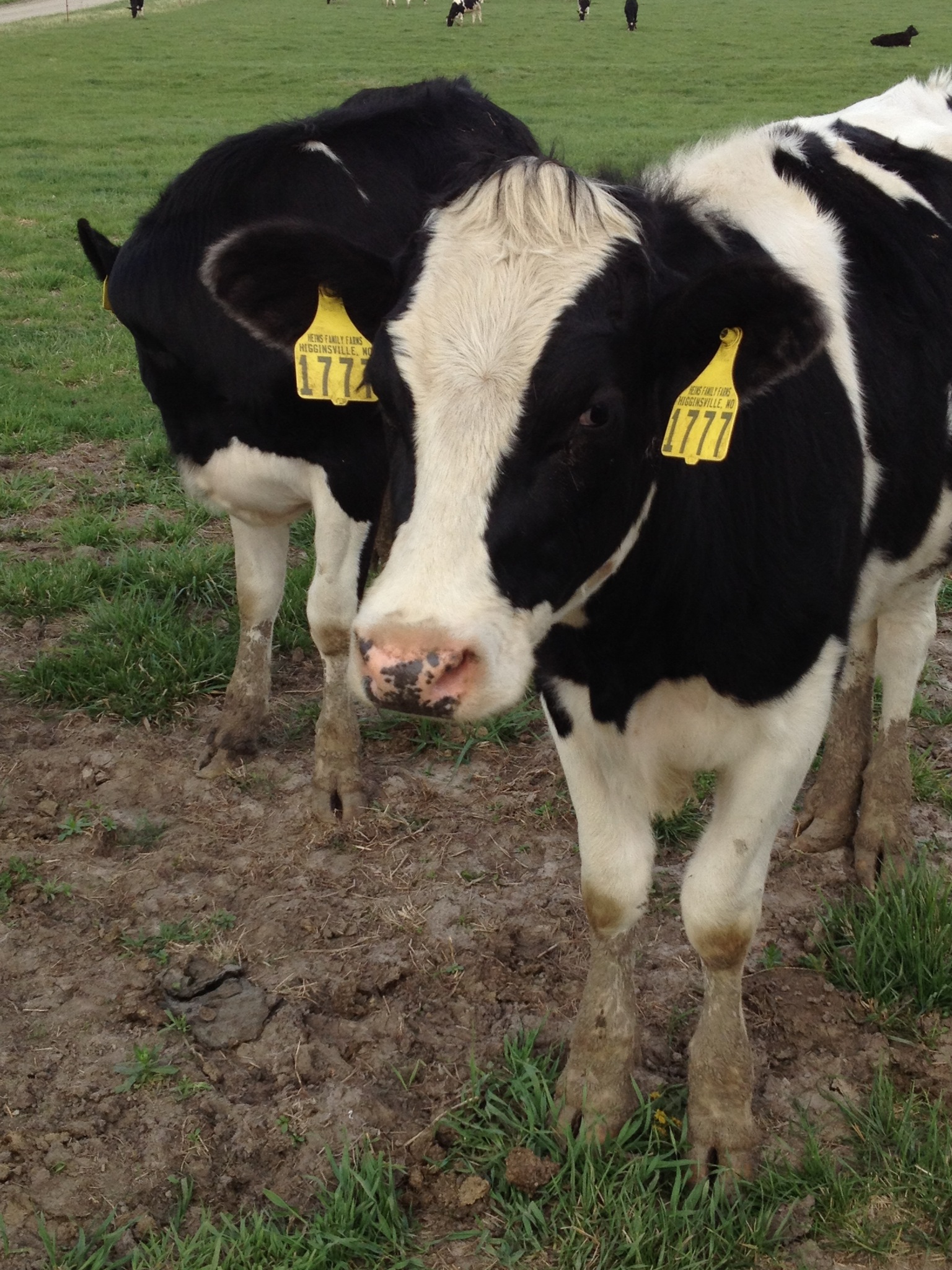
I stood next to the electric fence, its current of energy clicking like a castanet around the perimeter of the rolling pasture. I had just finished my morning run, and my senses were feasting on the lush humidity of green grass, mud puddles, and cow pies. I couldn’t help but sing.

I am Jesus’ little lamb,
Ever glad at heart I am;

A nearby heifer lifted her head and swung my way.

For my Shepherd gently guides me,
Knows my need and well provides me,

Another spotted girl on the southern slope abandoned her to-go breakfast and ambled towards the music. Then, another. And another. The heifers were peeling off one by one, now, defying the herd mentality for music. Perhaps cows and musicians are kindred spirits?

Loves me ev’ry day the same,
Even calls me by my name.

IMG_3446 copyAt this point, six black-and-white heifers stood silently before me in a line, their shoulders hunched together like shy teenagers at a party. I was singing about the wrong animal, but they didn’t seem to mind. At least the Hero was correct. I started in on stanza two.

From somewhere behind me, a screen door opened and slammed shut, and soon two boyish pairs of bare feet were braving the gravel driveway to come stand at my side. Apparently, cows are not the only creatures willing to leave breakfast for a good hymn-sing.

“Let’s sing the Offertory,” I suggested to my short companions. They didn’t hesitate, their sweet voices floating over the sun-streaked countryside like birds on a breeze.

Create in me a clean heart, O God,
And renew a right spirit within me.

Cast me not a way from Thy presence,
And take not Thy Holy Spirit from me.

I looked over my shoulder to see the thirteen-year-old in braids who had quietly emerged from the farmhouse to join our choir.

Restore unto me the joy of Thy salvation,
And uphold me with Thy free Spirit. Amen.

The cows stared at us, quiet and motionless. They didn’t applaud, but they also didn’t leave.

“I think they like our music,” I said.

The older boy leaned over and whispered, “They must be Lutheran.”

The cows didn’t protest.

“But which one is the pastor?” he asked.

“I know,” the younger boy piped up. “The bull is the pastor.”

I contained my smile. “I bet you’re right. God calls men to be pastors, so it must be the bull.”

“But that one’s the organist,” the older boy confirmed, pointing to the first heifer to join our songfest. One strand of grass hung awkwardly from the corner of her mouth. The thirteen-year-old giggled with delight.

“Yes, I think she is.”

We sang a few more hits from Lutheran Service Book before waving goodbye to our cow kin. As I headed into the house to claim my own spot at my hostess’s table, I couldn’t help but thank God for dairy farms, Missouri breezes, the hospitality of dear friends in Christ, the faith of little Lutherans, and the gift that is the Church’s song.

Some days, in the fellowship of Christ, I almost feel like a mother.


Cross-Bearing


Simon-of-Cyrene

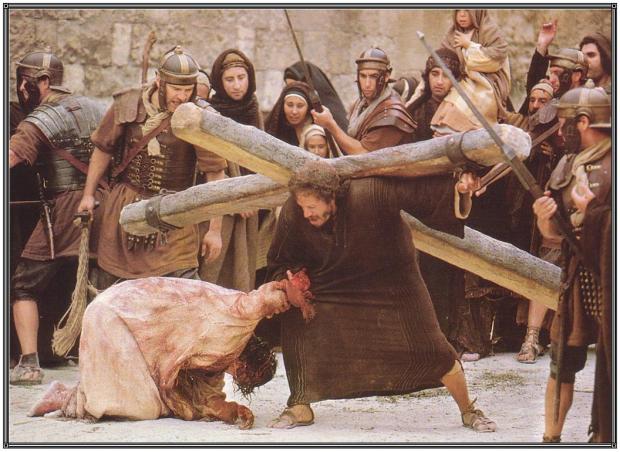
We are Simon of Cyrene.

We are called out of our comfortable existences – away from our well-laid plans and trips and vacations – to pick up the cross and turn towards Golgotha.

We are called to step alongside our bloody Savior.

We are called to messy good works which our Lord has prepared in advance for us to do.

We are called to witness the Suffering Servant pour out His blood for our atonement.

We are inconvenienced – yes, even annoyed – to have to bear the weight of something so filthy, but we are blessed beyond reason to be plucked from the crowd of goats. For we, in our cross-carrying, see the Savior’s power to bear more than just the weight of splintery wood. We see Him bear the crushing weight of Sin so that nothing – not our sin, not death, not the devil – can separate us from the love of God.

We who have been baptized into Jesus’ death will carry the cross and die with Him, but – Good News! – our Savior did not stay dead. He is risen, and we will rise again, too! Alleluia!

So put a shoulder under it, Simon.

Lamentation

My husband and I recently took a nostalgia trip to Kansas City (that’s where we met, y’all) and spent an afternoon at the Nelson-Atkins Museum of Art.

I was wandering through an exhibit, chewing on a particularly vibrant rendering of John the Baptist by Caravaggio when I threw a glance towards this oil on canvas by American painter Albert Bloch (1882-1961).

IMG_3474 copy

My heart jumped in my throat, the strangulation immediate. I fought down the nausea of recognition, for I wasn’t looking at a painting. I was looking in a mirror.

There I stood. There I sat. There I knelt. There I hid. There I scorned. There I blamed. There I questioned. There I wept. There I comforted. There I rejoiced.

Every posture of grief, every thought of denial, every self-absorbed motivation, every moment of isolation, every cross-bearing tear, every giving in, every turning to another, every turning to the Light.

I stood before my reflection and barely took notice of a father somewhere behind my right shoulder explaining a nearby painting to his school-aged daughter. They were oblivious to my plight.

I didn’t cry in the museum if that’s what you’re wondering. No, tears aren’t for open exhibits on nostalgia trips. If this painting teaches us one thing, it’s that grief likes to hide her face from even you.

She saves her tears for locked hotel rooms and public restroom stalls.

The name of this painting?

Klagelied.

Lamentation.


“May we both be like Anna”

There are times when God in His wisdom and mercy grants one of us our request for a child. So He has seen fit to do for our sister in Christ, Abby, and I don’t think I’ve ever read a more beautiful “sharing and bearing” epistle in my entire correspondence with women who struggle under the cross of barrenness:

We had the marvelous, bittersweet gift of, for once, hitting a “due date” [from one of our miscarried babies] with another baby on the way, and now that we are rounding the corner of the third trimester, it’s maybe sinking in? I am so happy and so scared, still, for her. I am praying all the more for the Lord’s return for us all and many baby blessings in the meantime.

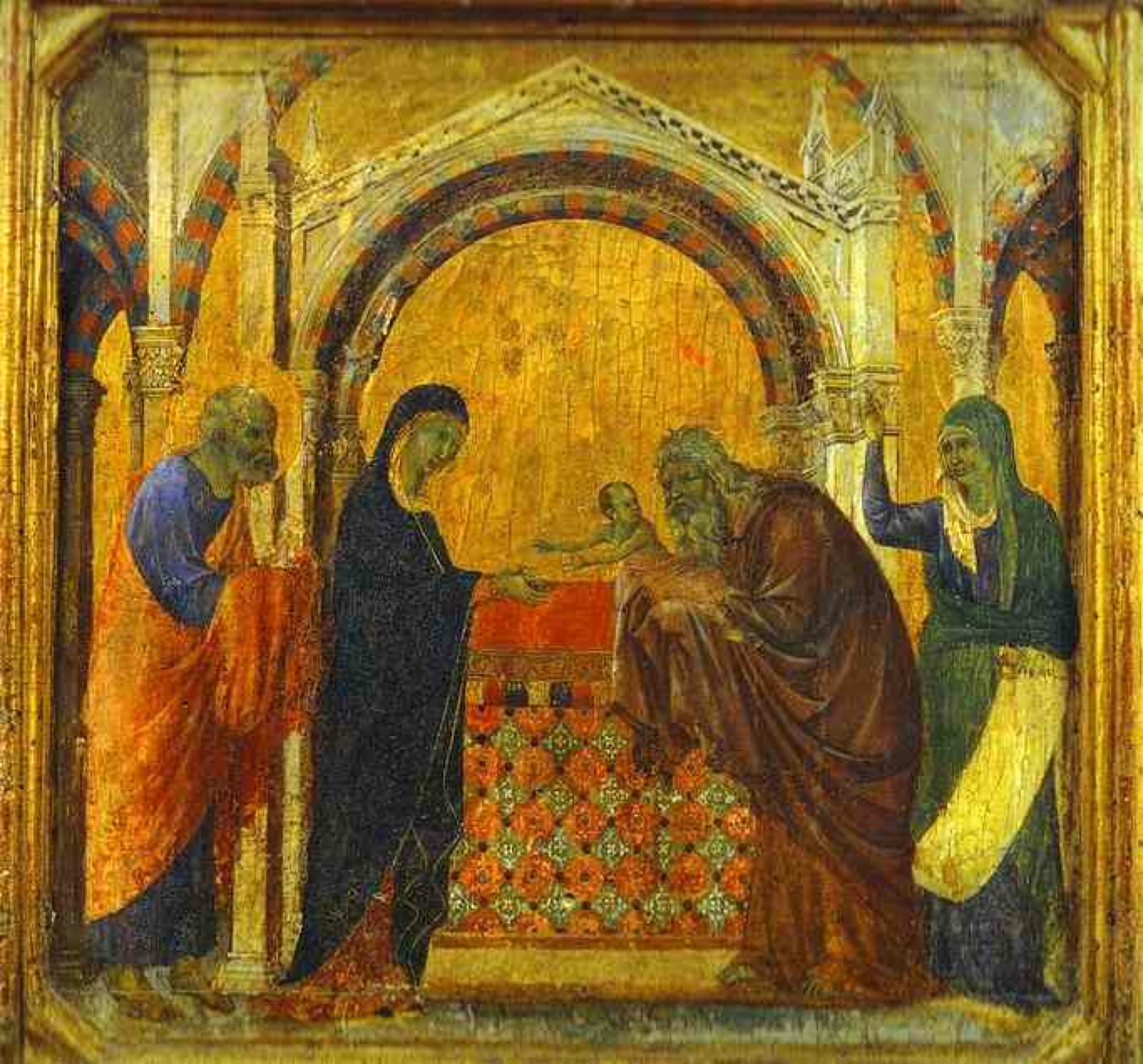
We are naming her Anne in honor of Hannah’s prayers and God’s marvelous favor to Anna, which came in the revelation of the Messiah and NOT in the form of a baby of her own. Because we have been so open with friends and family about our miscarriages, it has proven more natural to reply graciously to those who say things about how much the baby will “help us heal” from the miscarriages. I’m sorry, the only baby who does that is Jesus. I refuse to believe that this girl is the answer or solution. That would not be fair to expect of her. And we have all heard those awful stories about umbilical cords that wrap too tight, little lungs that just won’t expand, or chests that stop beating one night…. if one of those things were to happen to a baby that’s supposed to heal me, where would I be then? (Devastated, of course, but preferably not bereft of all hope in the Gospel.) 

The Bible does not say, “For God so loved the barren/miscarrying woman that He gave each one the promise of her own child, that whosoever believes in Him will not remain barren but will have a procreative life.” Because of His love for the whole world, He gave His Son so we could have eternal life. What good, good news. 

Much love to you, and I’m praying this news comes to you in God’s timing. May you see manifold witness of His love and care for you in every bit of your day, and may we both be like Anna, who found her satisfaction in God’s faithfulness to provide salvation.

Thank you, Abby, and amen.

Anna Simeon Presentation in the Temple - Duccio di Buoninsegna copy

Trust in the Lord

jacob-wrestling copyI was sitting in the hot seat at KFUO, listening to my husband respond to the radio show host’s question of what it means to deal with barrenness as a man, when I heard him say this:

“This cross [of barrenness] is one of the ways the Lord is teaching us to trust more fully in Him and in His will. He wants us to trust Him on this even when we have not received this particular gift that He gives.”

The wrestling angel released his death grip on my conscience, my hip went back into its socket, and I saw again the Lord’s blessing on my childless marriage. We get to trust in the Lord. Our barrenness is a gift, an opportunity to trust in God further, to trust in Him still, to trust in Him regardless, for He promises to work all things for our good. A wave of comfort washed over me like an anointing, its soothing rivulets of warm, sweet-smelling oil streaming down my neck and my spine.

It is not a new concept, this trusting in the Lord, but I still need to hear it over and over again that my baptized heart might believe and be comforted.

Luther writes about it this way in his Large Catechism (I:2-3):

“A god means that from which we are to expect all good and in which we are to take refuge in all distress. So, to have a God is nothing other than trusting and believing Him with the heart. I have often said that the confidence and faith of the heart alone make both God and an idol. If your faith and trust is right, then your god is also true. On the other hand, if your trust is false and wrong, then you do not have the true God. For these two belong together, faith and God. Now, I say that whatever you set your heart on and put your trust in is truly your god.”

Lord, help me ever to set my heart on and put my trust in You, not in motherhood. For Jesus’ sake, amen.

A Shout-out to the Singles

124426 copyTo all of my sisters and brothers in the house who grieve not only the absence of children of their own but also the absence of a spouse:

Remember this?

Well, our wait for Adriane Dorr Heins‘ book is over.

Hello, My Name is Single is finally available through Concordia Publishing House, and you can order it here.

I have a confession to make. I had the chance to sneak an early peak at the book (okay, read it all the way through) a couple of months ago, and – let me tell you – it is a delight!

In her book, Heins serves up a rich feast of Christ’s comfort—a tasty meal brined in Holy Writ, peppered to perfection with the Lutheran Confessions, and paired with Heins’ signature, zesty wit—prepared especially for those yearning for the gift of a spouse. Though “Single” is the name written on the place card, Heins generously invites all of us to the banquet table to partake of the peace and joy which alone are found in our Lord Jesus and His Church.

Heins begins the meal with a salty appetizer, “You are not defined by being single. No, you are a child of God: whole and perfect, broken no more,” and quickly refreshes the palate with a clarifying sorbet, “We are not alone, and we don’t live as though we are. We are one with Christ, even if we have no spouse or boyfriend or girlfriend or any friends at all, and He is the one who gives us our value, our worth, our meaning.”

The crunchy salad course whets the appetite for something meaty, “The time and ability to serve the Body of Christ is one of our best and most needed gifts as singles,” which Chef Heins delivers with an experienced hand: “And so it all boils down to this: All of us – single or married – want to place our importance and our worth on something we can control, rather than find it in Christ. We want something that’s not ours to have (at least not yet), and so our Good Shepherd responds to us in a way that teaches us again what His good and perfect will for us is.” *

And as for dessert, well…Did you really think I would give the best part away in a single (pun intended) blog post?

Nope. You’ll have to get the book yourself to find out what’s on the menu.

So, pick up your copy today (along with a fork), and down the hatch!

* (Hello, My Name Is Single by Adriane Dorr Heins, 7-24)