How to Care for the Barren

Crybaby

by Katie Schuermann


I can cry at the drop of a hat.

This post is not a flex. I am not boasting of any special talent or ability. I am simply trying to put into words the visceral, to explain something physical that happens when being disciplined by the Lord, when barrenness persists beyond everyone’s expectations, when “take up your cross and follow Me” (Matthew 16:24) translates into decades.

It opens you up, that’s what.

So when my optometrist confides in the darkened exam room that she now has to take a hormone-suppressing pill to keep her breast cancer at bay, my tears fog the very lenses trying to correct my vision.

When my neighbor texts me a picture of her positive pregnancy test, I bend at the waist in my kitchen and cry to the Lord both in praise and in pain for His goodness to her and to me, though His goodness bears different fruit in each of us.

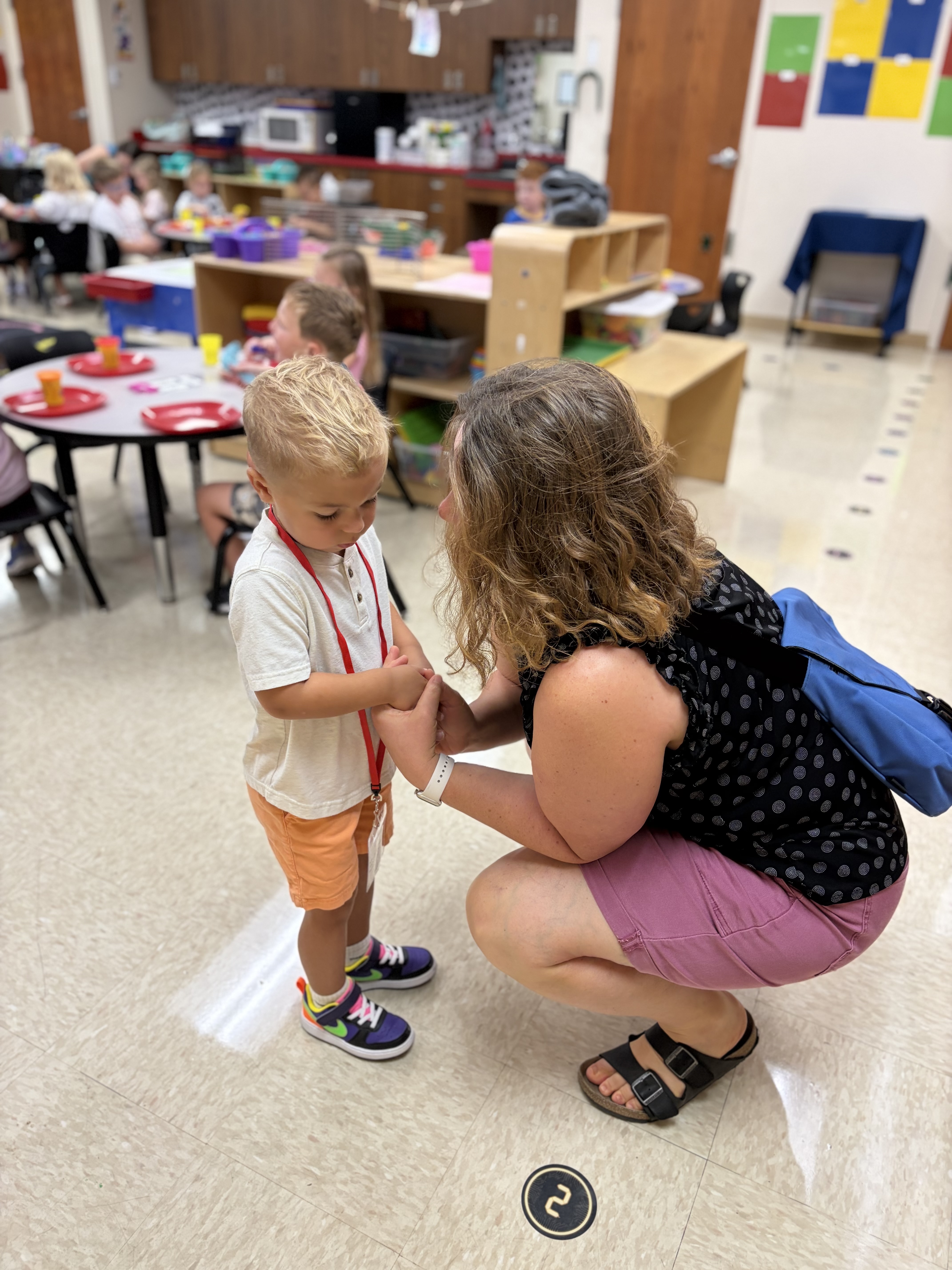
When my godson bows his head and begs me not to leave him on his first day of preschool, my tears fall to the floor and splash beside his own.

Why do I live like a fissure — a rock cracked open — my hot-lava emotions always bubbling just below the surface? One little earthquake, one tiny seismic event, and my face becomes a volcano.

From my perspective, it is because the cross of barrenness is so very public, so very painful, so very present. It already demands attention and energy both from me and from those living around me, no matter what else comes our way. It is a heavy thing, a burden carried into every moment, a tax exacted upon every personal and public interaction.

I’m not saying that barrenness is the focus of my life. I am saying that it accompanies my living. It enters the room with me, not like an elephant, exactly, but more like a hole. For it is the absence of my children in the room that everyone feels, and carrying all of those feelings wears a girl down.

But something important needs explaining.

My easy tears do not always come because I am in pain. More often than not, they come because my pain is being relieved.

In the case of my optometrist, I cried because, in bearing her burden, I was unburdened of my loneliness. I have no children in my home to nurture, so when God puts children-grown-up on my path in need of my motherly attention and care, I am more purposed than pained.

In the case of my neighbor, I cried because I experienced relief upon remembering that God does give the gift of children, if not to me. I was able to catch my breath for a minute under the ongoing weight of my cross, because I recalled that God’s withholding children from my own womb must serve some greater good (Romans 8:28), or I would be pregnant, too.

In the case of my godson, I cried because I was stunned with joy to be so wanted and cherished by a child not my own.

My point is this. I am a crybaby, but my weepy ways are not simply the result of world-weariness. I blink tears, because God in His abundant mercy deigns to comfort me in my barrenness day after cross-bearing day.

I am tearing up now just thinking about it.
I’ll Say It If You Won’t

by Katie Schuermann


The thing is, I deserve to be barren.

The list of my sins is life-long and Ten Commandments-deep.

I have made a god of my own wishes and desires so many times in my home life and in my career as an author and musician that I can no longer recall them all.

I continually neglect to call upon the name of the Lord on behalf of others, and I often daydream during the prayers in church.

I have skipped Sunday morning worship in my anger, and I often stare at my closed Bible on the dining room table, picking up my fork and eating breakfast instead of sanctifying the morning with reading the Word of God.

I have gone against my parents’ wise counsel on more than one occasion, despising their authority and imagining myself wiser than them, even going so far as to tell them so.

I have hated so many people. So, so many people. I have even hit people in my anger. All of my excuses be damned.

I have worn dresses too short and gowns too low. In my twenties, I even played the unchaste role of Maggie in a St. Louis production of Lend Me a Tenor, a choice I regret to this very moment.

I once stole a broken stopwatch from a cousin.

I lied to my math teacher about the (in)completion of an assignment.

I frequently look on Zillow for properties bigger and better than my own, and I walk by properties in my community, imagining myself living in their homes in their place.

I see other peoples’ adopted children, and I would rather they be mine.

In other words, I’ve broken all of God’s Commandments, from the First to the Tenth, there and back again, many times over. I am disgusting. I am dust, the kind that dirties everything and chokes people.

So, I’ll say it again: I am barren, and I deserve it. But that is not why I am barren.

I am barren, because God displays His own works, not mine, in my suffering (John 9:1-3).

I am barren, because the death in my womb reminds you and me to repent of our sins (Luke 13:1-5).

I am barren, because God disciplines His children like the good Father that He is (Heb. 12:5-11). But discipline is not punishment.

For God does not punish His baptized children for their sins. He won’t, because He already punished Jesus in our place. He poured out His wrath fully upon His Son on the cross, and Jesus Himself said before He gave up His Spirit, “It is finished” (John 19:30).

And so, to say that barrenness is punishment for my sin is to confess falsely that Jesus’ sacrifice on the cross was not enough, that the blood of the Lamb of God did not fully atone for all of my wrongs.

To get right to the point: to confess that barrenness is punishment for my sin is to mischaracterize God’s nature, not mine. Because God is “gracious and merciful, slow to anger and abounding in steadfast love” (Psalm 145:8). He saves His people and blesses His heritage (Psalm 28:9), and He does so by punishing Jesus in our place.

I may deserve to be barren, but I am not barren because I deserve it.

I am barren, because God deems it wise for me to be so.

A Wanting Prayer-Life

by Katie Schuermann


By the world’s standards, Michael and I are utter, complete failures at manifesting our own destiny as parents. There are probably even some church bodies who are ashamed to claim us as believing Christians, seeing as our hands remain empty after years of petitioning God for the gift of children. For with God, nothing is impossible (Luke 1:37). Surely our faith must be the problem. Surely our prayers are found to be wanting.

Honestly, I’ve always taken issue with this accusation. It’s as old as my wedding vows, and I’ve received it from church members, family, strangers, readers, employers, movie scripts, false prophets, podcasts, and countless blogs and books over the years.

I don’t mean to suggest that I deserve better than barrenness. No, I can easily imagine why someone would look at me and think my faith little, my prayer-life wanting, my heart undeserving of children, for that is all true.

But such an attack on my own faith does not take into account the faith of the thousands of kind, loving people who have prayed for me all of these years. What about my sweet mama? my self-sacrificing dad? my grandparents and sisters and nieces and nephews? What about all of my godchildren and my church family and my friends and pastors and even the compassionate strangers who read this blog? Do all of their (your) prayers count for nothing? Is God punishing all of us through my barren womb?

Or could it be that God’s good answer to all of our prayers is my barrenness?

Here is what I can tell you with assurance.

I am barren, and that is always bad. But miraculously, God works my barrenness for good, both for me and for you (Rom. 8:28). Barrenness continually calls me to repentance of my sins (Luke 13:1-4), and that is good. God’s persistent withholding of the gift of children from me repeatedly turns me toward Him for help, reminding me that He is my Father (Heb. 12:5-11), and that also is very good. And I maintain hope that my barrenness is something through which God’s works can be made manifest (John 9:1-3). Again, very, very good.

Maybe it would be helpful to consider my daily reality in this particular matter.

If, indeed, my prayer-life is found wanting, then everyone can rest assured. God is tending to this public concern very nicely, for in His wisdom, He continues to make me barren. And I promise you, barrenness drives me to pray to God over and over and over again.

Lord, have mercy.

(Thankfully, He does.)

(Still) The Barren Woman

by Katie Schuermann


I’ve never liked the word barren.

To be known as the barren woman is terrible, because it is true. I am barren, because I am “fruitless, lacking, producing no offspring,” as the dictionary bluntly and boorishly declares to everyone in the room.

I call myself barren, because I am.

I also call myself barren, because God has made me so.

It is that last sentence that really preaches to me. Allow me to explain.

While the word barren chafes my pride, I see it in the Bible and remember that being a barren woman is not unprecedented in the story of God’s salvation of mankind. Sarah, Rachel, Hannah, Elizabeth, Anna … so many of my mothers in the faith also were barren, and it comforts me not to be so special.

Also, when I see the word barren in the Bible, I remember that it is God Himself who makes people barren. He is the Creator, and He sees fit both to give and to withhold the gift of children in the Old Testament, the New Testament, and even today. He is the Author of life, and He works the horrible plot-point of barrenness for good for His People. Surely He will work my own little barren story for good, as well.

This is why I am bold to continue speaking and writing a word that has gone out of fashion in the infertility industry. When I admit to being barren, I am confessing both to myself and to you the truth about my womb as well as my Lord’s will. I am daily exercising my faith under its banner, being humbled under the will of God, trusting that the Creator’s merciful blessings extend even to those whom He disciplines, all the while prayerfully waiting and watching to see if the Man who raised Lazarus from the dead might also raise my barrenness to new life.

By the way, when I call myself barren, I am not confessing to you my eternal state of being. I am confessing to you merely the reality of my today. Today, my womb is closed. Today, God in His wisdom continues to withhold the gift of children from me and my husband.

But calling myself barren today communicates absolutely nothing to you about my tomorrow. God has my tomorrow in His hands, and I fall asleep each sunset trusting that He will give me what is best with the next sunrise.

In the meantime, I wait and I hope and I pray and I look for the good works God has prepared for me to do as a barren woman right now.

This is how I can smile for pictures taken with other peoples’ children. This is how I can write books for other peoples’ grandchildren to read. This is how I can laugh during podcast interviews about being childless. This is how I can sing for joy about my loss and your gain. I am a barren woman, yes, but I am a woman made barren by God. And since the Creator deems it best for me to be barren today, then I am not ashamed in being so.

Though I still dislike the word.

15 years

by Katie Schuermann


It has been 15 years since this blog was born. Can you believe it?

Our lives have changed much since Rebecca, Kristi, Melissa and I first started blogging about barrenness. Some of our crosses remain, others have been lifted, and still others have been exchanged.

We first ceased blogging all of those years ago, not because barrenness and secondary infertility no longer affect us, but because we thought it wise for our readers to start engaging more with their pastors face-to-face about their suffering, especially on matters of the conscience.

But we would like to honor the 15th anniversary of the first edition of He Remembers the Barren’s publication as well as this blog’s birth by announcing that we plan to blog every day in the coming month of October.

Because we are older and, we pray, wiser.

And because miscarriages, adoption, IVF, endometriosis, secondary infertility, grief, and all the things still affect us.

And because we would like to re-engage in that centuries-old Christian tradition of comforting you with the comfort with which we ourselves have been comforted (2 Cor. 1:3-4).

May the God of all mercies be glorified.

Lord willing, see you in October.

I’m Already Blessed

th-1 “It happened again,” my friend Barb said to me. “Somebody asked me when Monte and I were going to start a family. People don’t need to know my whole life story, and they shouldn’t pry into my private life.”

I grimaced as Barb shared those words. She and her husband had been married for several years and were still without children. People were starting to ask more frequently when this young couple would start having children. After much prayer, Barb and Monte had decided to move forward with the adoption process, but it was going slowly. Several months ago, a birth mother had contacted them with the possibility of having Barb and Monte adopt the child when he was born. However, once the mother delivered her baby, she chose to parent him.

“I’m sad that we didn’t get to adopt Peter, but I’m glad his mother loves him. That baby boy wasn’t the answer God has in mind for us.”

I marveled at Barb’s wisdom. She and her husband were so young but also wise beyond their years.

Barb continued, “I don’t know why people can’t be happy for me. I have an awesome husband. He supports me in my grief, even when he doesn’t know what to say or do in the sad times. I am healthy, and I have a job that pays me a decent salary. I have loving family and friends around me. Why can’t people see that I’m already blessed and be happy for me in those things?”

And there it was. In her grief, Barb recognized her many blessings from the Lord. Yes, the adoption process had experienced a setback. And, yes, Barb was mourning a child that was not given to her. However, through her sorrow, Barb could still recall the Lord’s numerous blessings to her and her husband.

Whether or not God will grant Barb and Monte a child, I cannot say. Rather, may we all, no matter our trials and tribulations, confess with Barb, “I’m already blessed!”

All Kinds of Barrenness

IMG_0211Special thanks to Katy Cloninger for today’s guest post. Her words of empathy, compassion, and truth are a welcome start to the day.
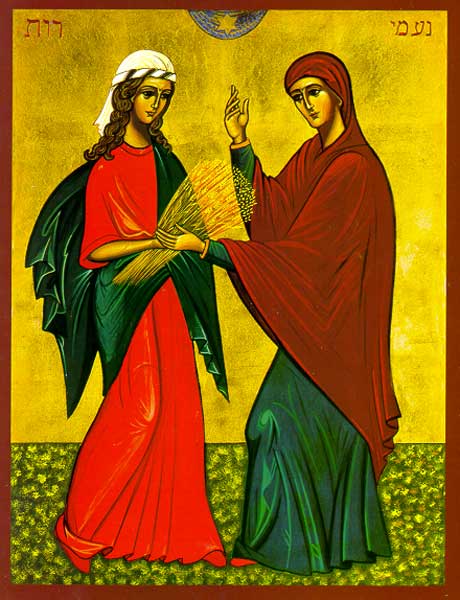

What does it mean to be barren? Merriam-Webster coldly and bleakly defines it as “incapable of producing offspring,” or “not yet or not recently pregnant.” But on a personal level, there are as many kinds of barrenness as there are barren women.

Some women fall into what may be called the classic category: they have never been able to get pregnant, no matter how much they try to “take charge of their fertility.” Others have been able to conceive but not to carry a child to term. Yet others have carried a pregnancy to term, but the baby was stillborn. Lord, have mercy on us all.

Other women suffer from secondary infertility. They have had one or more children, but for whatever reason, or no apparent reason at all, they cannot have any more. Such cases are made even sadder when the one child a woman has is taken from her by SIDS or some other tragic circumstance. Lord, have mercy on us all.

There are women who have had abortions before they knew the value of life, or knew it but were coerced, and the procedure took away not only the child they had but the ability to have children later on. Or perhaps some other surgery, necessary to preserve their own life, robbed them of the ability to bring more life into the world. Lord, have mercy on us all.

Then there are those women who never found a suitable husband, though their greatest desire was to be a loving wife and mother. Others have found husbands, but their husbands have turned out not to want children, or there are difficulties consummating the marriage, or their husbands have abandoned them, terminating all dreams of a happy home full of children. Perhaps the husband is the sterile spouse. Or perhaps the husband met an untimely death, leaving his young and hopeful wife a widow in her prime childbearing years. Lord, have mercy on us all.

No doubt there are many more kinds of barrenness than I have named. And for every person touched by barrenness, the individual details and complications add layer upon layer of sorrow and grief. Often we feel completely unique and alone in our pain.

But that feeling is a satanic lie, for the Bible tells us so.

“Surely He has borne our griefs and carried our sorrows,” Isaiah prophesies of Jesus, “yet we esteemed Him stricken, smitten by God, and afflicted” (Is 53:4). This Jesus, the Son of the Virgin, indeed “grew up before [the LORD] like a young plant, and like a root out of dry ground” (v. 2), for the very purpose that He would be “despised and rejected by men, a man of sorrows and acquainted with grief” (v. 3)—for us and for our salvation. Though our suffering is unique in some ways, it is common in that we all suffer the effects of sin; we all suffer the death-in-life of existing in a fallen world. We need a Savior to come and suffer for us the true forsaking of God so that we can be assured that God will never forsake us (Heb 13:5).

But because we are in Christ, our suffering leads ultimately to glorification. St. Peter instructs that “those who suffer according to God’s will entrust their souls to a faithful Creator while doing good” (1 Pet 4:19), and to “rejoice insofar as you share Christ’s sufferings, that you may also rejoice and be glad when His glory is revealed” (v. 13). St. Paul picks up on the same theme. He reminds us that we are “heirs of God and fellow heirs with Christ, provided we suffer with Him in order that we may also be glorified with Him” (Rom 8:17). Paul later adds that “those whom [God] foreknew He also predestined to be conformed to the image of His Son” (v. 29)—an image that is first cruciform, and only later glorified.

Nevertheless, Paul comforts us that our sufferings are brief and, with Peter, he encourages us to await the revelation of God’s glory in our now-broken selves: “For I consider that the sufferings of this present time are not worth comparing with the glory that is to be revealed to us” (Rom 8:18). Our glorification is so certain that Paul can speak of it in the past tense: “those whom He predestined He also called, and those whom He called he also justified, and those whom He justified He also glorified” (v. 30). Even now, Paul tells us, the Holy Spirit is bringing forth fruit as we suffer; we can “rejoice in our sufferings, knowing that suffering produces endurance, and endurance produces character, and character produces hope, and hope does not put us to shame, because God’s love has been poured into our hearts through the Holy Spirit who has been given to us” (Rom 5:3–5).

In our present vale of tears, we may not know why God sends us this cross or that one. But we are assured that somehow, it is for our good: “And we know that for those who love God all things work together for good, for those who are called according to His purpose” (Rom 8:28).

Our crosses, whatever they be, are always hard to bear—would be impossible to bear without God’s constant and mighty aid. But even if we are not bearing fruit in our wombs, the Holy Spirit is bearing fruit in us. So we wait with patience, trusting that the God who opens and closes our wombs knows best, and knowing that the glorification of our fallen world—and our fallen bodies—is at hand.


Katy Cloninger is a freelance copyeditor and the divorced mother of one. She has a BA in English from Newberry College and is a member of Holy Trinity Lutheran Church in Columbia, SC. She loves reading, writing, hearing, teaching, and singing about her Savior Jesus Christ and the marvelous truths of God’s Word.

Birth Announcements

iurI often am asked, “How do I tell my barren friend that I am pregnant?”

Personal preferences are always personal, so I cannot speak for every woman. However, I can share with you exactly how I want to receive the news of another’s pregnancy: personally and in private.

And if that personal, private pregnancy announcement is accompanied by a sincere invitation for me to take part in my pregnant friend’s joy, then I find that I often can, indeed, rejoice in the gift given to her. While it always hurts to remain barren when others are blessed, I recognize the tender care in being sought out ahead of the crowd. I see the extended kindness in being invited to join in on the celebration. Being remembered is always a better experience for me than being left alone.

But do you know what helps me the most during these times of grief? I am greatly comforted and encouraged when my pregnant friend rightly believes and confesses that her child is a gift from God, and that confession is often expressed — not through a cheeky Instagram picture or a clever Facebook announcement — but through a dignified email such as this:


Katie,

Several times in the past year, I felt quite a bit like Hannah — weeping bitterly before the Lord. I wondered many times why He didn’t remember me, as He remembered her. But the Lord is faithful and merciful, and He has remembered me. We found out last month that I am pregnant. And while this news has come with much joy and thanksgiving, it has also come with great grief. In my joy, I can’t help but think of all my sisters who, like Hannah, also weep bitterly before the Lord, and yet do not receive the gift of a child.

I pray for you and your husband often. I pray that He will shower you with the same blessings He has given me and my husband through our children. But more importantly, I pray He will grant you peace and comfort, and remind you ever that you are His, and that His love for you endures forever.

God’s blessings to you in all that you do.

In Christ,
Leah

Leah, in the midst of her rejoicing, chooses to remember — even share in — my grief.

And in the safety of such obvious love, I find it quite easy to share in her joy.


God with Us

P1060477

My mom does something really nice. She sits on the edge of the world with me, both literally and figuratively.

She, who is uncomfortable in high places, hikes to the cliff of my choice — usually the nearest, rough-hewn, dangerous place to which perpetual grief has pushed me — and shares my rock.

Those moments are un-rushed. We don’t talk much. We sit and look and listen and be. I sometimes meet a sob at the end of every breath, but other times my lungs are too busy handling the clean fragrance of juniper berries to bother with anything else.

But Barrenness, my tethered companion, is on that rock, too, and my mom knows it. She wisely never tries to push it over the ledge, for she knows it would take me with it. No, she let’s us both remain, and she stays with us for as long as we want to sit there.

My dad does something really nice, too. He sits with me until the pain goes away.

One summer afternoon my insides throbbed and twisted and turned with the force of a hurricane, and I sat doubled over in pain for hours. My dad led me out onto the front step — there was more privacy outside than in that day — and weathered every minute of the storm by my side. He never said a word but offered me his arm to squeeze through the violent gusts. He was my lighthouse and my harbor, a silent, unmoving, hopeful presence amidst the raging tempest.

My parents serve as masks of God to me in my suffering. They sit with me and wait with me and bear with me, preaching to me with their presence that God, indeed, sits with me and waits with me and bears with me in my suffering, too. They are icons of God’s promise never to leave me nor forsake me, beautiful illustrations of Emmanuel, “God with us.”

I try to remember this whenever I am given the opportunity to sit with someone else in her suffering.