Suffering

Shepherds Who Point Us to the Lamb

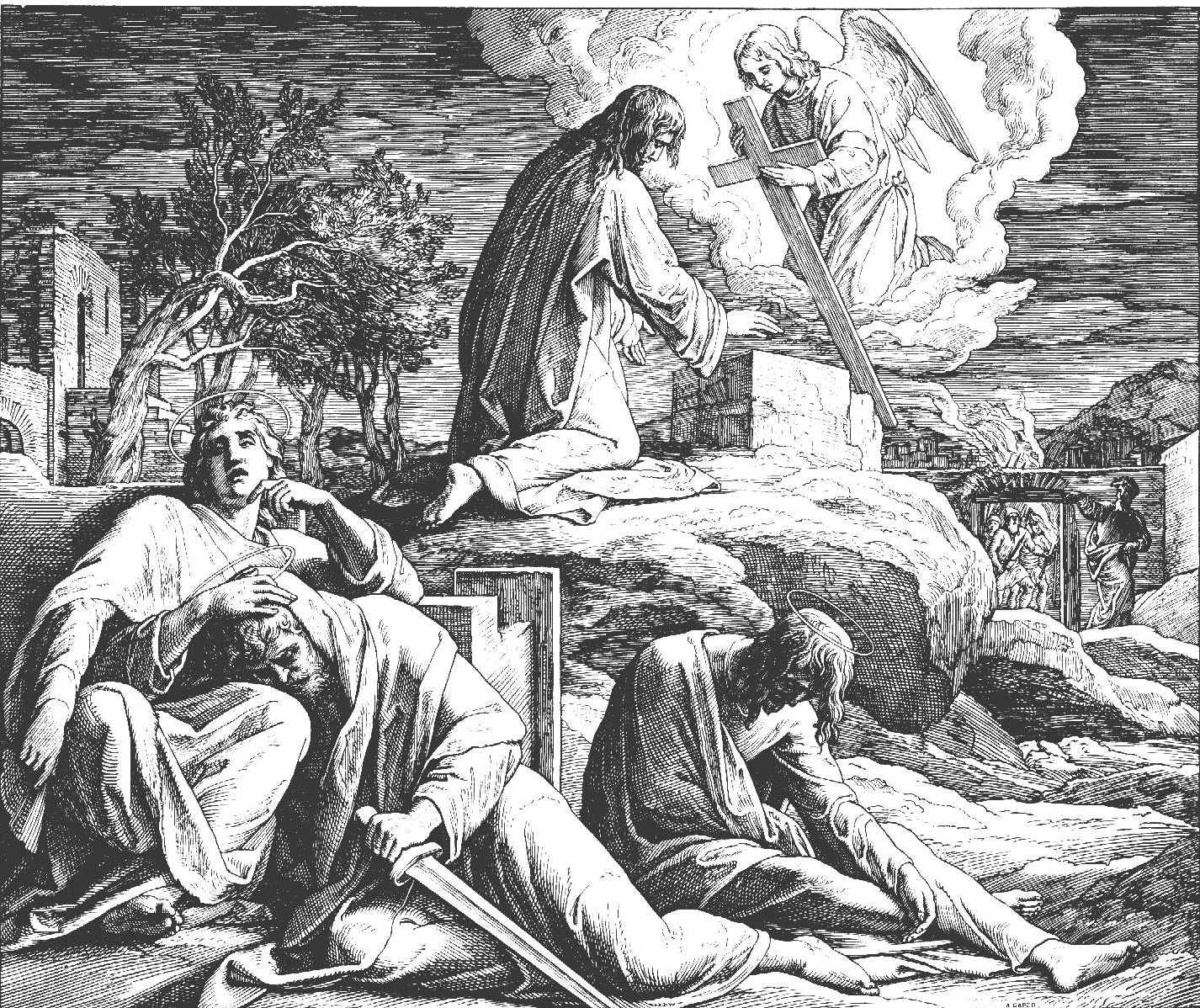
gethsemaneThere is no better time to talk about suffering than Good Friday, and our church body is blessed to have so many learned, compassionate, and insightful shepherds who know that the life of the Christian is one of taking up our crosses and following Christ, the Lamb of God, who takes away the sin of the world. Take some time this weekend to watch, listen, and read the following as we focus on the suffering and death of our Lord:

Rev. Bryan Wolfmueller’s comments on Issues, Etc. about Sanctification and Suffering

Synodical President Rev. Dr. Matthew Harrison’s video, “Suffering is Purposeful through Repentance”

and Rev. Dr. Gifford Grobien’s comments specifically to you, the barren:

When couples experience barrenness, with Job we should want to worship God and to say,  “The LORD gave, and the LORD has taken away; blessed be the name of  the LORD” (Job 1:21). But in the midst of the devil’s temptations such  faithful action and confession seem out of reach. We are distraught. There really isn’t any reason we can hear that will ease the questioning and the sadness. Once again, suffering has overshadowed the way things ought to be. Suffering overtakes even the faithful person. The cross looms and gives no reason.

Instead, the cross calls the church faithfully to follow. Faithfully. That is, even without seeing. Even without perceiving or  understanding. The cross beckons us to see suffering and to see deliverance through suffering. It does not explain suffering; but it promises deliverance from suffering. More than this, the cross of  Jesus Christ promises deliverance through suffering to fellowship with the one who suffered ultimately. The church is a fellowship of  suffering; a fellowship with the passionate One; a fellowship with God of the universe who nevertheless stooped to suffer not just with you, but for you.

Suffering, by its very nature, takes time. We, on the one hand, desire immediate results. We have our food through the drive-through, our information at the touch of a screen, our friends at the click of a  mouse. Even our sins are forgiven in a moment, at the Word of  absolution. That much is true. Yet suffering connotes experience. It  implies time. Deliverance comes after a time of suffering, and this time is not in vain. During this time we are sanctified. We grow in the love of God through the Spirit of God. We are sustained by this  same Spirit through God’s indomitable gifts, so that no temptation overtakes us that is beyond our ability. God is faithful, and with the  temptation he will also provide the way of escape.

Escape. Deliverance. God provides the way of deliverance from suffering. He conforms us to the cross so that we would die and live in Christ. God delivers from infertility. It takes time. It may take a  lifetime. But there is deliverance in the cross.

One of the ways to endure suffering as we await deliverance is to hear God’s Word and to pray. When we pray the Psalms we do both. God knows what it is to suffer, for He gives us psalms to pray even in  suffering–psalms of lament. Thus we pray the psalms of lament. Psalm  13: “How long, O LORD? Will you forget me forever?” Psalm 59: “For the  cursing and lies that [my enemies] utter, consume them in wrath; consume them till they are no more, that they may know that God rules.”

Pray these psalms, knowing that the enemy spoken of is the devil, the tempter overcome by suffering. He is overcome by Christ’s suffering, indeed, but it is true that Satan is overcome in his work in our lives when we persevere through suffering. When we are afflicted, the root temptation is to curse God and turn away in unbelief. God is all powerful, so our affliction must be his fault! That is the temptation of Satan. That is the theology of glory. So, when we persevere in faith, in spite of affliction, the work of the devil in our particular circumstances is also overcome through the power of the Spirit in the Word.

nosh on this

 The eyes of all look to you,
    and you give them their food in due season.
 You open your hand;
    you satisfy the desire of every living thing. Psalm 145:15-16

Food serves manifold purposes, doesn’t it? As a health enthusiast I often ponder the efficacy (or lack thereof) of the food we eat. As common sense would have it, this is what I’ve come up with: Real food nourishes, sustains, it delights us and brings people, most especially our families, together.

Awhile back, host Kristi Leckband wrote a beautiful post found here. In a nutshell, she recounts how her family dynamics around the dinner table were more sullen and silent at times of sorrow over dashed adoption efforts. And now, the dinner conversation jags lively and joyful as they delight in their new daughter adopted from China.

From this post I began to think about the dinner table. It’s compelling how gathering around it with family in either joy and sorrow is so necessary. It strengthens us in that unit. While the food is often the impetus for the gathering, the dinner table can be the weigh station where rest, conversational refreshment and, perhaps, just silent presence is needed.

This certainly has spiritual implications within our church families, too. What about that first Maundy Thursday? Jesus and his disciples are gathered in the upper room. This was one of many occasions in which they’d dined together. While the bible doesn’t say, I’m not so sure laughter, unless it was nervous or out of ignorance, set the tone that particular night. No. That night was focused on just being in each other’s presence and with their Master. In fact, Jesus is doing most of the talking and doing. In spite of the feelings and thoughts around the room about the impending event, food is the one of the reasons they gather. But Jesus is nourishing his disciples on a new spiritual plane; uniting them to Him through bread and wine, reminding them they are forgiven through what He is about to do on the cross.

This must have been a terrifying “church family night.” But they were reminded of who they were in relation to Christ and each other. They gathered around that table to receive food, physical and spiritual, to nourish, sustain and bring them together.

Think back to your childhoods. Hopefully yours are filled with comforting and joyous memories. Did our families turn us away from the table if we had a heavy or anxious heart? Did they require us to have a contrived zeal to be there? No. Simply being born or adopted into our families granted us a seat. Sure, we might have had to munch on pureed veggies, small and soft foods until our bellies could digest the more solid stuff on the table. We also (for the most part) learned manners there, too. This private order of service is all part of what it means to grow into our families.

So too, our Lord’s Table does not turn away heavy hearts or require pietistic zeal. Simply being God’s child grants us a seat. Yes, there may be a time in which the Word and baptism are the primary sustenances until a proper examination of communion is confessed. But this is all part of the gifts of learning what it means to grow in God’s church. Jesus knew the right time to teach and administer this holy meal to his disciples, just as we with our pastors are examined in order that we may come to the Lord’s table to receive Christ’s body and blood at the right time, too.

Food conjures up so many thoughts in our minds …the things we crave, what makes us feel good and how we share it with others. How interesting that God uses food and is the food for the strengthening of our faith. This faith craves and confesses Christ crucified for our sins. It desires to be united to Him and to share it with others. And with the substances we see before us: a pastor, the Word, bread and wine, Jesus is the Host, Servant and Meal of this fine dining reality. Blessed Maundy Thursday as we remember our Lord’s death until He comes.

Oh, taste and see that the Lord is good! Blessed is the man who takes refuge in him! Psalm 34:8

It Should Have Been Me

I have some news.“Did you hear? Alyssa is pregnant!”

“Guess what. My neighbor is expecting twins!”

“Has anybody told you? The Greenbergs are adopting!”

I’m certain we have all been privy to such conversations. In those moments, I have done my best to show genuine excitement for the couple. However, I am falling apart on the inside. That good news should be mine. I should be buying maternity clothing. I should be shopping for a double-stroller. I’ve been eating well, exercising faithfully, attending church on a regular basis. We submitted all of our paperwork to the adoption agency. Birthmothers should be choosing my spouse and me to adopt her child.

If left up to us, our wishes would be fulfilled. The pregnancy test would be positive. The twins would have matching cribs. The adoption process would be smooth as silk. It should be me! I should be the one shouting out such good news. But, no, I’m on the receiving end of good baby news once again.

There’s something else that should have happened to me. I should have been the one who was scourged, spit upon, mocked, pierced, and crucified. Yes, I’m the sinner who has broken every single one of the Ten Commandments. It really should be me who’s dead. I really don’t deserve any of the goodness that has been bestowed upon me, for I am a conceited, selfish sinner, who deserves death.

Thanks be to God that He gave His Son to take that punishment for me. Jesus Christ endured the scorn, the pain, and even the death you and I deserved. During this Holy Week, I humbly bow before the Lord God and thank Him for taking away the death that should have been mine.

crucified

Ouch

I admit that I neglect the topic of physical pain on this site. It is a selfish decision on my part. I don’t like to dwell on it. Physical pain simply is, and I can’t do a whole lot about it. It is something to be managed and endured for the long run, and I am the queen of self-numbing when it comes to long runs. Deep breath, chin up, eyes ahead, slow and steady.

However, I do not mean to neglect or ignore your own physical pain, dear reader. I know you are weary. I know you have to stay home two days a month from your job because of the searing pain. I know your menses are more than inconvenient; they are debilitating and socially impossible. I know you can neither stand nor sit nor lie down when the pain hits, and I know you vomit and writhe and pass out from the experience. I know the injections, therapies, surgeries, and crazy dietary restrictions are giant feet kicking your already dead horse. I know you shake your head at heaven every time a cyst bursts and ask “Really, Lord? Isn’t my childlessness alone already painful enough?”

Yet, physical pain is a symptom, not the root, of the problem of barrenness. Sin is the culprit which leaves our bodies twisted in pain, and only Christ’s atonement for that Sin will do. His blessed exchange on the cross, His loving sacrifice of Himself for the Sin of the world, is the reason we have hope in the midst of our pain. For, we know that our Redeemer did not stay dead but lives, and though fibroids and cysts and scar tissue and cancer and worms may destroy our bodies, yet in our flesh will we see God.

So, by all means, consult your doctors, your naturopaths, and your pharmacists for help in managing your physical pain, for they are God’s good gifts to us in this life; but, when the pain cannot be managed and simply must be endured, remember your suffering Savior on the cross and cry out, “Lord, have mercy!” and know that He does.

Crucifix on a Wall

One More Thing

Speaking of our tendency to seek purpose in everything, our dear Joanna just brought the following quote to my attention:

“The natural view of God, which we construct by our own powers, is one in which we try to fit everything into the concept of the One, the True, the Good, and the Beautiful. For the theologian of the cross, however, this view has been shattered by painful disillusionment. Therefore, the death of the old nature means the end of…all attempts to anticipate [meaning] by postulating it hypothetically.” (Theology the Lutheran Way by Oswald Bayer, 26).

Exactly.

bayerTheologyLutheranWay.qxd

Mama Bear

????

I know you’re afraid. I am, too.

We’re going against natural instinct, you and me. We know we’re not supposed to step in between a mama bear and her cub, but that’s exactly what we’re doing when we speak out against infertility medicine which breaks commandments of the LORD. We are stepping in between a mother and the children to which she feels entitled.

And a mama bear’s roar is terrifying.

Yet, we step in, nonetheless, because all children are loved and wanted by God, not just by mama bears. Every child’s value is best seen and understood at the foot of the cross on which Christ’s bloody sacrifice was laid out for them. We love these children, because God loves them; and we don’t want any of them to be valued solely for what they provide for the mama bear or the research technician or any other self-serving individual. We want to protect these precious children from being recklessly created outside of the one-flesh union where they can be graded, tested, abandoned, and destroyed.

Things could be different. We could be proactive in applying theology to infertility medicine rather than reactive. We could intentionally teach and counsel couples to live life under the cross of barrenness rather than encourage them to try every possible means to overcome it. We could speak the truth in love that children are not a commodity to which we are entitled in this life but a gift which God in His wisdom gives and doesn’t give. We could be honest in the Church and admit that God has not promised in His Word to give the gift of children to everyone.

Maybe, just maybe, this kind of honesty spoken in love would help the barren mama bears cope a little better. I know it helps me.

Unanswered Prayer

Have you yet to receive a “yes” to your prayer for a child? Does it feel like God leaves your prayer unanswered?

Our Sunday school class has been studying prayer. This past Sunday, Pastor Schuermann drew our attention to this quote from Dr. Martin Luther on the problem of unanswered prayer:

It is not a bad sign, but a very good one, if things seem to turn out contrary to our requests. Just as it is not a good sign if everything turns out favorably for our requests.

The reason is that the excellence of God’s counsel and will are far above our counsel and will, as Isaiah 55:8-9 says:”For My thoughts are not your thoughts, neither are your ways My ways, says the Lord. For as the heavens are higher than the earth, so are My ways higher than your ways and My thoughts than your thoughts.” And Psalm 94:11: “The Lord knows the thoughts of men, that they are vain.” And Psalm 33:10: “The Lord brings the counsels of the nations to nought; He frustrates the plans of the peoples and casts away the counsels of princes.” Hence it results that when we pray to God for something, whatever these things may be, and He hears our prayers and begins to give us what we wish, He gives in such a way that He contravenes all of our conceptions, that is, our ideas, so that He may seem to us to be more offended after our prayers and to do less after we have asked than He did before. And He does all this because it is the nature of God first to destroy and tear down whatever is in us before He gives us His good things, as the Scripture says: “The Lord makes poor and makes rich, He brings down to hell and raises up” (1 Samuel 2:7).

By this His most blessed counsel He renders us capable of receiving His gifts and His works. And we are capable of receiving His works and His counsels only when our own counsels have ceased and our works have stopped and we are made purely passive before God, both with regard to our inner as well as our outward activities. This is what He means when He says: “My thoughts are not your thoughts, neither are your ways My ways” (Isaiah 55:8). Therefore, when everything is hopeless for us and all things begin to go against our prayers and desires, then those unutterable groans begin. And then “the Spirit helps us in our weakness” (Romans 8:26). For unless the Spirit were helping, it would be impossible for us to bear this action of God by which He hears us and accomplishes what we pray for. Then the soul is told: “Be strong, wait for the Lord, and let your heart take courage and bear up under God” (Psalm 27:14). And again: “Be subject to the Lord and pray to Him” “and He will act” (Psalm 37:7, 5). (Luther on Romans 8:26, AE 25:364-5)

MP900178785

Effects of Sin

IMG_0864Sin – all Sin, Adam and Eve’s, yours and mine – leaves our world broken, laboring in pain for the resurrection when all things will be made new. Sin leaves even our children broken, and so we miscarry.

Lord, have mercy. Christ, have mercy.

Hear from a grieving mother, your sister in Christ:

Have you ever tried to catch a snowflake, anxious to see its intricacies, only to find that it has melted before your eyes even had a chance to focus? Have you ever seen a flash in the sky and turned around just as the last sparkles of a shooting star vanish, only to realize you missed the show? But then there are other times when you’re walking out of a store, late in the evening, tired from the days events, when suddenly the whole sky lights up right in front of you, right over your head, and the shooting star seems so close you could reach up and touch it…and no one else even gets to see it. It’s like it was only for you, and you didn’t even ask for it.

When I think of the baby that just died in my belly before I was even big enough to change into maternity clothes, I don’t think of the melting snowflake…I think of the shooting star that lit up the sky right in front of my face. I did not deserve Anastasia. My sin and status as a fallen creature is so interwoven into my being that its claws reach not only into my own life…but into the flesh of my children. It is evident in Anastasia’s death. It was not just my sin, but our sin. We all share in the sin that leaves us broken, weeping, alone, sick, and sometimes…in despair. We all share in death because we all share in sin, in our sin.

But there’s something else we all share in…our Savior. Anastasia was bathed in the blood of Christ. Her little ears were covered in God’s Word. And her home, for twelve weeks, was the body of one Baptized into Christ and made a temple of the Holy Spirit by God’s gift of Holy Baptism.

The doctors offered to let me have a D&C the day we found out Anastasia had died. But I couldn’t go. I was so overcome with my sin, with it’s effects, that I needed to grieve and confess. I have never wept so hard or long. Then I called a dear sister in Christ and, when she answered, I burst into tears telling her I didn’t even know why I was calling. We wept together.

And in Anastasia’s death, in my sin, I felt dead with her. But Jesus, He was dead too. Not half dead, not a little bit dead, He was dead. He was dead in our trespasses and sins. Have you ever thought about and wondered what those three days must have been like for His followers? God was dead. They were alone. And to add salt to the wound, they had to carry on in the work and physical labor of burial while grieving. And yet they were still alive. God’s power was enough to sustain His creation even when He was dead.

I carried Anastasia for twelve weeks. And then I carried her, dead, for ten days. One of those days was Ash Wednesday. I will never forget carrying her to the front of the church to receive ashes on my forehead. Presenting my other children for ashes felt like I was handing them over to death as well. Knowing that I infected them with the same sin that poured out death on my sixth child was unbearable. We were all being marked with death…but, it was death in the shape of life, even while I carried death inside of me.

And then I went into labor. I labored for five hours at home. I’ve given birth four times at home to our living children and the pain was no less in duration or strength to birth one so small. When she came I scooped her up and I held my snowflake. Twelve weeks with ten fingers and ten toes, two tiny ears and her mouth open just far enough that I could see her tongue and gums. She is God’s tiny miracle, put right into my hands for me to behold. She might be gone now, as quickly as a shooting star, but she was there, she was mine, and I am overcome with God’s mercy, goodness, and love for us sinners before we yet knew Him. The Lord is merciful. He forgives all. And because we are adopted by His grace, we and our children are adopted into LIFE. Death is not the end of Anastasia’s story, or of my or your stories. Easter is coming. Come soon, Lord Jesus.

Melanie Sorenson

The Answer Is Always “Repent”

“God doesn’t promise to make sense of things but to make good.”

Barren woman, today’s sermon at Good Shepherd Lutheran Church was for you:

Text: Luke 13:1-9

The Lord your God loves you. Have no doubt about this. Did you notice that the sermon hymn began with a quote from Ezekiel, attributed to God Himself? “‘As surely as I live,’ God said, / ‘I would not see the sinner dead.’” Singing those words to one another, we’re telling each other in so many words this simple truth: God loves you. “I have no pleasure in the death of the wicked…” Believe it. This is the will of your Father for you.

That word from the Lord is the foundational truth of your story. In fact, it’s the chief plot point of the story of the whole world throughout time. If you were to sit down and tell your biography that sentence would underlay every moment recounted.

But our life-stories aren’t all ups, are they? There are many downs, for we indeed bear many crosses. How do we account for them? When faced with suffering, disaster, tragedy, how do we as Children of God respond? When a friend or family member takes his own life, or the doctor comes in with the terminal diagnosis, or a sinkhole swallows someone up, or when tsunamis, earthquakes, gunmen, or terrorists seem to rule the day, how do you, Jesus’ disciple, respond?

The answer is always “Repent.” Always. It never changes. Do you say, “But I don’t deserve this!”? “But there are worse sinners than me. Why must I suffer?” Repent. Can you honestly call yourself anything less than the chief of sinners, deserving the wrath of God? And if you say, “Just look at their sin. This is just God’s punishment,” then repent. Take the log out of your own eye that condemns you.

“Do you think that these Galileans were worse sinners than all the other Galileans because they suffered in this way?.. Or those eighteen on whom the tower in Siloam fell and killed them: do you think that they were worse offenders than all the others who lived in Jerusalem?” Do you think that the 27 killed in Newtown were greater transgressors? The 3000+ on September 11th? The 3000+ aborted every day?

What is our answer to these questions? The world asks for an answer, doesn’t it? It wants to know, expects to know, in fact demands to know: why does God let these things happen? Why?

We’re tempted to leap in, defend God, justify God to the world. It seems easy to do this, but then we say the wrong thing or make something up about God that sounds nice and fits our own notion of Him but perhaps isn’t really true. This is our temptation. Yet look how God Himself answers: “Unless you repent, you will all likewise perish.” Not just perish as in a physical death. Perish as in spiritual, eternal, forever death. Unless you repent.

What about this question: Do you think that you are a worse sinner than all the others because you now have terminal cancer, or you miscarried, or you’re barren, or your spouse left you, or your kids have fallen away, or your job is lost? Do you think this?

The beauty of God’s answer is that it’s exactly the same. The answer is always “Repent.”

One simple word: “Repent.” What does it mean? It’s easy to think it means to “change your ways”; to “want to do better”. But God has no intent to cast His Law upon you in your moment of suffering. Repent simply means to “change your mind”; to have a different outlook, a different perspective, to “re-think”. This is what God tells us to do in light of suffering and death: recognize that death isn’t the worst that can happen to you. Jesus died and now lives. The same is true for you, trusting in your child-of-God status. Suffering isn’t your punishment, at least not spiritually from On-High. That was laid upon the suffering servant Jesus Himself, for you.

So repent, that is, “re-think”; cease the questioning of God. Why suffering? Why evil? Why did God let this happen to me? “Repent.” That’s what Jesus answers, always. The questions themselves reveal our lack of trust in God. Let us not call out “The way of the Lord is not just.” God’s response to our judgement of Him is rooted in complete fairness: “I will judge each of you according to his ways.” The worst thing is to die unbelieving, suffer unbelieving, fall asleep staring at ourselves instead of fixing our eyes on Jesus. To be fairly judged by God is the worst thing for us.

Repent. Re-think. The temptation we all face is to think of God as vengeful, of “making a list and checking it twice,” of always being ready to pay you back for your wrongdoing. Put aside the temptation to explain away God in your suffering, and know that “God is faithful, and he will not let you be tempted beyond your ability, but with the temptation he will also provide the way of escape, that you may be able to endure it.” He does indeed provide the way out. It is to hear His words and believe them.

Repent. Re-think. God does not have your end in mind. “I have no pleasure in the death of the wicked…” God doesn’t promise to make sense of things, but to make good. “And we know that for those who love God all things work together for good, for those who are called according to his purpose.”

Repent. Re-think. God doesn’t promise to handle the details of each and every disaster that comes along. He is able and willing – He doesn’t leave us in doubt about that. Throughout the Scriptures God is involved in the details. But He rather prefers to make good by sending His Son to become man and handle sin to the point of death, even death on a cross. There on the cross death’s stinger is cut away. There on the cross the grave’s seeming victory is divinely mocked for all eternity.

God’s preference is not to put you in a bubble as you walk through this valley of the shadow of death. Instead he challenges the demonic principalities and powers of this sinful world by adding His word to some water and washing clean your soul and your conscience. God confronts the ongoing accusations that the world, the devil, and even our old sinful flesh lob at Him, each other, and ourselves by speaking the Body and Blood of Jesus in, with, and under the bread and wine in the Lord’s Supper.

Your Baptism tells you that all the suffering in the world cannot touch you. The Holy Communion fed to you reminds you that Christ’s suffering and death are the victor over anything that will assault you, both in body and soul. In the Word and these Sacraments God provides the way of escape – namely, faith.

God works for good in everything. Faith comes in and believes this. Faith doesn’t say that cancer or a car wreck or your sin is good. Instead, it says “God will work good and has already worked good in the death of Jesus. Lord, have mercy on me, a sinner.”

This is how God bids us to think. We are all sinners. And the answer to our sin is always the same. “Repent.” Think differently, beloved. Think on Christ, who has sealed you in His promise of forgiveness for all eternity.

Amen.

Rev. Michael P. Schuermann

Did They Really Just Say That?

Surprised Woman

Just remember, whatever it is people say to you in response to your barrenness, they are just saying whatever really comforts themselves.

So, when all of that anger and pain and frustration boil to the surface at being told you should just relax or take more Vitamin D or make an appointment with Dr. Doogie Howser or start the adoption process or lift your cervix for thirty minutes after intercourse or pray harder in order to get pregnant, take a deep breath and think of it this way:

They are not telling you what to do and how to be and how to feel; they are telling you what comforts them. They are helping you know them better.

That’s not so bad, right?