Infertility

Comforting or Being Comforted

Many moons ago a friend inquired if I’d heard anything more regarding our adoption. I told her that we had no idea when or if a referral was coming. At that point, the tears started to flow for both of us. She told me that we were in her prayers, and I began weeping a bit more visibly. She continued and stated that she KNEW that there was a child for us. At that point, I had to turn the faucet off. I had to switch from being the “comforted” to being the “comforter.” I found myself reminding her that I have been given countless blessings already. I told her that our family size might already be complete and that I might need to learn to be content with that. She found herself agreeing with me and acknowledging that, yes, she’d heard me say that on previous occasions.

A small request: Please don’t make me comfort you when you are trying to comfort me. It’s difficult, and it feels a bit awkward.

True comfort comes from not having to filter what’s being said when you talk with me regarding my barrenness. I feel like I can actually let my guard down when a good friend carries the load with me and lets me grieve and mourn and be sad…and understands what all that entails for the life of a Christian.

So You Wanna Complain?

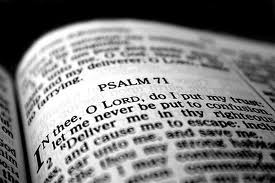
There’s a psalm for that. Yes, you can complain to God about your situation. This world is full of injustices, and barrenness is one of them. God is fully aware of our childless home; He knows the desires of our hearts. Thus, He invites us to bring our sorrows and hurts to Him. When we complain to God, we give evidence to our faith, that we know God is gracious and merciful to hear us and has the power to help us.

Even more, God tells us HOW to complain. There are psalms of lament in the book of Psalms. These psalms show us that it is good and right to complain to our heavenly Father. The very words to use in our complaints are given to us by God Himself.

So what’s in a psalm of lament?  1) a complaint to God about what has gone wrong and God’s failure to help  2) a plea to God for help  3) a confession of faith in God’s goodness  4) a promise of praise for God’s help

Psalm 13 demonstrates all four of these components.

Psalm 13

1 How long, O Lord? Will you forget me forever? How long will you hide your face from me?

2 How long must I take counsel in my soul and have sorrow in my heart all the day? How long shall my enemy be exalted over me?

3 Consider and answer me, O Lord my God; light up my eyes, lest I sleep the sleep of death,

4 lest my enemy say, “I have prevailed over him,” lest my foes rejoice because I am shaken.

5 But I have trusted in your steadfast love; my heart shall rejoice in your salvation.

6 I will sing to the Lord, because he has dealt bountifully with me.

A psalm of lament gives voice to our sorrows and shows us how to complain. When our lives don’t go as planned, we hurt. It seems as if God has abandoned us, and that makes us angry. This is where Satan enters. He seeks to skew our vision and desires to turn us away from God. Instead, we run with those hurts and angers to Jesus. We unload it on Him, for He alone can take our anger and heal our hurts. Thus, God uses our anger to teach us to rely on Him for all of our needs, both of body and soul.

Share your feelings of sorrow, hurt, and anger with your pastor. Go to him; he is God’s man for you in your time of need. Your pastor will help you complain to God (He can give you a whole list of lament psalms) and will also comfort you with words of God’s grace and mercy.

So go ahead and complain. God wants to hear from you. In fact, He has given you the best words to use – His own.

Suffering

God Himself causes our suffering.  He is not the cause of sin, mind you, but He is the cause of our suffering.  [p.32]  Those are the words of Dr. Gregory Schulz  in his book The Problem of Suffering: A Father’s Hope.

As I read Dr. Schulz’s book, I began to think he had a window to my heart.  As he shared the struggles of pain and suffering surrounding the death of two of his children, he asked why these things could happen.  I asked that same question surrounding my barrenness.  He wrote based on his experiences as a father and a husband.  He asked why suffering happens.  He questioned suffering in the world.  I asked those very same things.  Dr. Schulz pointed me to Jesus, the only relief from suffering.

We experience death, pain, sorrow, and grief. How can suffering come from God?  Suffering is real.  Suffering hurts.  Suffering drives us to our knees.  Suffering demonstrates to us that we are mortal.  We cannot cure every disease.  We cannot prevent death.  We cannot administer the drug that takes away aches and pains.

No, our only relief lies in Jesus Christ.  He took all of our sin sicknesses and sufferings and ingested them into Himself on the cross – for us.  We are made holy in our baptisms.  Once baptized, though, we are signed up for a lifetime of suffering.

There is great temptation to say that our suffering will come to a fairy-tale ending in this world.  On the contrary, in this world we will have pain and sorrow.  It would be foolish to insist that our suffering is going to have a glorious finish.  This is a sinful world, and while we dwell in it, we will not be safe from sin.  When the body and soul of the believer in Christ are united with Jesus, THEN all suffering will end.  This is why we pray in the Lord’s Prayer, “But deliver us from evil.”  True relief is peace in Christ.

In this world, we will experience disappointment, heartache, death, miscarriage, and so much more.  Take heart, dear sisters and brothers in Christ, you are not alone.  Dr. Schulz writes: “…even the Gospel doesn’t give us absolute rest as long as we are away from home in this vale of tears.  It can and does bring us the Good News of Jesus, the rest for our souls, but we still experience anger and anxiety.” [p.124]  He continues: “My joy is not complete.  It cannot be, until God grants us all a blessed reunion in heaven.” [p.125]  God does not abandon you.  He loves you, and He understands your suffering.

I commend this book to you.  Grieve with Dr. Schulz.  Live under the cross of Jesus until He takes you to Himself, where all suffering ends.

Father’s Day

Just because your husband may not be the father of his own children does not mean you cannot celebrate him this Sunday.

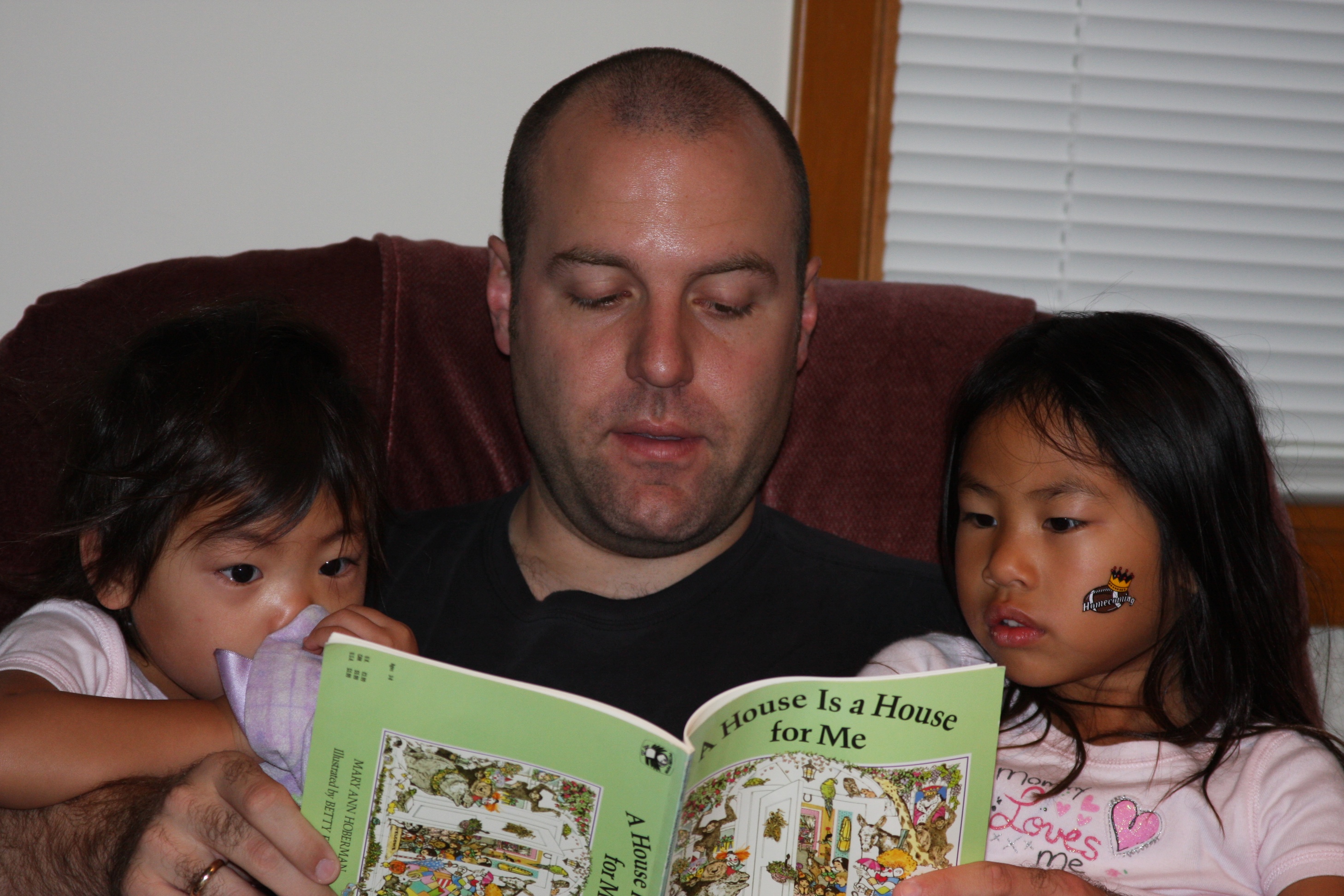
Does your husband teach Sunday school or help with the senior youth group? Does he buy ice cream for his nephews and read books to his nieces? Does he play dodgeball with rough-and-tumble sixth graders? Does he instruct his godchildren in the Way they should go?

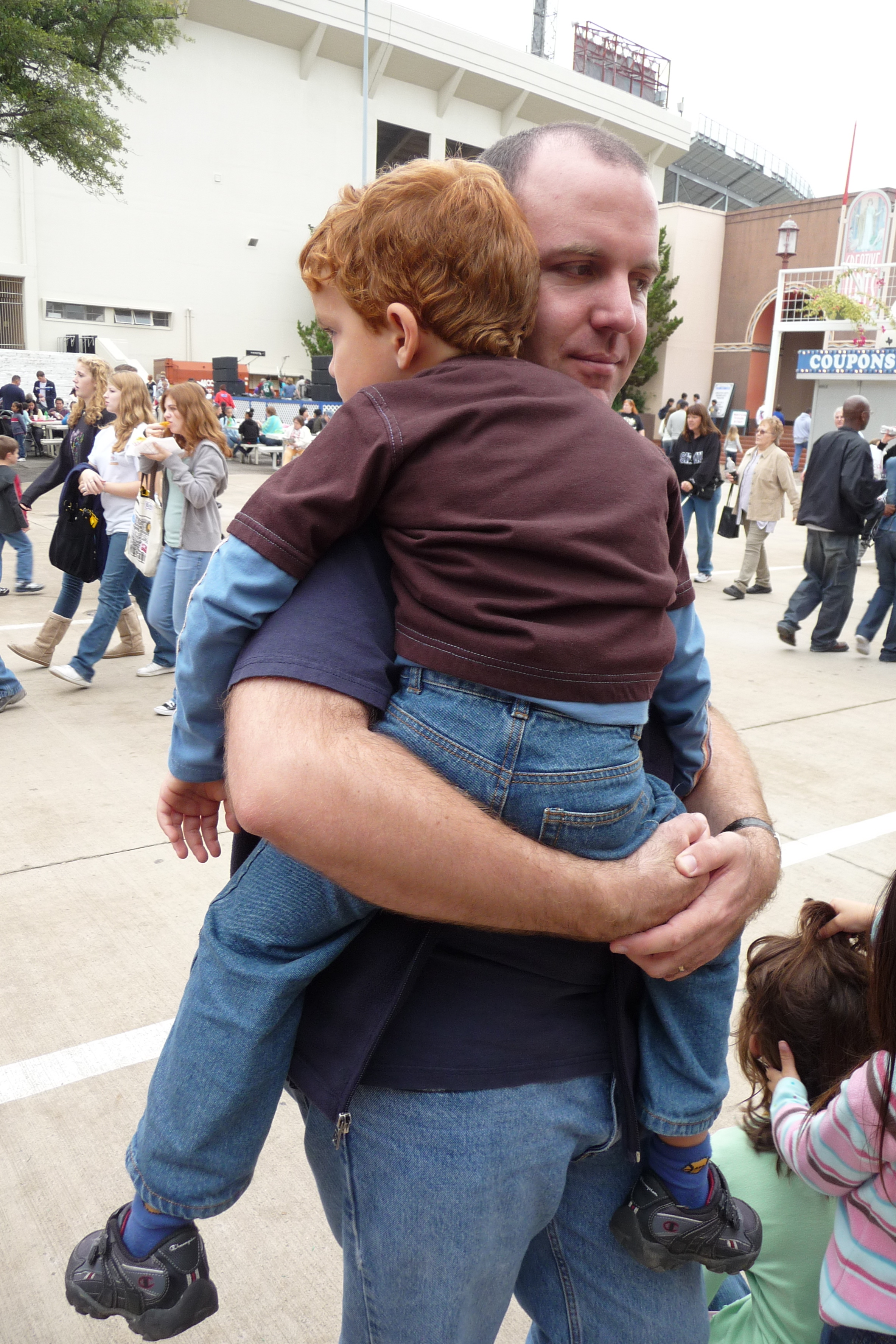
Does he serve on the board of elders, church council, or board of trustees? Does he chaperone youth trips? Does he turn sticks into lightsabers? Does he give money to crisis pregnancy centers, school auctions, or pro-life organizations? Does he carry tired children across the State Fair grounds? Does he include his voice with all of the Church to pray?

Then, he is a father.

Go all out this year, ladies. Spoil your husbands silly. Foot rubs, massages, grilled steaks, homemade rolls, tickets to see Prometheus, the whole nine yards. Celebrate the dickens out of your guy, because he is a father to all children.


Dr. Tactless

Some people say the wrong thing. Some people ask nosy questions. Some people say the wrong thing, ask nosy questions and make unhelpful predictions about the future. These are people you should avoid at all costs. This week I had no choice but to confront someone who has a reputation for not knowing the meaning of tact. Our regular medical practitioner was unavailable for our checkup, so we had the misfortune of seeing that guy. Here’s how the conversation played out. Keep in mind, the checkup was for the child, not me:

Dr. Tactless: Now, this one’s adopted?

Me: Yes.

Dr. Tactless: And you have another one who’s adopted, too, right?

Me: Yes, he’s eight now.

Dr. Tactless: So…is that something you planned to do, or was there something wrong?

Me: Well…I’ve only been pregnant once, and then I had a miscarriage.

Dr. Tactless: I see. So something is wrong with your system.

Me: We…uh…don’t know for sure. I’ve had some issues with endometriosis in the past but feel pretty healthy now.

Dr. Tactless: And your husband’s sperm count is normal?

Me: Ummm…he, uh,…he seems to be healthy, too.

Dr. Tactless: Hmmm…now how old are you again?

Me: Thirty-six.

Dr. Tactless: Oh, well, you know you could get a surprise later on.

Me: We would be open to surprises.

Dr. Tactless: You know, there’s nothing like the ink drying on adoption paperwork to make for a good fertility treatment (sly, know-it-all half-smile creeping up his face as he nods slowly). Well, the baby looks good. Come back in a month.

Sheesh. I couldn’t get out of that office fast enough.

Don’t you ever wish you could turn the tables, just for once, to show the other person what it feels like? If I could do this conversation all over again, this is how it would be:

Me: So, I don’t see a ring on your finger. Not married?

Dr. Tactless: No, I’m single.

Me: So…was that by choice, or is there something wrong with you?

Dr. Tactless: Uh…no, I was dating a women recently but she left the relationship. I would still like to get married someday.

Me: Hmmm…so something is wrong with you.

Dr. Tactless: I, uh, don’t know about that, exactly.

Me: Now, do you use deodorant and mouthwash regularly? That’s important, you know.

Dr. Tactless: Well, I think I smell OK.

Me: So now, how old are you again?

Dr. Tactless: I’m forty-nine.

Me: I see…You know, there’s this bar at the corner of ___ and____ where a lot of older, desperate women hang out on Friday nights. There’s nothing like a little desperation to get a relationship going (wink, wink). You should try that place. You just might get lucky.

Can I Be Happy?

There are days when I dwell on my barrenness.  My thoughts lead to lots of “what if” statements.  “What if we’d tried to start a family right after we wed?”  “What if we’d started the adoption process sooner?”  “What if I never parent another child?”  Thus begins a slippery slope, focusing on the negatives.  Once that starts, it’s hard to climb back up out of the pit.

Enter Jesus Christ.  I belong to Him.  True, my body is not right; it’s sinful and broken.  My mind wants to turn inward on itself and have a nice, little pity party.  However, Jesus lives in me.  He’s right there in my head and in my heart.  The cross was traced over my head and heart at my baptism.  Jesus is right here – with me!

Yes, there are tough days, days when I sink into my own sorrows.  However, Jesus walks with me through those tough days.  Even more, He carries me through the rough times.  Jesus knows my hurts.  He’s been hurt even deeper.  He was abandoned by His Father on the cross.  He endured suffering and shame like I will never experience.  He knows what it means to sorrow.

Will I ever be happy?  Will it be when I am a parent?  Is that the only thing to which I cling for my happiness?  If I can’t be happy unless I have a child, then I am coveting.  That’s sin, and I beg for God’s forgiveness.  On the contrary, happiness comes through Jesus and Him alone.  My joy is found in Jesus because, in Him, I am made whole and righteous.  My body on earth remains broken because of my sin, but I am perfect in Jesus.  And He is my happiness.

No Library Left Behind

Have you ever looked for books on barrenness/infertility at your local library? It is pretty scary what titles come up on the search. The content is even scarier. Most of these books circulating in your community project a theology of glory onto childlessness which falsely ties a woman’s fertility to her faith in God. In other words, these books communicate that if a woman prays enough, grieves enough, yearns enough, and ultimately believes enough, she will earn God’s favor in a way that will force Him to give her a baby.

The truth: God has made no such promise to us in His Word, and this kind of book can lead a barren woman to despair. God loves us and provides for us in Jesus regardless of our parenting status.

Would you help me with something? I’d like to make He Remembers the Barren start popping up in women’s library searches. If you have the will and the means, would you please consider donating a copy of He Remembers the Barren to your local public library? All you have to do is walk a copy into your local branch and hand it to them with a smile. That’s what I did. Now, a book that offers the comfort of Christ to our suffering sisters is circulating in the Dallas Public Library System. Kind of cool, huh?

In fact, if you feel up to it, there are three people/institutions I think would benefit from receiving a copy of this book from you: your pastor, your OB/Gyn, and your local public library.

Thank you for your help!

At Least

There are two words a barren woman loathes to hear:

“At least you don’t have children and can do whatever you want.”

“At least you don’t have to pay for babysitting.”

“At least you’re young and have lots of time to have children.”

“At least you have one child. That’s better than nothing.”

“At least you won’t have to wait long to adopt. I mean, who wouldn’t want you to parent their child?”

“At least now you know you can get pregnant.” (after losing a child through miscarriage)

These two, little words do the opposite of what you expect. They sting rather than soothe. They set up a natural comparison between God’s divinely distributed gifts which more often than naught leads the listener to covet rather than to be content. Even when these two words are offered with the best of intentions, they still man-handle the listener into seeing the world from the speaker’s perspective, and no one feels comforted after being face locked, gorilla pressed, and clover leafed.

All in favor of scrapping this phrase from interpersonal communications, raise your hand?

Filled to Overflowing

Peter (of the Bible) was a professional fisherman.  He knew what to do to fill his nets, but he had a problem.  He had spent the entire night out on the sea and caught nothing.  He had done all he could and still came up with an empty net.

Along came his good friend Jesus, who told him to cast his net on the other side of his boat.  What – the other side of the boat?  How much difference can there be?

And yet Peter obeyed.  Immediately the net was overflowing with fish.  Immediately.  How I wish I could have seen Peter’s face.  He must have been floored.  The Lord filled the net with good things and all good things.

Jesus gives me only good things, too.  I have tried to conceive a child.  I’ve taken test after test and popped my share of pills.  My best efforts were still not good enough because I am sinful.  I still came up with an empty womb.  Rather, the Lord opens His hands and graciously gives – when and where He wills.  He has already given to me the very best things.  I have received His name in Holy Baptism.  I have received the forgiveness of my dreadful sins through His Body and Blood.  I have heard through my ears the Absolution of sins forgiven.  The gifts of eternal life and salvation are mine – not through my own merits but through Jesus Christ, my Lord God and Savior.

Like Peter, my best works aren’t good enough.  My sinful body proves it.  Jesus, however, is good, and He is more than enough.  He fills and satisfies.  On my own, I will certainly come up empty-handed, but I know with certainty that Jesus does what is best for me.  He fills my life with gifts that are too numerous to count.  May we all be given faith to trust in the Lord’s mercy, just as Peter learned to do, and to receive God’s gifts with thanksgiving.